


Longo Toyota of Prosper

Blog / Car Maintenance Tips

What Are The Signs Your Car Needs a Tuneup

2023-Toyota-Highlander

A tuneup is a check-up of your vehicle. Depending on who you ask, it can include everything from an engine inspection to vehicle fluid replacements and mechanical repairs. If your vehicle is acting a bit off, you may be in need of a tuneup. Below, you can read about some common signs that your car needs a tuneup.

Lights Come Up on Your Dashboard
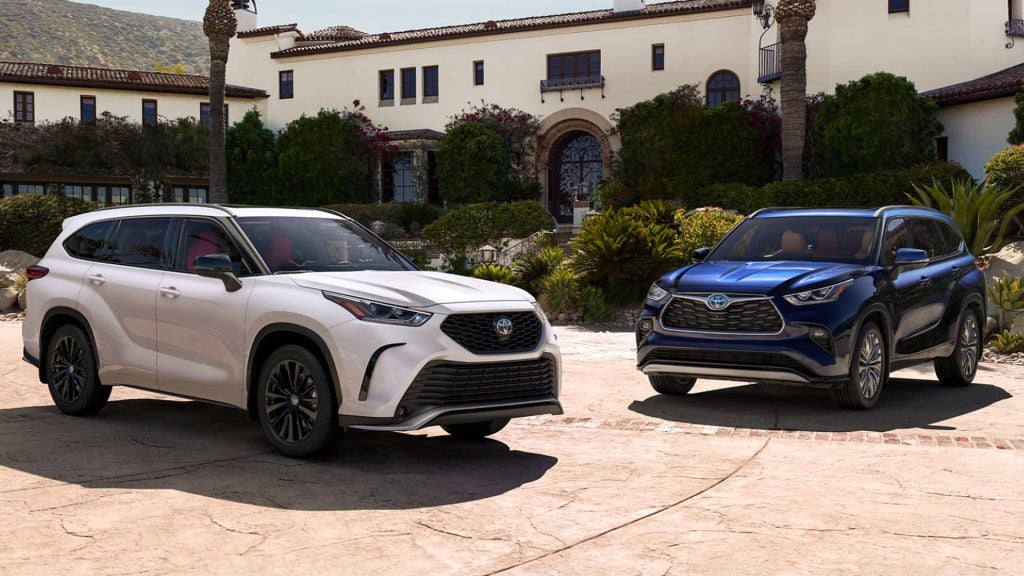
2023 Toyota Highlander

If one or more lights are showing up on your dashboard that aren't normally there, there may be something wrong with your vehicle. You can refer to the owner's manual for your car to determine exactly what each light means. While it's possible to drive for hundreds of more miles with these lights lit up, you should address them as soon as possible.

This way, the problems that each light indicates won't develop into more serious issues. When you bring in your vehicle for service at our dealership, the technicians at our service center at Longo Toyota of Prosper can diagnose the present issues and propose a solution.

You Hear Unusual Noises

Unusual noises can indicate that your car needs a tuneup. Different noises can indicate different issues. For example, a screeching sound under the hood can indicate a worn or loose serpentine belt. If you hear a chugging or rattling sound, there may be something wrong with your exhaust system. Here are some other noises to consider and their potential causes:

  • A ticking noise while your car is idle may indicate low oil levels
  • A clicking noise while you're turning your vehicle may be the result of poorly lubricated axles
  • A clunking noise while driving can indicate a bad shock absorber
  • A thudding noise from your tires can indicate poor tire pressure
  • A loud grinding or squealing sound from your brakes can be a result of worn-out brake pads
  • A low-pitched humming noise from under your car may indicate a failing transmission

If you hear any of these noises or another kind of sound, it's important to not just turn up the music and forget about it. Our certified technicians at Longo Toyota of Prosper can address the issue and ensure your vehicle no longer makes the offending sound.

Your Car Pulls to One Side

Think about how your car behaves when you're driving down a straight road. If it tends to pull to the right or left and requires you to constantly adjust it, your wheels may be misaligned. This sign can not only be annoying to deal with, but it can also be dangerously distracting to your driving. It's best to take your vehicle to a reputable dealership's service center so the technicians can perform a wheel alignment or replace any damaged suspension components.

Your Car Shakes When You Drive It

It can be easy to dismiss a vibrating car as the result of driving on an uneven surface. Pay special attention to how your vehicle behaves when you're driving on a noticeably smooth road. If you notice excessive shaking and vibrating, there's likely an internal problem somewhere. The vibrations may only occur in the steering wheel or at higher speeds. In other cases, you may feel the shaking throughout the entire car. Regardless of the extent of the vibrations, it's important to seek tuneup services.

Your Brakes Grind When You Apply Them

Think about what happens when you apply your vehicle's brakes. Does your vehicle come to a smooth stop with no interruptions? Or do you feel and hear your brakes make a grinding motion as they attempt to bring the vehicle to a stop? If the latter is the case, your vehicle may have worn rotor discs or a brake pad issue.

Even if your brakes work while they grind, this scraping motion can cause them to eventually become ineffective. To avoid putting yourself, your passengers, and other drivers at risk, you can bring your vehicle in for a tuneup to address the problem.

Your Car Accelerates Slowly

When you're at a red light and it turns green, how does it feel to get your car up and going again? Do you feel like it goes from zero to 60 miles per hour easily and quickly? Or do you have to put your pedal to the metal to even pick up a little bit of speed? If your car is slow to accelerate, there may be an issue with the oxygen sensor or a bad throttle position sensor. It's important to take your car in for a tuneup if you notice slower-than-normal acceleration, as avoiding it can cause problems with accelerating to merge on the highway or make your way up a steep hill.

Your Car Stalls Out

Stalling is when your engine dies. In any car with an automatic transmission, stalling spells trouble. It may occur for various reasons, including ignition issues, a faulty fuel pump, or a dead battery. Your car can stall while you're driving or stopped at a red light, which can create potentially dangerous circumstances. If your car has a tendency to stall occasionally before it gets back up and running, it's important to get it to an auto service center as soon as possible.

Your Car Gets Bad Gas Mileage

If you suspect that your car isn't getting as good gas mileage as it used to, you can keep track of the mileage you're getting by noting it each time you go to the gas station. Document each record in a notebook or in a note on your phone.

A downward trend in your gas mileage may indicate that your vehicle has a problem like a clogged fuel injector or a dirty engine air filter. Once you take your vehicle in for a tuneup and have a certified technician address the problem, you may notice your vehicle start to achieve the fuel efficiency that its manufacturer specifies.

If you've noticed any of these signs or otherwise believe that your car needs a tuneup, you can schedule service here at Longo Toyota of Prosper. Our team will perform a thorough inspection and determine what maintenance and repair services your vehicle needs. We'll work efficiently and with precision so you can get back on the road with confidence.

Posted in:

Related Posts

Toyota Camry Maintenance

Toyota Camry Maintenance Guide: Your Essential Checklist

When you buy a Toyota Camry from us at Longo Toyota of Prosper, Texas, you can look forward to many years of trouble-free ownership. To ensure your car's ongoing reliability and maintain its warranty coverage, it's important to follow the recommended Toyota Camry maintenance schedule. Whether your Camry has a four-cylinder gas engine or the V-6 powertrain, our team can help you maximize your Camry's performance with our comprehensive Toyota Camry maintenance guide. Note our expert tips to keep your car running smoothly. more Understanding Your Camry's Maintenance Schedule Your Toyota Camry service schedule follows 5,000-mile or 6-month intervals depending on your driving habits. This means that if you drive 5,000 miles in fewer than six months, you should follow the mileage-interval recommendations for maintenance. If it takes you more than 6 months to drive 5,000 miles, you should schedule a service every 6 months. Customizing the Schedule Based on Driving Conditions In some cases, you might need extra service visits or additional maintenance tasks at a service appointment. For instance, if you do most of your driving under special operating conditions, your car will suffer more wear and tear and require extra maintenance and more frequent oil changes. Special operating conditions include: Driving through dust, in mountainous terrain, or in extreme hot or cold weather Transporting heavy loads Making frequent short trips If you're not sure if your car needs additional maintenance, ask the helpful team in our service center. Service Intervals: What and When Toyota routine maintenance tasks need to be carried out at the correct service intervals, which are as follows. Every 5,000 Miles/6 months: The Essentials At each 5,000-mile or 6-month service, we'll: Rotate the tires Check the fluid levels and top off if necessary Inspect the brake pads and rotors Check the wiper blades Every 10,000 Miles/12 months: Intermediate Checks and Replacements At this service interval, in addition to carrying out the previously mentioned tasks, we'll: Change the engine oil and filter Replace the cabin air filter Major Milestones: 15,000, 30,000, and 60,000 Miles At the 15,000-mile/18-month Toyota service interval, we'll check the following as part of our more in-depth inspection: Engine coolant Radiator and condenser Exhaust pipes and mountings Steering gear and linkage Driveshaft boots Ball joints and dust covers Brake lines and hoses Additional tasks at 30,000 miles/36 months include: Inspecting the automatic transmission fluid cooler hoses and connections and looking for signs of leaks Checking the fuel lines and connections, fuel tank band, vapor vent hoses, and cap gasket Replacing the engine air filter At 60,000 miles, Toyota maintenance recommendations include inspecting the drive belts, and for Camrys with the V-6 engine, replacing the spark plugs. With the four-cylinder engine, the spark plugs shouldn't need changing until the 120,000-mile/144-month mark. Specific Maintenance Tasks Explained Two of the most common and important routine maintenance tasks are engine oil changes and tire rotations. Oil Changes: Frequency and Best Practices Engine oil is your car's lifeblood. It lubricates the moving components and helps to maintain the correct engine temperature. As the oil gets older, it gradually gets contaminated with tiny particles and becomes less effective at lubricating engine parts and dissipating heat, and the oil filter becomes clogged with debris. That's when the oil and filter need changing. Toyota recommends having the oil changed every 10,000 miles. However, if most of your vehicle use falls under the special operating conditions listed above, your oil might need to be changed more frequently, possibly every 5,000 to 7,000 miles. Tire Maintenance: Rotation, Balancing, and Replacement Your car's tires wear at different rates depending on their position on the vehicle. With front-wheel-drive and all-wheel-drive Camrys, the front tires experience more acceleration, cornering, and braking forces than the rear tires, so they'll wear more quickly. By rotating the tires, you enable them to wear more evenly and help to extend their life. For the Camry, it's recommended to move the rear tires to the front axle and the front tires to the rear axle. When you have your tires rotated at our tire center, our technicians will check the tire treads and inspect the inner and outer tire walls for cracks, bulges, and excess wear. If necessary, they'll balance the wheels. If the tires are excessively worn or damaged, we'll replace them with the right tires for your Camry. Seasonal Maintenance Tips for Your Camry As the seasons change, it's important to prepare your car for the cold winter weather or the extreme summer heat to ensure it doesn't let you down. Preparing Your Car for Winter Check that your tires have enough tread and are properly inflated. Consider changing to winter tires for better grip. You'll want to make these additional preparations: Have your brakes checked. Make sure the coolant has the right mix of antifreeze and that the washer fluid is rated for low temperatures. Inspect your windshield wipers and replace them if necessary. Make sure all the lights are working. Put an emergency kit together with items such as blankets, first aid supplies, a flashlight, jumper cables, and snacks. An ice scraper, shovel, and sand will help if you get stuck in the snow. Summer Readiness: Overheating Prevention As the summer heat approaches, it'll be good to care for the following: Check the radiator and hoses for cracks and leaks. Ensure all fluids are at the right levels. Make sure the air conditioning is working efficiently. Have the brakes and tires inspected. Always carry water in the car. Cold and hot weather can reduce the efficiency of your car's battery. We recommend bringing your car to us for a battery service in the fall and spring to make sure it won't fail you in the extreme weather. Schedule Maintenance for Your Toyota Camry With Us By following the Toyota scheduled maintenance guide for your Camry, you can be confident that your car will carry on running at its best for as long as you own it. When you reach the maintenance milestones, contact us at Longo Toyota of Prosper, Texas, to take advantage of the Toyota Camry services in our state-of-the-art service center. Dynamic Toyota Camry Driving on Erbil Highway by Harem is licensed with Pexels License

Toyota Safety Features

Standard Toyota Safety Features

Toyota is among the top brands when it comes to ensuring the safety of its drivers. Toyota Safety Sense (TSS), a package including a range of driver-assistance features, was first launched in 2015. Since then, it has gone through a series of important upgrades to give each new Toyota cutting-edge safety tech. Our experts at Longo Toyota have taken a closer look at the safety features you can expect to find on most Toyota models and the optional add-ons you can choose for added protection on the roads around Prosper, Texas. more Forward Collision Warning and Automatic Emergency Braking Forward collision warning and forward automatic emergency braking are two key features of every Toyota, whether it's the small Corolla or a family-sized SUV. The collision warning alerts you to potential threats up ahead, including pedestrians and cyclists, giving you time to avoid or reduce the impact of the collision. Should you fail to respond in time, the automatic emergency braking system can kick in to bring your vehicle to a swift stop. Lane Departure Warning The lane departure warning tracks where you are on the highway and sets off an alarm if you're about to leave your lane. This feature is a standard option in many Toyotas with lane-keep assist, which can steer your vehicle back into the center of a lane. This feature won't take over if you're indicating in order to exit a lane. The main aim of these features is to stop accidents arising from drivers inadvertently sliding into another lane and colliding with traffic. Adaptive Cruise Control Adaptive cruise control is a modern safety feature designed to reduce accidents on the highway caused by drivers not leaving enough distance from the vehicle ahead of them. It can automatically adjust your speed to ensure that you maintain a safe distance. In the higher trims of some Toyotas, you may also find stop-and-go adaptive cruise control, which can operate similarly in heavy traffic. However, it's important to remember that this feature is not an automated driver, and you still need to be alert behind the wheel. Automatic High-Beam Headlights This feature adjusts your headlight levels when oncoming traffic approaches. As a result, you can be sure that you won't blind oncoming drivers when they're approaching you. In addition, the high beams will come on when you need them most, when it's dark and road visibility is poor. Some higher trims in the Toyota vehicle lineup add adaptive headlights as an extra feature. These headlights can move side to side depending on your position on the road to improve visibility and ensure maximum performance. Blind-Spot Monitoring Your blind spot is one of the most dangerous areas because vehicles can approach you without you seeing them. The blind-spot monitor handles this problem by alerting you to approaching motorists so you can take evasive action. The rear cross-traffic alert is a similar feature. It alerts you to traffic traveling across the rear of your vehicle when you're reversing out of a parking spot or any other position. Both blind-spot monitoring and rear cross-traffic alert are generally optional upgrades for Toyota vehicles, but you may find them as standard features in some models. Rear Seat Alert Unfortunately, it's not rare for children or pets to be left in the back seats of cars. Automakers have developed the rear seat reminder to counter this problem. It alerts you every time you get out of the vehicle to check behind you to ensure you've left nobody behind. It's especially handy in Toyota's larger vehicles with three rows of seating, such as the Highlander or Sequoia SUVs. Parking Sensors and Surround-View Parking Camera If you buy an SUV or truck, parking sensors are a big help. They alert you to approaching obstacles, including walls or other vehicles, when you're parking in a spot. Rear parking sensors are most common, but you can also get forward parking sensors for extra safety. One popular optional upgrade for large trucks and SUVs is the surround-view parking camera. It shows an aerial view of your vehicle on your display so you can monitor potential threats from all sides as you maneuver safely into your parking position. Road Sign Recognition Have you ever unintentionally missed a speed limit sign or driven past your exit? The road sign recognition feature can read signs along the highway and project them onto your instrument cluster. This feature is an optional upgrade in most Toyota vehicles, but you may get it standard with a higher trim. Rain-Sensing Windshield Wipers This is another feature that's typically available as an optional upgrade. When it starts to rain, the wipers will automatically come on to help you maintain good visibility. It takes the responsibility away from the driver to turn on the windshield wipers and helps prevent risks due to poor visibility. Driver Attention Monitor Here's another feature that's typically only available with higher trims in Toyota's lineup. The attention monitor keeps track of your habits and response times to determine when it's time for you to take a break. This piece of tech is well worth having if you regularly go on long highway drives. Learn More About Toyota Safety Features at Longo Toyota of Prosper Whether you're in the market for one of our new Toyota vehicles or a certified pre-owned model, we can introduce you to the vehicle's safety features and talk you through the optional upgrades. During a test drive in Prosper, one of our Toyota experts can explain how specific safety features work and point out anything you should be aware of. Contact us today with any questions about driver safety or the TSS suite of driver-assistance features. We'd be delighted to take your call or respond to an online message.

Toyota service tips

Are Toyotas Still Reliable Cars?

When shopping for a new set of wheels, reliability is often one of the first things that comes to mind, especially when considering the substantial financial commitment you're making when you purchase a car. While modern cars are designed with longevity in mind, some models outperform others in terms of dependability. Cars that are considered the most reliable will offer improved safety, better fuel economy, and an array of modern features, without many of the common kinks associated with early model redesigns. In addition, repairs will be less frequent and more manageable when you own a reliable model. One brand that has consistently stood out in terms of reliability is Toyota. From its flagship Camry to the ever-popular Corolla, Toyota vehicles have earned a reputation for being reliable and dependable. In fact, according to Consumer Reports’ unbiased car ratings for 2023, Toyota placed first on the list of most reliable car brands, with Lexus, Toyota's luxury division, in a close second. So if you're curious about whether Toyota vehicles are still considered reliable cars, the answer is a resounding yes. Here's an in-depth look at why Toyotas are still considered the most reliable vehicles today. more What Is Reliability, and How Do We Measure It? Reliability is the assurance that a product, system, or service will fully execute its intended purpose and meet operational requirements for a set period without failure. To measure car reliability, organizations such as Consumer Reports, JD Power and Associates, Edmunds.com, and Kelley Blue Book examine data from various sources, including car owners, repair shops, and parts suppliers. They look at how often vehicles have required repairs, the types of repairs needed, and the number of complaints filed per vehicle. They then use this data to calculate reliability ratings for new and used cars. Toyota's Reliability Track Record Toyota's reliability track record is nothing short of astounding. For over half a century, the company has focused on refining its engineering processes and improving the quality of its vehicles. It all started with the humble Toyopet Crown, a car that struggled to keep pace on America's smooth, fast-flowing highway. But through a relentless commitment to Kaizen, or continuous improvement, Toyota eventually came to dominate the automotive industry, producing some of the most beloved and dependable cars on the planet, from the Corolla to the Camry to the Lexus. Today, Toyota has earned a reputation as one of the most reliable car brands in the world and is known for its unshakable commitment to quality. Consumer Reports and other industry experts consistently rate Toyota vehicles among the best for build quality, safety, and driver satisfaction, demonstrating that Toyota remains the gold standard for reliability. Why Are Toyotas So Reliable? Regarding reliability, Toyotas have undoubtedly led the pack for decades. But what exactly makes them so dependable? Knowing what sets these vehicles apart from the competition can be helpful when shopping for a new ride. Here are some of the things that have helped cement Toyota vehicles’ reputation for reliability: Conservative Approach to Innovation Toyota takes its time introducing new features, never rushing the production of any vehicle. Instead, the company conducts extensive research and development to ensure the features are safe, reliable, and beneficial to drivers. Rather than simply trying to beat competitors or make headlines, Toyota takes a conservative approach to innovation and only adds features that enhance the vehicle's overall value. Function Over Form Toyota's primary objective when designing its vehicles is to make them as functional and reliable as possible. That means the company places a greater emphasis on design and accessibility than on things such as turbocharged engines or flashy exterior styling. This approach yields practical, reliable cars that often last longer and have fewer problems, inviting a better overall car ownership experience. Extended Service Life When you buy a new car, you don't just pay for the purchase price — you also have to factor in its ownership cost over the long haul. Fortunately, Toyota cars have a longer service life than many other brands. This means you can expect to save money on maintenance and repairs while you own your vehicle, as the car is less likely to break down. Thorough Quality Control Every Toyota undergoes numerous tests to ensure it meets stringent standards for safety and durability. In addition, the use of high-quality materials and smart engineering also plays a significant role in their reliability. Toyota also has a robust network of dealerships with factory-trained technicians who perform regular inspections and updates, helping keep Toyotas running smoothly for years. This attention to detail is why Toyota cars are so dependable and long lasting. How Long Is the Average Life Span of a Toyota? Toyota vehicles are renowned for their long-lasting reliability, with Forbes ranking them as the longest-lasting car brand in 2014 and beyond. These vehicles last an average of 210,705 miles when properly cared for. Even the most reliable car brand can't withstand neglect, so proper maintenance, with regular inspections and updates as necessary, is necessary for your Toyota to achieve its maximum life span. In addition to the standard 36-month/36,000-mile limited coverage warranty, Toyota offers extra protection with its 60-month/60,000-mile powertrain coverage, 60-month/unlimited mile rust-through coverage, and emissions coverage that varies by state. Having a manufacturer-backed warranty is also a great way to safeguard your investment. With the right maintenance and a good warranty, you can expect your Toyota to last a long time. Here are a few additional tips to keep your Toyota running strong: Don't run on empty: This can ruin your tank and cause damage that shortens your Toyota's life span. Buy quality parts: To ensure the best performance and longevity, buy Toyota-certified parts from authorized Toyota dealerships, such as Longo Toyota of Prosper. Address any problems immediately: If you notice any problems with your Toyota, don't wait until the last minute. Fix any issue as soon as possible to avoid shortening your car's life span. Ready to experience the Toyota difference? Longo Toyota of Prosper, Texas, is the perfect place to find your ideal used or new Toyota truck or car. Our inventory includes a wide variety of certified used vehicles and the latest new Toyota models. Whether you're looking for a reliable family car or an adventure-ready off-roader, we have something to suit your needs. Contact us today to schedule a test drive and find out why Toyotas are renowned for their reliability.