

Vehicle safety isn't only about protecting passengers in a crash. Many modern vehicles come with systems that help the driver spot challenging road situations in time to avoid them. If you've seen "BSM" on a Toyota's mirror, dashboard or window sticker, you've probably wondered what it means. BSM stands for Blind Spot Monitor, and it's one of the driver-assistance features Toyota offers across much of its lineup. Keep reading to discover what it is, how it works and how it can help you avoid dangerous situations.
What Does BSM Mean on a Toyota?
Toyota's blind-spot monitoring system is an active safety assist feature that uses radar sensors to detect other vehicles entering the driver's blind spots. When the system detects a vehicle, it issues a visual warning through an indicator light on the driver's side-view mirror (and on the passenger's mirror, too). If the driver signals a lane change toward a detected vehicle, the indicator light will start blinking to get their attention, and some models also add an audible alert. Many Toyota models with BSM also have a Rear Cross-Traffic Alert (RCTA) system, which uses the same sensors to detect vehicles approaching from either side when backing up.
Some of the system's core components are:
- Radar sensors: Mounted in the rear of the vehicle, they scan the lanes next to you to detect vehicles that enter your blind spots.
- Electronic control unit: Receives data from the sensors and analyzes it to detect potential hazards.
- Side mirror indicator lights: Activate a small LED light to warn the driver if the system detects a vehicle.
What Does the BSM Light on a Toyota Mean?
The BSM indicator is the small light on or near each outside mirror. Here's what you may see:
- Light on (steady): A vehicle was detected in your blind spot or is approaching quickly in the next lane.
- Light flashing: You've turned on your turn signal toward a lane where a vehicle was detected. Don't change lanes until it's clear.
- Light off: The system hasn't detected a vehicle. You should still check your mirrors and look over your shoulder.
- "BSM" or "RCTA" off message or light on the dash: The system may be turned off, temporarily unavailable or in need of service. See the troubleshooting section below.
The indicator is a driving aid, not a replacement for good driving habits. Always check your mirrors, use your turn signal and glance over your shoulder before changing lanes.
When BSM Can Help Drivers
Some situations where the blind-spot monitor can effectively assist drivers include:
When Changing Lanes
The most common use of BSM technology is moving from one lane to another. Even if you're careful and check your side mirror before changing lanes, a vehicle may still be beside you in a blind spot. If the BSM indicator doesn't light up, the system hasn't detected a vehicle, but you should still check your mirrors before changing lanes.
When Merging Onto a Highway
Another common use is merging onto a busy highway. Finding the right moment to change lanes can be difficult with cars constantly passing you. BSM can help you judge when it's safe to merge.
When Passing By Smaller Vehicles
When you're driving a medium or large SUV, such as the Toyota Highlander or RAV4, it can be challenging to notice motorcycles and bicycles beside you. BSM can alert you when a vehicle is next to you, though it may not detect every type of road user, so stay alert.
When Driving in Bad Weather
If you're driving in heavy rain or fog, mirror visibility can be limited. The BSM indicator can give you an extra cue when vehicles approach, but heavy weather, snow or ice on the sensors can also reduce its performance.
Which Toyota Models Have BSM Technology?
Many Toyota models offer blind-spot monitoring, either as standard equipment or as an option, and availability depends on the model, model year and trim level. A feature that's standard on one trim may be optional on another, so the best way to confirm it is to check the window sticker or feature list of the exact vehicle you're considering. You can also review the vehicle-specific features on Toyota's safety page or ask our sales team to confirm it for you. For more on Toyota's other driver-assistance technology, read our guide to Toyota Teammate advanced driver assistance technology.
How To Turn Toyota's BSM On or Off
While the blind-spot monitoring system is a useful safety feature most of the time, there are situations when you may want to turn it off. Towing a trailer or using a rear bike rack can cause false alerts, because large objects near the rear bumper can be detected by the sensors. Your owner's manual will list other situations where the system may not work as expected.
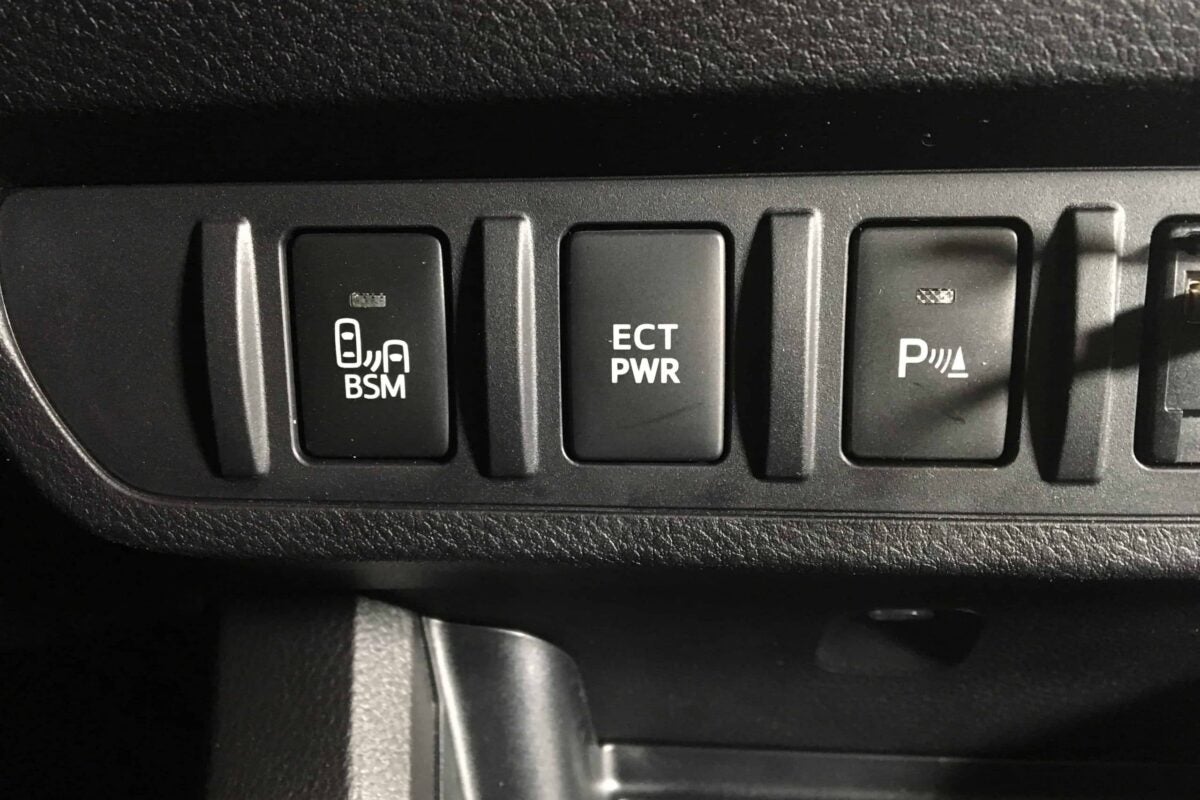
On many models, the setting is in the vehicle's settings menu, found in the multi-information display or the infotainment system, under the driver assistance or safety settings. Look for BSM or BSM/RCTA and choose on or off. Some models may combine BSM and RCTA into one setting, and some may use a dedicated button, so check your owner's manual for the exact steps for your model. Or visit us at Longo Toyota of Prosper and our team will be happy to show you.
BSM Light Not Working? Troubleshooting Tips
If you see a BSM or RCTA warning message, or the indicators aren't working, these steps may help:
- Clean the rear bumper: Dirt, snow, ice or mud near the rear corners of the bumper can block the radar sensors.
- Check for obstructions: Bike racks, trailer hitch accessories or items near the rear bumper can interfere with the sensors.
- Restart the vehicle: A temporary issue may clear after you turn the vehicle off and on again.
- Check your settings: Make sure BSM hasn't been turned off in the vehicle settings.
- Schedule service: If the message stays on, or the bumper was damaged in a minor impact, have the system inspected. You can schedule service online with our Toyota-trained technicians.
BSM Safety Benefits and Statistics
A study by the Insurance Institute for Highway Safety (IIHS) found that blind-spot detection lowers the rate of all lane-change crashes by 14% and the rate of lane-change crashes with injuries by 23%. Besides helping you avoid collisions when changing lanes and merging into traffic, having a blind-spot monitor on your vehicle can also make driving less stressful.
Frequently Asked Questions About Toyota BSM
What does BSM stand for on a Toyota?
BSM stands for Blind Spot Monitor. It uses radar sensors to detect vehicles in your blind spots and lights an indicator on the side mirrors to warn you.
What does it mean when the BSM light flashes?
A flashing BSM light usually means you've turned on your turn signal toward a lane where the system detects a vehicle. Wait until the lane is clear before moving over.
Can I turn off BSM on my Toyota?
On many models you can turn BSM on or off in the vehicle's settings. The exact steps vary by model, so check your owner's manual or ask our team.
What is the difference between BSM and RCTA?
BSM watches the lanes beside you while you drive. Rear Cross-Traffic Alert (RCTA) uses similar sensors to warn you about vehicles approaching from the side when you're backing up.
Come See How Toyota's BSM Works at Longo Toyota of Prosper
The best way to experience how Toyota's blind-spot monitoring system can help keep you and your family safe is to test-drive a Toyota. Visit us at Longo Toyota of Prosper and drive the model that fits you best. Our sales staff will explain how the system works and answer any questions you may have about its features. Contact us today to learn more about how Toyota's BSM can enhance your driving lifestyle.