

Longo Toyota of Prosper

Blog / Comparison

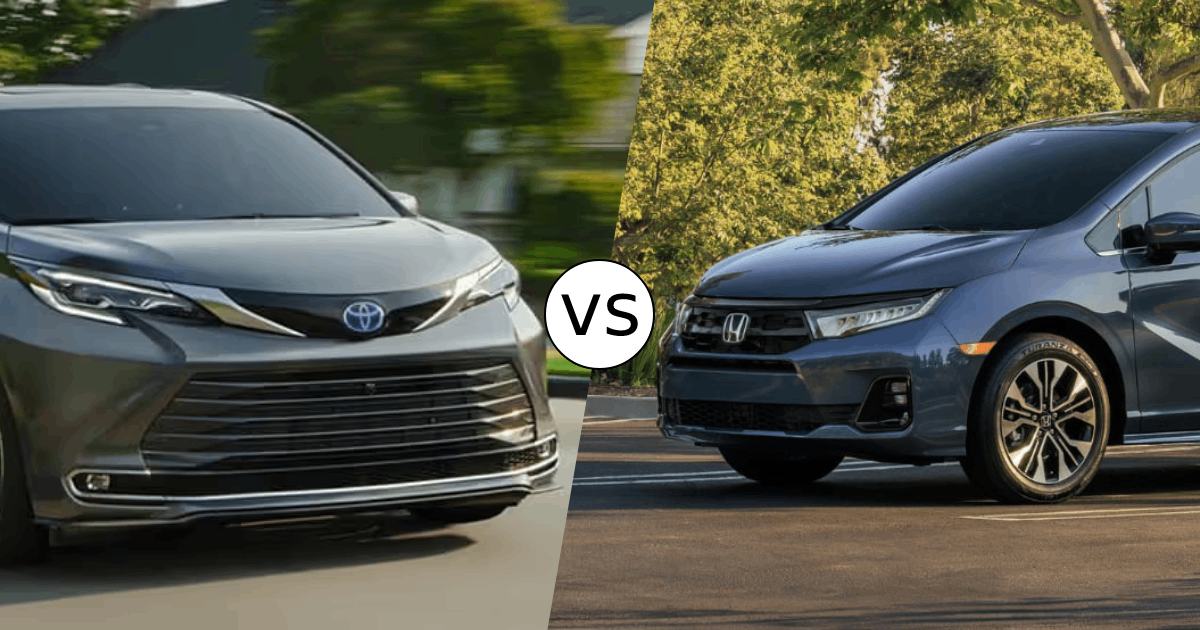
2025 Toyota Sienna vs. 2025 Honda Odyssey

2025 Toyota Sienna vs. 2025 Honda Odyssey

If you've already spent countless hours comparing the Sienna vs. the Odyssey, we're here to simplify things. These popular minivans are built to handle everything from carpools to long road trips, but there are some major differences worth considering. Read on for a head-to-head comparison of the 2025 Sienna and Odyssey, compiled by our experts at Longo Toyota of Prosper.

Performance and Powertrain

In terms of powertrain performance, the Sienna vs. Odyssey debate comes down to preference. Let's take a closer look at these Honda Odyssey vs. Toyota Sienna specs so you can decide which one deserves a spot in your driveway. The 2025 Toyota Sienna comes standard with an efficient hybrid engine. This 2.5-liter four-cylinder setup delivers 245 horsepower and earns an EPA-estimated 36 mpg in the city and on the highway. 

The Toyota Sienna's 0 to 60 mph time clocks in around 7.5 seconds with available all-wheel drive (AWD). While it may not be the fastest off the line, it offers a quiet and refined ride. On the other hand, the 2025 Honda Odyssey delivers a bit more punch with its 280-horsepower V-6 and 10-speed automatic transmission. The Odyssey Elite reaches 60 mph in just 6.4 seconds, but it can only manage up to 28 mpg on the highway and isn't available in AWD. 

At the end of the day, the Sienna's hybrid engine is hard to beat if you value fuel efficiency and lower long-term operating costs.

Toyota Sienna vs. Honda Odyssey Interior

The Sienna's cabin is plush, practical, and packed with family-friendly features. With up to 18 cupholders and a sliding center console with storage underneath, it's the perfect vehicle if you have kids. You can upgrade to the available second-row captain's chairs with ottomans or splurge on premium leather upholstery with contrast stitching for a touch of luxury. Higher trims also come with some unique add-ons, such as an onboard vacuum and refrigerator. 

Toyota built the Sienna to comfortably fit up to eight people with a generous 33.5 cubic feet of cargo space behind the third row. While the second row isn't removable, it slides 25 inches to make extra room for luggage and sizable grocery hauls. 

The new Honda Odyssey's eight-seater interior features Magic Slide second-row seats for flexible configurations. Removing them requires a little elbow grease, but it opens up an impressive 140.7 cubic feet of cargo space. Visibility, comfort, and storage all rate high. However, the Sienna includes more unique features for families who want practical convenience during long road trips. Before deciding between the Sienna or the Odyssey, you should take a look at which cabin feels better for you in person. 

Technology and Infotainment System

Next up, let's see how tech stacks up in the Odyssey vs. Sienna debate. Every Sienna comes with wireless Apple CarPlay and Android Auto, and even the entry-level LE trim includes an 8-inch touch screen and Wi-Fi Connect with integrated streaming. Choose the XLE Plus or higher trims to enjoy a crisp 12.3-inch touch screen, 12 JBL speakers, and available rear-seat entertainment with an 11.6-inch high-definition display. 

Honda also updated the Odyssey's system this year with a 9-inch touch screen and improved rear-seat entertainment. It's a solid move on Honda's part, but it still uses an older infotainment platform and lacks the personalization of Toyota's system. The Odyssey's HDMI port and cabin intercom are nice touches as well, but the Sienna's available head-up display and digital instrument cluster give off a more high-end experience. 

Safety and Reliability

Looking at Toyota Sienna vs. Honda Odyssey reviews reveals that both minivans have earned a five-star safety rating from the National Highway Traffic Safety Administration. Toyota Safety Sense 2.0 comes standard across all Sienna trims, incorporating advanced features such as adaptive cruise control, lane departure alert, lane tracing assist, and a pre-collision system with pedestrian detection. You'll also get a blind-spot monitor with rear cross-traffic alert and 10 airbags. Available upgrades include a Panoramic View Monitor and parking assist with automatic braking. 

The Odyssey counters with its own Honda Sensing suite, which includes adaptive cruise control, lane-keeping assist, and collision mitigation braking. It also adds convenience with a multi-angle rearview camera, CabinWatch, and CabinTalk to help monitor passengers. Switching gears to compare reliability, we have to give Toyota credit for its 10-year hybrid warranty and two years of complimentary maintenance. Honda's one-year maintenance plan is helpful but limited by comparison. 

Honda Odyssey vs. Toyota Sienna Price

Of course, when you compare the Toyota Sienna and the Honda Odyssey, pricing is a major factor. The Toyota Sienna's 2025 price in the U.S. starts around $39,485, making it more affordable at the entry level than the Odyssey, which begins at $42,220. For most families, we recommend the Sienna XLE or XSE trims. The XLE includes heated front seats, a power liftgate, and hands-free sliding doors, which are a nice thing to have when your hands are full. The sportier XSE trim adds larger wheels and a 12.3-inch touch screen. 

On the Honda side, the Odyssey's Sport-L trim is a popular pick, but it starts at $43,370. Top trims such as the Sienna Platinum climb to around $56,445, which is comparable to the Odyssey's Elite trim at $51,180. If you're leaning toward the Sienna and looking to get a competitive rate, our finance team at Longo Toyota of Prosper can help. Apply online today to get preapproved for financing or explore our current lease offers. 

Which Minivan Is Right for You?

So, which is better, the Honda Odyssey or the Toyota Sienna? There's only one way to find out. Now that you've compared the Toyota Sienna vs. Honda Odyssey, we invite you to schedule a test-drive to get behind the wheel of a 2025 Sienna. Contact us to schedule an appointment today, or visit us next time you're in Prosper, Texas.
Posted in:

Related Posts

Toyota Grand Highlander

2026 Toyota Grand Highlander vs. 2027 Kia Telluride: Why the Toyota Wins

Three-row SUV shoppers in North Texas have two strong options this year, but they're not equally matched. The 2026 Toyota Grand Highlander vs Kia Telluride comparison comes down to hybrid maturity, documented safety data, and standard equipment Toyota includes from the base trim up. The specs below show why the Grand Highlander comes out ahead. If you want to skip ahead, you can browse our current Grand Highlander inventory right now. 2026 Toyota Grand Highlander vs. 2027 Kia Telluride: At a Glance The 2026 Grand Highlander is a carryover year for us with no major non-hybrid changes, while the Telluride skipped 2026 entirely and returns for 2027 as a fully redesigned second generation. Spec Grand Highlander (Gas) Grand Highlander (Hybrid MAX) Telluride (Gas) Telluride (Hybrid) Engine 2.4L turbo 4-cyl Turbo 2.4L + electric motor Turbo 2.5L 4-cyl Turbo 2.5L 4-cyl + 2 electric motors Drivetrain FWD standard, AWD available AWD only FWD/AWD FWD/AWD Transmission 8-speed automatic 6-speed automatic 8-speed automatic 8-speed automatic Horsepower/Torque 265 hp 362 hp / 400 lb-ft 274 hp / 311 lb-ft 329 hp / 339 lb-ft Fuel Economy 21/28/24 mpg 26/27/27 mpg 22 combined FWD (20 city/26 hwy), 20 combined AWD (18 city/24 hwy) Up to 35 mpg combined (EX FWD), 31 mpg AWD Towing Up to 5,000 lb Up to 5,000 lb Up to 5,000 lb 4,500 lb Grand Highlander's hybrid lineup has established output figures and a proven fuel economy track record. We'll dig into that further below. Meet the 2026 Toyota Grand Highlander LE, XLE, and Limited: Everyday Value and Comfort The LE trim starts things off with 18-inch wheels, LED head and taillights, a power liftgate, wiper de-icers, and keyless entry and start. Fabric-trimmed three-row seating comes standard, along with an 8-way power driver seat and a 4-way manual passenger seat. Every Grand Highlander, including the LE, gets a 12.3-inch Toyota Audio Multimedia touchscreen with wireless Apple CarPlay and Android Auto standard, no upcharge required. Step up to the XLE and you'll find heated front seats, a wireless charger, second-row sunshades, and synthetic leather upholstery. An available 8-seat bench configuration and 18-inch silver alloy wheels round out the upgrades. The Limited trim adds a memory driver seat, heated and ventilated front seats, and 20-inch wheels. LE pricing starts at $42,260, XLE from $45,030, and Limited from $49,760. Platinum and Hybrid Trims: Efficiency Meets Luxury Hybrid powertrains are available across LE, XLE, Limited, Nightshade, and Platinum trims, so efficiency isn't locked behind a premium price tag. The standard hybrid pairs a 2.5-liter four-cylinder with an electric motor through a CVT, producing 245 hp with FWD or AWD availability. For drivers who want more muscle, the optional Hybrid MAX combines a turbocharged 2.4-liter engine with electric assist for 362 hp and 400 lb-ft of torque, paired exclusively with AWD. Platinum and Hybrid Nightshade trims add heated and ventilated second-row seats. The top Hybrid MAX Platinum brings a panoramic roof, a 10-inch head-up display, a digital rearview mirror with HomeLink, and Traffic Jam Assist through a Drive Connect trial or subscription. AWD adds $1,600 across the lineup and comes standard on Platinum. Meet the 2027 Kia Telluride Kia skipped the 2026 model year entirely, moving from the 2025 version straight to a redesigned 2027 model with a bigger, boxier body and a more functional third row. The LX starts at $39,190 before a $1,545 destination charge, with a 12.3-inch touchscreen, wireless Apple CarPlay and Android Auto, cloth upholstery, and a second-row bench for 8-passenger seating. The S adds captain's chairs at $42,090, and the EX starts at $43,790. Eight-passenger seating is not offered across the full lineup, which narrows Kia's family-hauling flexibility next to the Grand Highlander's broader bench availability. Higher trims move toward luxury and capability, with the X-Pro adding 9.1 inches of ground clearance, all-terrain tires, and a standard tow hitch. Pricing tops out at $56,790 for the X-Pro SX Prestige, and the LX is up nearly $3,000 over the outgoing generation. Exterior Design, Size, and Capability Compared The redesigned Telluride grew to a 116.9-inch wheelbase and 199.2 inches overall. The Grand Highlander runs a 116.1-inch wheelbase and stretches to 201.4 inches, making it the longer vehicle of the two by more than 2 inches, with that length going into the third row and cargo hold. Towing favors Toyota's hybrid lineup. Both the gas and Hybrid MAX Grand Highlander are rated at 5,000 lb, while the Telluride's hybrid drops to 4,500 lb. For North Texas families towing a boat to Lake Lewisville, the Hybrid MAX means no trade between capability and fuel savings. Interior Space, Comfort, and Cargo Room Cargo capacity is where the Grand Highlander separates itself once you start loading up. It offers 20.6 cubic feet with all seats up, 57.9 with the third row folded, and a maximum of 97.5 with all rear seats down, enough to stack seven carry-on suitcases behind the third row. Kia lists the gas Telluride at 22.3, 48.7, and 89.3 cubic feet, with the hybrid a cubic foot lower at each measurement. The Telluride holds a small edge with every seat occupied, but the Grand Highlander opens up more than 8 additional cubic feet when you fold everything flat. The third row tells a similar story. The Grand Highlander gives back-seat passengers 33.5 inches of legroom against the Telluride's 32.1, with headroom within a fraction of an inch. Toyota also offers eight-passenger bench seating across more of the lineup. If your third row carries adults regularly rather than occasionally, the Grand Highlander is the one built around that. Powertrain Performance and Fuel Efficiency Grand Highlander's standard gas engine is a 265-hp turbocharged four-cylinder paired with an 8-speed automatic, running FWD standard with AWD available for $1,600 more. FWD models return 21 mpg city, 28 highway, and 24 combined. The Telluride's gas engine is a turbocharged 2.5-liter four-cylinder producing 274 hp and 311 lb-ft, which is 17 hp less than the prior generation's 3.8-liter V6 but 49 lb-ft more torque. Reviewers have split on how that trade plays out in practice, with some noting the extra torque arrives early and others finding the four-cylinder less eager than the old V6 at higher revs. Toyota's 265-hp turbo four sits in the same neighborhood on output, and buyers who want real acceleration have the 362-hp Hybrid MAX available without leaving the lineup, an option Kia does not match on either powertrain. Why the Grand Highlander's Hybrid Advantage Matters Grand Highlander's standard hybrid delivers 245 hp with an EPA-rated 37 mpg city, 34 highway, and 36 combined on the FWD XLE, a fuel economy figure built on years of proven hybrid engineering. The Hybrid MAX pushes output to 362 hp and 400 lb-ft while still returning 26/27/27 mpg, giving drivers a genuine performance option without leaving efficiency behind. Kia's Telluride hybrid pairs its turbo 2.5-liter engine with two electric motors for 329 hp and 339 lb-ft, reaching up to 35 mpg combined in the best-case EX FWD trim or 31 mpg with AWD. Those numbers look competitive on paper. What's new is the combination: this turbo-hybrid powertrain is making its debut in a first-year redesign, and it's the first Kia hybrid assembled in the United States, at the company's West Point, Georgia plant. That means there is no model-specific reliability data for it yet. Toyota's hybrid system, by contrast, has been refined across multiple generations, and Consumer Reports singled out the Grand Highlander Hybrid as a standout performer in its 2026 reliability survey. Toyota also backs the hybrid battery for 10 years or 150,000 miles. That combination counts for something if you're commuting across North Texas daily or planning a long road trip with three rows packed full of gear. Technology, Safety, and Driver-Assist Features Every Grand Highlander trim, starting with the LE, comes standard with Toyota Safety Sense 3.0, adaptive cruise control, lane-keeping assist, automatic emergency braking, blind-spot monitoring, and rear cross-traffic alert. The 12.3-inch touchscreen with voice control is standard across the board too, so you're not paying extra for baseline safety and connectivity. IIHS has put the Grand Highlander through the full battery, and the results are on the record. It earned good ratings in passenger-side small overlap, moderate overlap, and updated side impact, plus superior marks for daytime and nighttime pedestrian crash prevention. An acceptable driver-side small overlap rating keeps it out of Top Safety Pick contention, though the dummy measurements showed no elevated injury risk to front occupants. The redesigned 2027 Telluride has not been crash-tested by IIHS or NHTSA at all. One side has a published picture, the other has nothing yet. Pricing, Reliability, and Long-Term Value On paper, the Telluride's LX starts lower at $39,190 (before destination) compared to the Grand Highlander LE's $41,360. The Telluride S starts at $42,090 and the EX at $43,790, compared to our XLE at $44,130 and Limited at $48,860. Reliability is where the long-term math shifts firmly in Toyota's favor. Consumer Reports ranked Toyota the #1 most reliable brand for 2026 with a reliability score of 66, ahead of Subaru at 63 and Lexus at 60. J.D. Power's dependability studies consistently place Toyota and Lexus at the top of the industry. Kelley Blue Book's expert reviews also point to the Grand Highlander's strong resale value, tied directly to Toyota's reliability reputation. When it comes to Kia Telluride vs Toyota Grand Highlander reliability, the data favors Toyota's track record over Kia's brand-new hybrid system with no history yet. Final Verdict: Why the 2026 Toyota Grand Highlander Wins Line up the Toyota Grand Highlander vs Kia Telluride specs side by side, and the Grand Highlander wins on the factors that matter most for long-term ownership. Grand Highlander offers broader 8-passenger seating availability across the lineup, a hybrid powertrain with a proven track record and documented fuel economy, standard safety technology backed by real IIHS crash-test data, and reliability rankings that lead the industry according to Consumer Reports and J.D. Power. The Telluride brings bold styling and strong base-trim value, but Kia is asking buyers to sign on for a redesign with no crash-test results and a first-generation hybrid system. For families comparing Highlander vs Telluride or Grand Highlander vs Telluride options in North Texas, the Grand Highlander delivers verified performance where the Telluride is still asking buyers to take it on faith. Test Drive the Grand Highlander at Longo Toyota of Prosper We'd rather you experience these numbers firsthand than just read about them. Longo Toyota of Prosper operates from a $25 million, 15-acre facility at 2100 West University Drive in Prosper, Texas, and we've proudly carried the title of the nation's #1 volume Toyota dealership for over 55 years. Explore a virtual test drive from home, or browse our current Grand Highlander inventory to find the trim that fits your family. When you're ready to talk specs, financing, or scheduling a visit, contact our team and we'll get you behind the wheel.

Front of Toyota Corolla

2026 Toyota Corolla vs. Subaru Impreza: Which Compact Car Wins?

Shopping for a compact car in 2026 puts you right in the middle of a genuine toss-up, especially once the 2026 Toyota Corolla and 2026 Subaru Impreza land on your shortlist. Both cars deliver dependability and modern tech at a reasonable price point, just through completely different approaches. This comparison walks through pricing, powertrains, technology, safety, and total cost of ownership so you can see where each model actually earns its keep. Want to skip ahead? You can explore the 2026 Corolla inventory at Longo Toyota of Prosper anytime. 2026 Toyota Corolla vs. Subaru Impreza: Two Compact Contenders On the surface, these cars occupy the same lane: affordable, reliable compacts with modern safety gear and manageable running costs. Dig a little deeper and the split becomes obvious. The Corolla is a refined, fuel-efficient sedan and hatchback built around comfort and long-term value. The Impreza goes a different direction, offering standard all-wheel drive and a hatchback-first design aimed at drivers who deal with rough weather or uneven roads on a regular basis. Neither one is a wrong choice here. It really comes down to matching the car to your daily driving, and the numbers below make that call a lot easier. Meet the 2026 Toyota Corolla The Corolla has spent decades earning its spot as one of the best-selling compact cars on the planet. The 2026 model carries that momentum forward with sharper styling, refreshed tech, and a trim lineup that spans a range of budgets without skimping on quality. Trim Lineup and Pricing The 2026 Corolla comes in LE, SE, and XSE gas trims, along with LE, SE, and XLE hybrid trims. Pricing starts around $23,125 for the LE sedan and climbs to roughly $28,840 for the XSE hatchback, with the hybrid XLE starting near $29,340. Every trim brings genuine feature upgrades rather than just cosmetic tweaks, and even the base model includes an 8-inch Toyota Audio Multimedia touchscreen with wireless Apple CarPlay® and Android Auto™, plus standard Toyota Safety Sense™ 3.0. These figures reflect pricing at publish time and can shift, so it's worth contacting our team to confirm current numbers before your visit. Standout Features and Design The exterior wears Toyota's current design language well, and the cabin feels thoughtfully laid out for both driver and passengers. Upper trims add available JBL® premium audio, giving the interior a near-premium feel despite the compact footprint. Toyota Safety Sense™ 3.0 ships standard on every Corolla trim, covering Pre-Collision System with Pedestrian Detection, Lane Departure Alert with Steering Assist, Lane Tracing Assist, and Road Sign Assist. Finding that much safety hardware standard at this price point isn't common. Toyota backs the Corolla with a 3-year/36,000-mile basic warranty and 5-year/60,000-mile powertrain warranty, and you can browse our new vehicles to find the trim that fits. Meet the 2026 Subaru Impreza Subaru built the Impreza around a single idea: all-wheel drive belongs standard, not as a pricey option. The 2026 Impreza sticks with that promise while sharpening its tech and interior quality along the way. Trim Lineup and Pricing The Impreza keeps its lineup lean, just Sport and RS trims. Sport starts around $26,595, and RS starts near $29,495, both before destination fees. Every trim includes Subaru's Symmetrical All-Wheel Drive, which separates it from most front-wheel-drive rivals in this price range. Standard equipment covers an 11.6-inch touchscreen with Apple CarPlay® and Android Auto™, plus EyeSight® Driver Assist Technology. Worth flagging: that AWD system adds weight and mechanical complexity, and it shows up in the base price. A front-wheel-drive Corolla at a matching trim typically costs less than the Impreza, though drivers dealing with snow, rain, or rough roads might see the extra cost as a fair trade. Standout Features and Design The 2026 Impreza comes primarily as a hatchback, giving it an edge over the Corolla sedan when it comes to cargo flexibility. The rear hatch opens to a usable cargo area that expands further once you fold the rear seats down, a real plus for active drivers or anyone regularly hauling gear. EyeSight® handles pre-collision braking, adaptive cruise control, lane centering, and lane departure warning across every trim. Build quality has climbed in recent model years, and the 2026 version shows it through better materials and tighter panel gaps. Corolla vs. Impreza: Specs Side-by-Side Here's how the powertrains and fuel economy stack up across trims, based on manufacturer and EPA data: Model / Trim Engine Horsepower Transmission Fuel Economy (combined) Corolla LE/SE/XSE (gas) 2.0L Dynamic Force 4-cylinder 169 hp / 151 lb-ft Dynamic Shift CVT ~35 mpg Corolla LE/SE/XLE (hybrid) 1.8L 4-cylinder Hybrid 138 hp combined CVT up to 50 mpg Impreza Sport 2.0L 4-cylinder 152 hp CVT ~29 mpg Impreza RS 2.5L 4-cylinder 180 hp CVT ~29 mpg Both cars run on regular unleaded fuel. The Corolla's front-wheel-drive setup and hybrid option hand it a clear efficiency edge, while the Impreza's standard AWD trades some fuel economy for year-round traction. Fuel Efficiency and Everyday Running Costs Fuel economy is where the Corolla really separates itself. The gas Corolla posts roughly 35 mpg combined per EPA estimates, and the hybrid climbs as high as 50 mpg combined. For drivers commuting daily across Prosper and North Texas, where highway miles and summer heat are just part of the routine, those numbers translate into real pump savings over a year of ownership. The Impreza's AWD system adds rotational mass and drivetrain complexity, which nudges fuel consumption down to around 29 mpg combined for the Sport and 29 mpg combined for the RS. The gap isn't massive, but it's consistent enough to matter if you're watching your budget closely. Toyota's total cost to own for the Corolla LE sedan tends to stay competitive, reflecting the efficiency and reliability savings that build up over time. Want exact figures for your specific trim? Contact our team and we'll walk you through current numbers. Insurance and maintenance costs land in a similar range for both models, though Toyota's larger dealer network often means better labor pricing and easier parts access in most areas. Technology, Safety, and Driver-Assist Features Both cars take safety seriously and pack strong standard driver-assist suites. Toyota Safety Sense™ 3.0 on the Corolla and EyeSight® on the Impreza cover the essentials: automatic emergency braking, lane keeping assist, adaptive cruise control, and automatic high beams. On paper, they're closely matched, and both platforms meet current NHTSA and IIHS testing standards. In real-world use, both systems hold up reliably. The Corolla's Toyota Audio Multimedia interface feels intuitive, especially for drivers who aren't glued to tech, and available JBL® audio adds a premium touch on higher trims. Subaru's larger 11.6-inch touchscreen offers more screen real estate, though some drivers find its menu layout less refined than the Corolla's. Connectivity holds up well on both, with wireless Apple CarPlay® and Android Auto™ available across most trims. The Corolla's available digital instrument cluster gives it a slight edge in feeling modern, though the Impreza still holds its own with solid hardware throughout the range. Reliability, Resale Value, and Total Cost of Ownership This is where the Corolla pulls ahead most convincingly. Toyota's reputation for long-term reliability is well documented, and the Corolla is one of the brand's clearest proof points. Ownership costs over five years tend to stay low thanks to infrequent mechanical issues, affordable parts, and a wide network of trained technicians who know the platform inside and out. Resale value is another win for the Corolla. It consistently ranks among the best in its class for retained value, which matters if you plan to sell or trade in down the road. The gap between what you paid and what you get back tends to run smaller with a Corolla than with most competitors. The Impreza holds up reasonably well too, and Subaru has made real progress on long-term dependability in recent years. Toyota's track record still sets the benchmark for the compact class, though, and the Impreza's AWD system brings extra components that could need attention at higher mileage, something worth keeping in mind if you plan to hold onto the car long-term. Which Compact Car Comes Out Ahead? For most Prosper and North Texas drivers, where harsh winters aren't a major concern and highway commuting is a daily reality, the numbers favor the Corolla: Fuel efficiency: The Corolla's 35 mpg gas rating and up to 50 mpg hybrid option beat the Impreza's ~29 mpg combined. Technology: Both offer solid connectivity, but the Corolla's Toyota Audio Multimedia system and available JBL® audio edge out the Impreza's larger but less intuitive display. Safety: Toyota Safety Sense™ 3.0 and EyeSight® are closely matched on paper, giving both vehicles strong safety credentials. Total cost of ownership and resale value: The Corolla's roughly $46,688 five-year cost to own, paired with Toyota's strong resale reputation, gives it a clear long-term value advantage. Where the Impreza leads: Standard all-wheel drive and hatchback cargo flexibility make the Impreza a legitimate pick for drivers who regularly deal with snow, rain, or uneven terrain. For buyers prioritizing fuel efficiency, technology, safety, and long-term value, the 2026 Toyota Corolla comes out as the stronger overall choice in this comparison. Explore the 2026 Corolla at Longo Toyota of Prosper Why Buy Here If the 2026 Toyota Corolla sounds like your fit, Longo Toyota of Prosper can help you land on the right trim and walk through your options with zero guesswork. Located at 2100 W. University Drive in Prosper, TX, our dealership is part of the Longo Toyota family, recognized as the number-one volume Toyota dealership in the nation for over 55 years. Our in-house finance team can walk you through flexible loan and lease options, with online pre-approval available if you'd rather get a head start before visiting. Factory-trained Toyota technicians are on-site for maintenance, warranty work, and repairs after the sale, so your ownership experience doesn't end the moment you drive off the lot. Get Started Today Reach the sales team at 972-347-4929, Monday through Saturday from 8:30 AM to 8:30 PM, or contact our team to schedule your visit. You can also explore the 2026 Corolla inventory online before you come in. The 2026 Corolla is worth seeing in person, and the team at Longo Toyota of Prosper knows every detail of the model inside and out.

Toyota Prius

2026 Toyota Corolla vs. Toyota Prius: Efficiency, Style, and Performance Compared

The Corolla and Prius have earned loyal followings for good reason, and both lean on Toyota's reputation for reliability and long-term value. Still, they serve different drivers. Comparing the 2026 Toyota Corolla vs Toyota Prius means figuring out which one matches your daily routine, whether that's a Prosper commute on US-380, highway trips across North Texas, or hauling gear on the weekend. The Corolla appeals to drivers who want a refined, familiar sedan experience without giving up modern tech or fuel efficiency. Prius buyers tend to chase something different: higher MPG and a bolder, more forward-thinking design. Knowing your own priorities before you sit in the driver's seat makes the decision much easier. 2026 Toyota Corolla: Trim Lineup and Standout Features The 2026 Corolla lineup splits into gas and hybrid trims. Gas trims (LE, SE, XSE) run on a 2.0L Dynamic Force 4-cylinder engine producing 169 hp and 151 lb-ft of torque, with the LE rated at 32 city / 41 highway / 35 combined MPG. Moving up to the XSE adds heated SofTex® seats, a 12.3-inch digital instrument cluster, and an available power tilt sliding moonroof. On the hybrid side, the lineup (Hybrid LE, Hybrid SE, Hybrid XLE) pairs a 1.8L 4-cylinder engine with an electric motor for a net 138 hp. The Hybrid LE FWD returns 53 city / 46 highway / 50 combined MPG, while the Hybrid LE AWD comes in at 51 city / 44 highway / 48 combined MPG thanks to Toyota's Electronic On-Demand AWD system, a useful option for the occasional wet or icy North Texas morning. Every Corolla trim includes Toyota Safety Sense 3.0, 10 airbags, and the Star Safety System™, and hybrid models can be equipped with a multi-link rear suspension for a more composed ride. Build consistency is where the Corolla earns its keep. Toyota has prioritized solid construction and mechanical longevity in this model for years, and the 2026 version continues that track record. For shoppers who want efficiency in a conventional sedan package, the Corolla Hybrid delivers without asking you to sacrifice comfort or a familiar driving feel. 2026 Toyota Prius: Trim Lineup and Standout Features The 2026 Prius has come a long way from earlier generations. Gone is the purely utilitarian look; in its place is a sharper, bolder identity. The hatchback silhouette is genuinely striking, with a low roofline and strong character lines. The cabin follows through with an upscale feel built around the driver. All Prius trims (LE, XLE, Nightshade, Limited) run on a 2.0L 4-cylinder hybrid engine paired with electric motors, producing 194 net combined hp in FWD configuration and up to 196 net combined hp with AWD, which is available across the entire lineup. That's worth noting for anyone in North Texas who wants extra traction during occasional wet or icy stretches. The LE trim leads the lineup in efficiency at 57 city / 56 highway / 57 combined MPG, while the XLE, Nightshade, and Limited trims land at 52 city / 52 highway / 52 combined MPG. An 8-inch touchscreen is standard, growing to 12.3 inches on the Limited trim, which also adds heated and ventilated SofTex® seats and a fixed glass roof. The Nightshade trim brings blacked-out exterior accents and dark wheels for a more aggressive look. Credit the Prius's low drag coefficient and lighter weight for those efficiency numbers, and for the sportier steering and firmer suspension feel compared to the Corolla. Prius trims typically carry a higher starting price than Corolla Hybrid trims. That gap tracks with the extra performance and standard AWD you get across the lineup. Current pricing and trim availability can be checked directly through Longo Toyota of Prosper's new inventory. Efficiency, Style, and Performance: Key Differences Both models carry Toyota's hybrid engineering forward, but they approach efficiency and driving dynamics from different angles. Fuel Economy and Hybrid Technology Compared The Prius LE leads the segment at 57 combined MPG, while the Corolla Hybrid ranges from 48 to 50 combined MPG depending on trim and drivetrain. Both vehicles use an ECVT and blend electric motor assist with gasoline power for smooth, quiet acceleration, which helps in stop-and-go North Texas traffic and takes some of the sting out of the mileage hit that summer AC use usually causes. Drivers who rank maximum fuel savings above everything else will find the Prius has a consistent edge, but the Corolla Hybrid still offers a meaningful upgrade over its gas counterpart for budget-conscious commuters. Trim Powertrain Horsepower Fuel Economy (city/hwy/combined) Drivetrain Safety Suite Corolla LE (gas) 2.0L Dynamic Force 169 hp 32 / 41 / 35 MPG FWD Toyota Safety Sense 3.0 Corolla Hybrid LE (FWD) 1.8L Hybrid 138 hp 53 / 46 / 50 MPG FWD Toyota Safety Sense 3.0 Corolla Hybrid LE (AWD) 1.8L Hybrid 138 hp 51 / 44 / 48 MPG AWD Toyota Safety Sense 3.0 Prius LE 2.0L Hybrid 194 hp (FWD) / 196 hp (AWD) 57 / 56 / 57 MPG FWD or AWD Toyota Safety Sense 3.0 Prius XLE/Nightshade/Limited 2.0L Hybrid 194 hp (FWD) / 196 hp (AWD) 52 / 52 / 52 MPG FWD or AWD Toyota Safety Sense 3.0 Design, Comfort, and Driving Feel Compared The Corolla's design leans on refined familiarity. It's approachable and well-proportioned, equally at home in a corporate parking lot or a grocery store pickup lane. The cabin is comfortable and neatly laid out, with seating that supports both front and rear passengers. Behind the wheel, the Corolla feels confident and responsive, with steering and suspension tuning that favor comfort while still offering some feedback. The Prius goes all in on a smooth, hushed ride that backs up its efficiency-first mission, plus a sportier steering feel that comes from its lighter weight and lower drag coefficient. Cabin noise stays low at highway speeds, and because it's a hatchback, the Prius has a real cargo advantage over the Corolla sedan. That makes it the better fit for anyone who's regularly loading up gear for a weekend trip or coming home from a big grocery run. Which Toyota Fits Your Driving Style? Choosing between the 2026 Corolla and Prius comes down to what your daily drive looks like and what you value most behind the wheel. Choose the Corolla if: You want a traditional sedan feel with familiar proportions and easy visibility You're a value-focused buyer who wants efficiency without a higher starting price You have a family and prioritize a straightforward, low-maintenance ownership experience You commute mostly on surface streets and don't need AWD as often Choose the Prius if: You want the highest MPG available in this comparison for long highway commutes You're drawn to a more distinctive, tech-forward design and cabin You need extra cargo flexibility from a hatchback body style You want AWD available across every trim for added confidence in occasional wet or icy North Texas conditions Both vehicles come standard with Toyota Safety Sense 3.0, and either one should hold its value well down the road, which is typical for Toyota hybrids. Either way, you're getting the long-term dependability Toyota has built its name on for decades. Test Drive the 2026 Corolla or Prius at Longo Toyota of Prosper Specs and comparisons only get you so far. Sitting in both vehicles, adjusting the seat, and pulling out of the lot tells you a lot more about which one actually suits you. Visit Our Prosper Showroom Longo Toyota of Prosper makes that process easy and pressure-free at 2100 W. University Drive, Prosper, TX 75078. As part of the Longo Toyota family, ranked the number one volume Toyota dealership in the nation for more than 55 years, we bring deep product knowledge and a customer-first approach to every conversation. Our sales team is on hand Monday through Saturday from 8:30 AM to 8:30 PM and can be reached at 972-347-4929. Whether you're weighing the Corolla Hybrid against the Prius or exploring financing, our in-house finance team can walk you through flexible leasing and loan options, including online pre-approval. Once you've picked your car, our on-site service center keeps it running well, staffed by factory-trained Toyota technicians using genuine Toyota parts. Service hours run Monday through Friday from 7 AM to 7 PM and Saturday from 7 AM to 3 PM; reach the service department at 972-347-4966. Schedule Your Test Drive You can reach out directly to our team to schedule a test drive or ask questions before you visit. The right Toyota is out there, and coming in to drive both is the best way to find it.