

Longo Toyota of Prosper

Blog / Comparison

Blog

All Comparison Local New Inventory Car Tips Review Car Maintenance Tips DIY Hybrid Prosper Toyota Dealer Prosper Toyota Service Prosper Used Cars
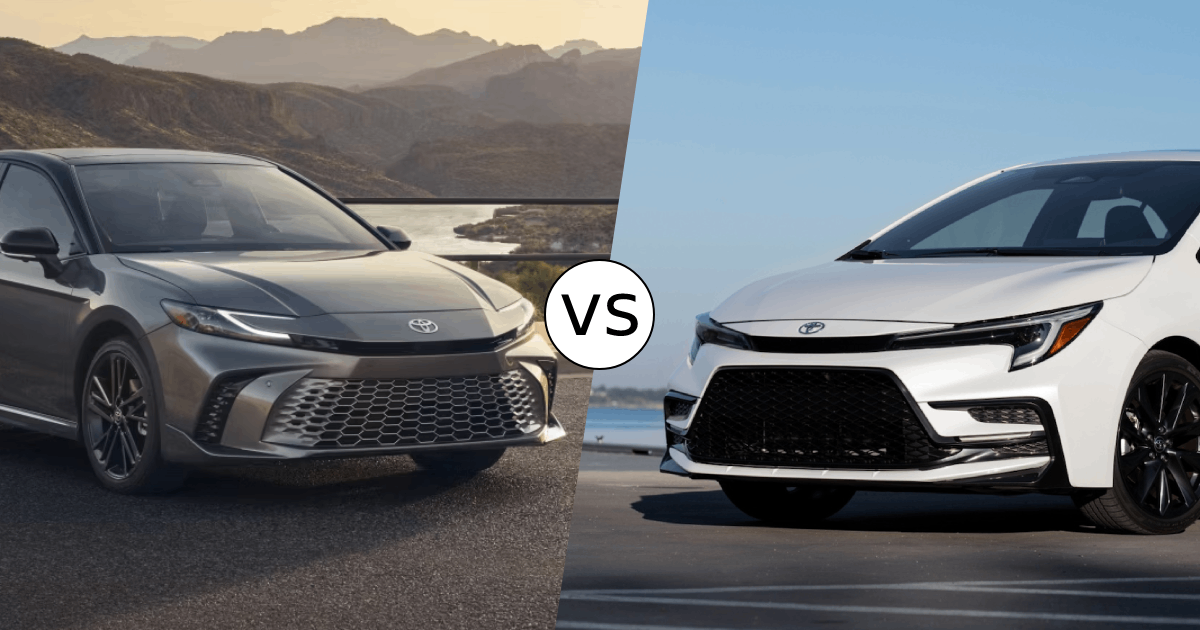
2026 Toyota Camry vs. Toyota Corolla

2026 Toyota Camry vs. Toyota Corolla: Which Sedan Is Right for You?

When customers come to us asking about the 2026 Toyota Camry vs. Toyota Corolla, the conversation is almost always the same: both sedans are genuinely excellent, but they're built for different drivers. One leans into space, hybrid power, and a more premium feel. The other offers a compact, practical package that works well across a wide range of lifestyles. If you're weighing this decision, we put this comparison together to help you figure out exactly which sedan fits your life. Browse our new Toyota inventory to see what's available while you read. more Meet the 2026 Toyota Camry: A Midsize Sedan Gone Fully Hybrid The 2026 Camry goes all-hybrid across the entire lineup. Buyers no longer have to choose between performance and efficiency. Whether you're drawn to the refined interior or the broad trim selection, the Camry arrives better equipped and more capable than any previous generation. A Cabin Built for Comfort and Space Step inside the 2026 Camry and the first thing you notice is how much room there is. The midsize platform gives passengers genuine legroom and headroom, which works well for taller adults and longer drives across North Texas. The trunk is also noticeably larger than what the Corolla offers, adding real practicality for daily hauling or weekend travel. Toyota has prioritized quality materials and integrated technology in a way that feels intentional rather than overcrowded. Hybrid Power That Performs and Saves Going fully hybrid pays off in two directions. The 2026 Camry's 2.5-liter hybrid system produces 225 hp with FWD or 232 hp with AWD, and the acceleration is genuinely surprising if you're not expecting it. Fuel economy reaches up to 52 city / 51 combined on the LE FWD, with the hybrid system delivering strong efficiency across every trim in the lineup. For drivers logging longer commutes between Prosper and the DFW area, those numbers add up quickly at the pump, and the Camry holds its own against most midsize sedans in this class. Camry Trims: LE to XSE The Camry lineup spans five trims: LE, SE, Nightshade Edition, XLE, and XSE. The LE is the entry point, well-equipped without stretching the budget. Moving up through the SE and XLE brings upgraded interior materials, larger displays, and more driver assistance technology. The XSE delivers a sportier aesthetic and a more spirited character. Whether you want luxury appointments, the latest tech, or a more engaging drive, there's a trim built around that priority. Meet the 2026 Toyota Corolla: Compact, Capable, and Versatile The Corolla has been one of the best-selling cars in the world for decades, and its 2026 version shows why that popularity holds. Where the Camry leans into size and performance, the Corolla offers a smaller footprint with smart, practical design that works well for a wide range of drivers. A Right-Sized Footprint That Fits Your Life Urban and suburban drivers tend to fall in love with the Corolla quickly. It's easier to maneuver in traffic, simpler to park in tight spaces, and lighter on the road in general. Toyota hasn't sacrificed comfort to achieve that compactness, though. The interior remains well-organized with enough room for daily passengers and a functional cargo area. For commuters or smaller households, the Corolla's size often makes day-to-day life easier without feeling like a trade-down. Gas or Hybrid: The Corolla Gives You the Choice Unlike the Camry's all-hybrid approach, the Corolla lets you choose your powertrain. The standard gas trims (LE, SE, XSE) deliver around 169 hp and up to approximately 35 MPG combined. Ownership costs stay low and maintenance is straightforward. The Corolla Hybrid steps things up considerably, reaching up to approximately 50 MPG combined with around 138 hp. Not every driver wants or needs a hybrid, and the Corolla's lineup respects that with genuine options either way. 2026 Toyota Camry vs. Toyota Corolla: Head-to-Head Comparison Putting the two sedans side by side across key categories makes the differences much clearer. Category 2026 Toyota Camry 2026 Toyota Corolla Size / Interior Space Midsize; larger cabin and trunk Compact; smaller footprint, efficient interior Performance / Powertrain 2.5L hybrid; 225 hp (FWD) / 232 hp (AWD) Gas: ~169 hp; Hybrid: ~138 hp Fuel Efficiency Up to 51 MPG combined (hybrid-only) Gas: Up to 35 MPG combined; Hybrid: Up to 50 MPG combined Value / Appeal Broader trim range; more premium positioning Lower entry price; wider powertrain flexibility Size and Interior Space The Camry wins this category outright. As a midsize sedan, it offers more interior volume with greater passenger room and a larger cargo area. Families or frequent travelers who need flexibility will find the Camry more accommodating. The Corolla uses its footprint efficiently, but it can't match the Camry's overall size. For drivers who regularly carry passengers or move larger loads, this difference is meaningful. Performance and Powertrain The Camry's hybrid system delivers more horsepower and a noticeably more energetic feel behind the wheel. Both sedans use continuously variable transmissions that help optimize power delivery, but the Camry's sportier trims add a layer of engagement the Corolla's lineup doesn't quite match. The Corolla's powertrain is smooth and reliable, tuned more for efficiency than excitement. Drivers who enjoy a spirited feel on the highway will likely prefer the Camry. Fuel Efficiency This comparison might surprise some shoppers. Because the 2026 Camry is fully hybrid, its fuel economy rivals or exceeds the standard Corolla gas model across all configurations. The Corolla Hybrid is efficient in its own right at up to 50 MPG combined, but the Camry's system, paired with its larger engine, stays genuinely competitive. For long-distance drivers or heavy commuters, the Camry's efficiency is a real selling point rather than a compromise. Value and Starting Price The Corolla carries a lower starting price, and that matters. For first-time buyers, younger drivers, or anyone working within a tighter budget, the Corolla offers solid transportation with good technology and strong safety features at a price that's hard to argue with. The Camry asks for more upfront but returns more cabin space, a more powerful hybrid system, and a wider trim selection. Whether that added investment makes sense depends on what you actually need from your next vehicle. Which Toyota Sedan Is the Right Fit for You? Both sedans have a clear audience. Matching each one to your situation makes the decision easier than comparing spec sheets alone. The 2026 Camry is the stronger pick if you: Frequently drive with passengers or need extra cargo room Log significant highway miles and want strong hybrid fuel savings Want AWD capability or a sportier trim like the XSE Prefer a more premium cabin feel in your daily driver The 2026 Corolla is the stronger pick if you: Want a lower entry price with room to grow into a higher trim Prioritize easy parking and maneuverability in North Texas suburban traffic Prefer the flexibility to choose between gas and hybrid powertrains Are a first-time buyer or commuter who wants proven reliability at a practical price Both sedans reflect Toyota's long track record of dependable engineering. Whichever you choose, you're getting a well-built car backed by one of the most trusted automotive brands in the world. Explore the 2026 Toyota Camry and Corolla at Longo Toyota of Prosper The best next step is getting behind the wheel yourself. Longo Toyota of Prosper carries both the 2026 Camry and Corolla, giving you the chance to experience how each sedan actually feels rather than just how it reads on a spec sheet. Located at 2100 W. University Drive in Prosper, TX, we serve North Texas drivers with a straightforward, customer-first approach backed by the legacy of the number one volume Toyota dealership in the nation for over 55 years. Our team can walk you through every trim level, explain the hybrid powertrain differences in plain terms, and help you find a financing or leasing arrangement that works for your budget. You can reach us directly at 972-347-4929 during sales hours, Monday through Saturday from 8:30 AM to 8:30 PM, or contact our team online to schedule a test drive or check current inventory. Whichever sedan turns out to be your match, we'll make sure you leave with confidence in your decision.

2026 Toyota Tundra vs. Ford F-150

2026 Toyota Tundra vs. Ford F-150

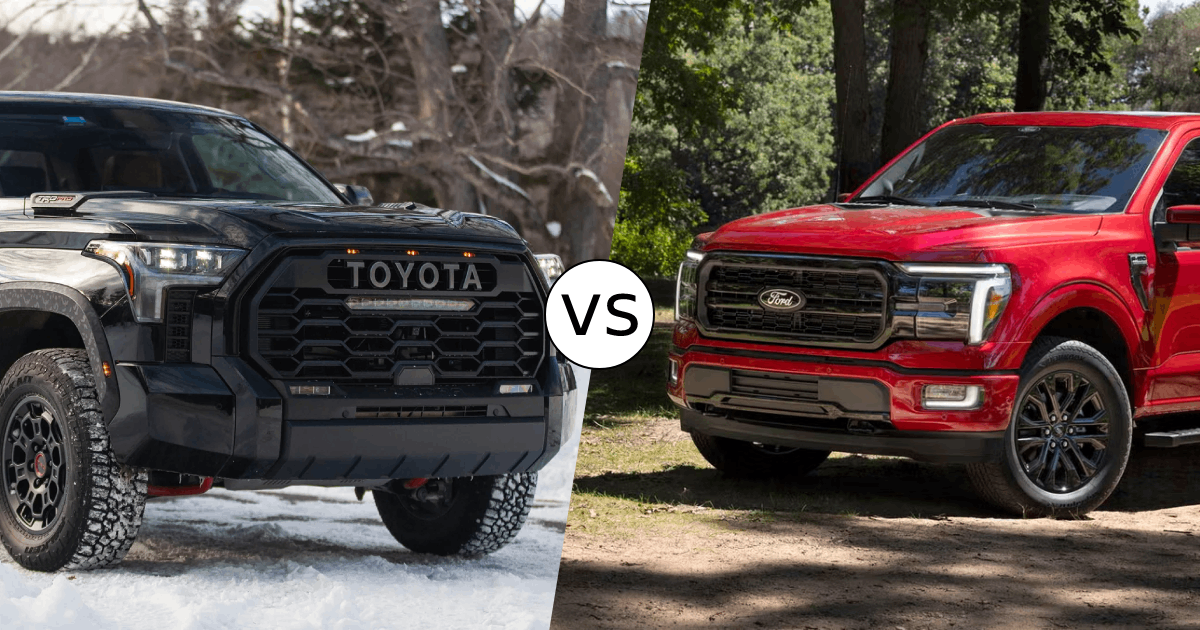
When North Texas truck buyers stack the 2026 Toyota Tundra against the Ford F-150, the comparison comes down quickly to what actually matters: performance under load, long-term dependability, and real ownership value. Both trucks earn serious consideration, but the Tundra consistently pulls ahead where it counts. We've put these two through a thorough head-to-head comparison, and our verdict is clear. If you're ready to see what's available right now, you can browse our Tundra inventory and find the configuration that fits your needs. The Tundra's 2026 story is one of continued refinement. Toyota has built on a strong foundation with the i-FORCE MAX hybrid powertrain, a well-earned durability reputation, and an interior that competes with premium trucks. It's a pickup that works just as well for a construction crew as it does for a weekend road trip with the family. This breakdown covers every angle that matters. more Head-to-Head Comparison: 2026 Tundra vs. F-150 Key Specs Putting these two trucks side by side shows a detailed but meaningful picture. The i-FORCE MAX delivers stronger horsepower, torque, and payload numbers, while the F-150 PowerBoost edges ahead in fuel economy and holds a narrow 150-lb towing advantage. The Tundra's 22 mpg combined (RWD) versus the F-150 PowerBoost's 25 mpg combined (RWD configurations) is an honest gap worth acknowledging, particularly for buyers with long daily commutes. But for buyers who prioritize horsepower, payload, and long-term warranty coverage on the hybrid system, the Tundra's advantages are more consequential. Specification 2026 Toyota Tundra Hybrid 2026 Ford F-150 Hybrid Engine 3.4L twin-turbo V6 + hybrid 3.5L twin-turbo V6 + hybrid Horsepower 437 hp 430 hp Torque 583 lb-ft 578 lb-ft Transmission 10-speed automatic 10-speed automatic Max Towing 11,450 lbs 11,600 lbs Max Payload 1,850 lbs 1,740 lbs EPA Combined (RWD) 22 mpg 25 mpg Hybrid Battery Warranty 10 years/150,000 miles 8 years/100,000 miles The F-150 PowerBoost holds a narrow 150-lb towing advantage and a real fuel economy edge, and we won't pretend otherwise. But the Tundra's payload lead, higher horsepower and torque output, standard safety technology, and longer hybrid battery warranty coverage add up to a stronger overall package for hybrid-truck buyers focused on long-term ownership. Powertrain Performance: Where the Tundra Sets the Standard Power and efficiency used to be opposites in the truck world, but the 2026 Tundra challenges that assumption directly. i-FORCE MAX Hybrid vs. F-150 PowerBoost: Power Meets Efficiency Toyota's i-FORCE MAX hybrid system pairs a 3.4L twin-turbocharged V6 with an electric motor integrated directly into the transmission, producing 437 horsepower and 583 lb-ft of torque. That torque arrives the moment you touch the accelerator, which is a genuine advantage when merging onto a highway with a loaded trailer or pulling out of soft terrain around Prosper. The F-150 PowerBoost hybrid is a capable system, producing 430 horsepower and 578 lb-ft of torque, with no real questions about its capability. But the Tundra's hybrid architecture is specifically tuned for performance under load. Where the PowerBoost leans into fuel savings, the i-FORCE MAX prioritizes the kind of urgent power delivery that matters in demanding situations. Towing, Payload, and Real-World Capability The i-FORCE MAX hybrid system delivers up to 11,450 lbs of max towing capacity, backed by standard integrated trailer brake control and trailer sway control. The Tundra's gas-only i-FORCE V6 pushes that figure to 12,000 lbs for buyers who prioritize maximum towing over hybrid efficiency. In a hybrid-to-hybrid matchup, Ford's F-150 PowerBoost holds a narrow 150-lb edge at 11,600 lbs, though reaching that figure requires the Tow/Haul Package and Max Tow Axle upgrade, which add to the purchase price. On payload, the hybrid comparison favors the Tundra. The i-FORCE MAX delivers a maximum payload of 1,850 lbs, ahead of the F-150 PowerBoost hybrid's 1,740 lbs. Buyers who need maximum overall F-150 payload can step up to the 5.0L V8 configuration, which Ford rates at 3,325 lbs, but that means moving away from the hybrid powertrain entirely. For hybrid-truck buyers in Prosper who regularly haul materials, equipment, or gear, the Tundra's payload advantage is real and measurable. Reliability and Long-Term Ownership Costs When buyers ask whether the Tundra holds up better than the F-150 over the long haul, the data supports a strong lean toward Toyota. That advantage shows up not at the dealership, but in year three, year five, year ten, when you're still driving the same truck and haven't had a reason to worry about it. The Numbers Behind the Tundra's Long-Term Value The Tundra has built one of the strongest resale stories in the full-size segment. Kelley Blue Book's 2025 Best Resale Value Awards ranked it third among all vehicles in America, projecting it will retain 60.9 percent of its original value after five years. That residual strength compounds over a five or ten-year ownership window, and it shows up in real ownership economics too. RepairPal pegs the Tundra's average annual repair cost at $606, compared to $788 for the Ford F-150, a $182 yearly gap that translates to roughly $910 over five years. Tundra owners also average just 0.3 unscheduled shop visits per year, in line with the best trucks in the class and below the 0.4-visit industry average. If you're thinking about trading in your current truck, you can get an instant cash offer and see exactly what your vehicle is worth before you shop. Warranty Coverage and Total Cost of Ownership Toyota backs the Tundra with a 3-year/36,000-mile basic warranty and a 5-year/60,000-mile powertrain warranty, comparable to Ford's F-150 coverage at those tiers. The significant gap appears with the hybrid battery. Toyota covers the Tundra's hybrid battery for 10 years or 150,000 miles. Ford's PowerBoost F-150 hybrid battery is covered for 8 years or 100,000 miles under the Hybrid & Electric Vehicle Unique Component coverage. That's a 2-year, 50,000-mile gap in Toyota's favor, and for buyers who plan to keep their truck long-term, it's a meaningful difference. Eligible new Tundra buyers also receive ToyotaCare, which covers scheduled maintenance for two years or 25,000 miles, reducing out-of-pocket costs during early ownership. When you factor in lower average repair frequency and stronger resale value, the Tundra's total cost of ownership picture is hard to match. Interior Quality, Comfort, and Everyday Practicality For buyers who commute daily, haul the family on weekends, and occasionally handle work duties, the interior experience matters as much as what's under the hood. Cabin Materials, Ride Refinement, and Noise Isolation Step inside a 2026 Tundra and the material quality registers immediately. Soft-touch surfaces, well-fitted trim panels, and thoughtful storage solutions create an environment that punches above its class. Rear legroom is particularly generous, making this a legitimate family hauler rather than an afterthought passenger vehicle. Adults can sit comfortably in the back on long drives without complaint. Ride quality is a genuine strength. The suspension absorbs road imperfections smoothly, and highway noise isolation is competitive with trucks that cost significantly more. The cabin stays quiet and composed, which becomes especially noticeable on longer hauls across North Texas. Toyota made deliberate engineering decisions to compete at the higher end of the segment, and it shows. Infotainment Technology and Driver Assistance Features One of the Tundra's clearest advantages over the F-150 is that Toyota Safety Sense 2.5 comes standard across all trims. Every Tundra includes a pre-collision system with pedestrian detection, lane tracing assist, adaptive cruise control, and automatic high beams, regardless of where you enter the lineup. On the F-150, several of these features are reserved for higher trims or require optional packages. The infotainment system centers on a responsive touchscreen with wireless Apple CarPlay and Android Auto. The interface is clean and intuitive, avoiding the cluttered menus found in some competing systems. Pair that with a standard digital instrument cluster and an available head-up display on upper trims, and the technology suite feels modern without being overwhelming. Trim Levels and Value: How the Tundra Delivers More for Your Money The Tundra's trim structure progresses logically through the SR, SR5, Limited, Platinum, 1794 Edition, TRD Pro, and Capstone. That range means there's a well-equipped Tundra for every buyer type without forcing unnecessary upgrades to access key features. The Tundra Limited represents one of the segment's strongest value propositions, delivering genuine luxury appointments and a full technology package at a price that competes directly with comparable F-150 configurations. The Capstone sits at the top, matching F-150 Lariat and Platinum trims in interior refinement but with Toyota's reliability record as a built-in advantage. And because Safety Sense 2.5 is standard across the lineup, even the entry-level SR buyer gets the full driver assistance suite without paying for a package upgrade. The Tundra's consistent advantages across all trim tiers are worth spelling out: Toyota Safety Sense 2.5 is standard on every trim, with no required upgrade packages. i-FORCE MAX models carry a 10-year/150,000-mile hybrid battery warranty, compared to Ford's 8-year/100,000-mile coverage on the PowerBoost hybrid, a 2-year and 50,000-mile advantage that compounds for long-term owners. Max payload comes in at 1,850 lbs, versus 1,740 lbs for the F-150 in standard configurations. Resale value consistently outpaces the F-150, with the Tundra ranked third among all vehicles in America on Kelley Blue Book's 2025 Best Resale Value Awards, projected to retain 60.9 percent of its value after five years. Why Tundra Buyers Are Making the Right Call in 2026 The 2026 Toyota Tundra has matured into a fully competitive truck that no longer asks buyers to trade dependability for performance. Capability, technology, comfort, and long-term reliability come together without meaningful compromise. For hybrid-truck buyers on the fence between these two, the advantage builds over time. A truck that holds its value better, costs less to maintain on average, arrives with the full Toyota Safety Sense 2.5 suite standard across every trim, and backs its hybrid battery with a 10-year warranty is a smarter long-term investment for buyers focused on total cost of ownership. Find Your 2026 Toyota Tundra at Longo Toyota of Prosper We carry a full lineup of 2026 Tundra configurations at Longo Toyota of Prosper, from the work-focused SR all the way up to the fully appointed Capstone. Explore available Tundra models online, or stop by our Prosper location to see them in person. Our team is here to help you find the right configuration and structure a deal that fits your budget, with flexible financing and leasing options available. Contact us at 972-347-4929, Monday through Saturday from 9 AM to 8:30 PM.

2026 Toyota Tacoma vs. Honda Ridgeline

2026 Toyota Tacoma vs. Honda Ridgeline

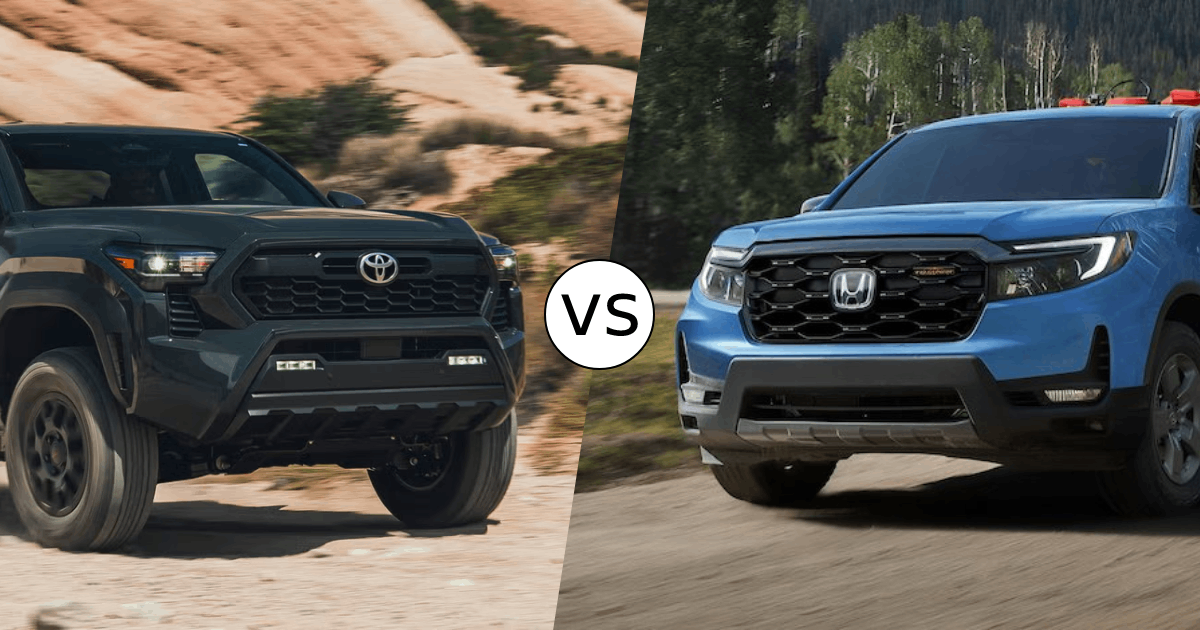
Choosing between the 2026 Toyota Tacoma and the Honda Ridgeline really comes down to what you think a midsize truck should be. Both are capable, well-built vehicles with loyal followings, but when you set them side by side across the categories that actually matter, a clear winner emerges. The Tacoma outperforms the Ridgeline in towing, off-road capability, powertrain options, and long-term ownership value. This comparison is for buyers who are actively researching and close to making a decision. more Two Trucks, Two Very Different Philosophies At the heart of this debate is a fundamental difference in how these trucks were engineered. The Ridgeline is built on a unibody platform, much like a car or SUV. That choice delivers a smooth, comfortable ride and makes it genuinely pleasant to live with day to day, but it also limits how far you can push it when the pavement ends or when serious towing is required. The Tacoma runs a traditional body-on-frame platform. That structure is the backbone of real truck capability. It gives the Tacoma a stronger foundation for towing, greater durability under load, and the kind of off-road resilience that unibody construction simply can't replicate. In terms of engineering intent, the Tacoma was built to work and explore. The Ridgeline was built primarily for comfort and convenience. Specification 2026 Toyota Tacoma 2026 Honda Ridgeline Body Construction Body-on-frame Unibody Horsepower / Torque Up to 326 hp / 465 lb-ft (hybrid) 280 hp / 262 lb-ft Towing Capacity (max) 6,500 lbs (gas) / 6,000 lbs (hybrid) 5,000 lbs Payload Capacity (max) Up to 1,705 lbs Up to 1,583 lbs Off-Road Hardware Locking rear diff, Crawl Control, Multi-Terrain Select, FOX QS3 shocks (TRD Pro) Intelligent Traction Management (Snow, Sand, Mud, Normal) Hybrid Option Yes (i-FORCE MAX) No If the Tacoma's platform and capability align with what you need, take a look at our current Tacoma inventory and see which trims are available now. Towing Capacity: The Tacoma's Most Decisive Advantage If hauling things is part of why you're buying a truck, the specs tell a compelling story. The 2026 Tacoma is rated to tow up to 6,500 pounds when properly equipped. The Ridgeline, regardless of trim, maxes out at 5,000 pounds. That 1,500-pound gap might not sound massive on paper, but it's very real in practice. It's the difference between hauling a smaller enclosed trailer and towing a larger boat. It's the margin between a loaded camper and leaving gear behind. For buyers in North Texas who use their trucks for weekend recreation, jobsite hauling, or moving equipment across the region, that extra capacity becomes apparent quickly. Payload capacity follows the same pattern. The Tacoma outpaces the Ridgeline there too, making it the stronger choice when you're regularly loading the bed with tools, equipment, or supplies. Towing and payload are often the deciding factors for buyers comparing these two trucks, and the Tacoma wins on both counts. Powertrain Variety: Why the i-FORCE MAX Changes Everything The 2026 Tacoma offers something the Ridgeline simply cannot match: genuine powertrain choice. Toyota starts buyers with a turbocharged 2.4-liter four-cylinder producing up to 278 horsepower and 317 lb-ft of torque on most trims, though the base SR trim produces 228 horsepower and 243 lb-ft of torque. That's strong output for most daily and work situations. But the real story is the i-FORCE MAX hybrid. The i-FORCE MAX pairs that turbocharged 2.4-liter engine with an integrated electric motor, producing 326 horsepower and 465 lb-ft of torque. Seriously impressive numbers for a midsize truck, and it comes with better fuel efficiency than a traditional V-6. The Ridgeline, by comparison, runs a naturally aspirated 3.5-liter V-6 making 280 horsepower, paired with a 9-speed automatic as the only available configuration. There is no hybrid option. This isn't just a numbers story, though. That electric motor delivers instant torque at low speeds, which translates to better off-the-line pull, stronger hill-climbing performance, and smoother behavior while towing. The Tacoma offers more options under the hood and more power for the buyers who want it. Off-Road Capability: Built for the Trail, Not Just the Pavement The Ridgeline handles light gravel roads and mild terrain reasonably well. But when it comes to genuine off-road performance, this comparison becomes almost unfair. The Tacoma was designed with trail use in mind from the start, and its trim lineup reflects that commitment throughout. TRD Off-Road and TRD Pro Trims vs. the Ridgeline's AWD System The Ridgeline comes standard with Honda's i-VTM4 AWD system across every trim, a system that performs well on slippery surfaces and light off-road conditions. It's a smart system, but it's designed to enhance daily driving safety rather than tackle serious terrain. The Tacoma's TRD Off-Road trim arrives with an electronic locking rear differential and Multi-Terrain Select right out of the box. Ground clearance reaches 11.0 inches at this trim level. Step up to the TRD Pro and you get TRD-tuned FOX QS3 three-way adjustable Internal Bypass shocks with rear piggyback reservoirs and external FOX IFP rear bump stops, a high-clearance front bumper, and TRD Pro front stabilizer bar. These are substantive engineering choices that genuinely change how the truck performs on challenging terrain. Crawl Control and Trail-Specific Technology The Tacoma's capability goes beyond hardware. Crawl Control automatically modulates throttle and braking, letting the driver focus entirely on steering through technical terrain rather than managing wheel speed. Multi-Terrain Select adjusts traction and power delivery for specific surface types: mud, sand, loose rock, moguls. The Ridgeline does offer an Intelligent Traction Management system with selectable modes for Snow, Sand, and Mud, which adds some terrain-specific capability beyond a purely reactive AWD setup. That said, it doesn't come close to matching the depth of the Tacoma's system. Multi-Terrain Select covers a wider range of surface types with more precise calibration, and Crawl Control handles low-speed technical terrain in a way the Ridgeline simply has no equivalent for. For anyone who genuinely uses their truck off-road beyond light trails and slippery roads, the gap here is still substantial and the choice is straightforward. Ready to explore TRD trim availability? Browse our Tacoma inventory to see what's in stock at Longo Toyota of Prosper. Bed Configuration and Flexibility: Working Harder in More Situations The Ridgeline has a clever dual-action tailgate and an in-bed trunk that adds useful storage for certain buyers. That's a genuinely smart feature worth acknowledging. In terms of overall bed versatility, though, the Tacoma offers greater flexibility. The Tacoma's bed is longer in standard configuration, and its body-on-frame construction means the bed sits separate from the cabin. That matters when you're handling heavy, shifting loads that would stress a unibody structure. The Ridgeline's integrated design is clever, but the in-bed trunk does reduce flat bed space. For contractors, outdoor enthusiasts, or anyone dealing with bulky or irregular cargo, the Tacoma's traditional truck bed with its higher payload rating is simply more practical. Toyota also supports extensive bed accessory compatibility through genuine parts, giving owners real customization options. Long-Term Value, Reliability, and Resale Strength When the reliability conversation comes up, it inevitably circles back to Toyota's track record. Toyota has spent decades building a reputation as one of the most dependable automotive brands in the world, and the Tacoma reflects that heritage directly. It consistently holds strong resale values year after year, making it one of the best long-term ownership choices in the midsize truck segment. The Ridgeline is well-engineered, and Honda's reliability record is solid. But the Tacoma's resale strength operates on a different level. Take care of a Tacoma and it holds its value in ways most vehicles can't match. That's a pattern truck buyers experience firsthand when they go to trade in or sell. The Tacoma also comes backed by a 5-year/60,000-mile powertrain warranty, which adds meaningful peace of mind over a long ownership horizon. From a cost-of-ownership perspective, the Tacoma's durability and parts availability work in the owner's favor too. Toyota genuine parts are widely available, and factory-trained technicians make service predictable and straightforward. The Verdict: Which Truck Actually Delivers More Set performance and capability side by side and the 2026 Toyota Tacoma consistently delivers more of what truck buyers actually need. It tows more, offers more powertrain choices, handles off-road terrain with technology the Ridgeline cannot touch, and holds its value better over time. The Ridgeline is a fine vehicle for a specific kind of buyer: someone who wants a truck's bed and cab layout with a car-like ride and modest daily driving demands. But if you want a truck that performs like one, the comparison points clearly in one direction. The Tacoma handles more, carries more, and does more, without sacrificing the daily drivability that modern truck buyers expect. Whether you're cross-shopping the Tacoma against the Ridgeline or narrowing your focus to a specific trim, the 2026 Tacoma stands out as the stronger, more capable, and more versatile choice for North Texas drivers. Explore the 2026 Toyota Tacoma at Longo Toyota of Prosper If the 2026 Tacoma sounds like the right truck for you, we're ready to help. Longo Toyota of Prosper is located at 2100 W. University Drive in Prosper, TX, and is part of the Longo Toyota family, recognized as the #1 Toyota dealership in the nation for over 55 years. We carry a full inventory of new Tacoma models across all trim levels, including TRD Sport, TRD Off-Road, TRD Pro, and Limited. Whether you're interested in the standard turbocharged powertrain or the i-FORCE MAX hybrid, our sales team is ready to help you find the right configuration. Sales hours run Monday through Saturday, 9 AM to 8:30 PM, and you can reach our sales team at 972-347-4929. For service, our factory-trained technicians are available Monday through Friday from 7 AM to 7 PM and Saturday from 7 AM to 3 PM. The service department can be reached at 972-347-4966. Explore available Tacoma trims online before you visit, or contact us and our team will help you find the right truck. The 2026 Tacoma is worth experiencing in person, and we'd love to be the dealership that puts you in one.

2026 Toyota RAV4 vs. Nissan Rogue

2026 Toyota RAV4 vs. Nissan Rogue: Which SUV Fits Your Needs?

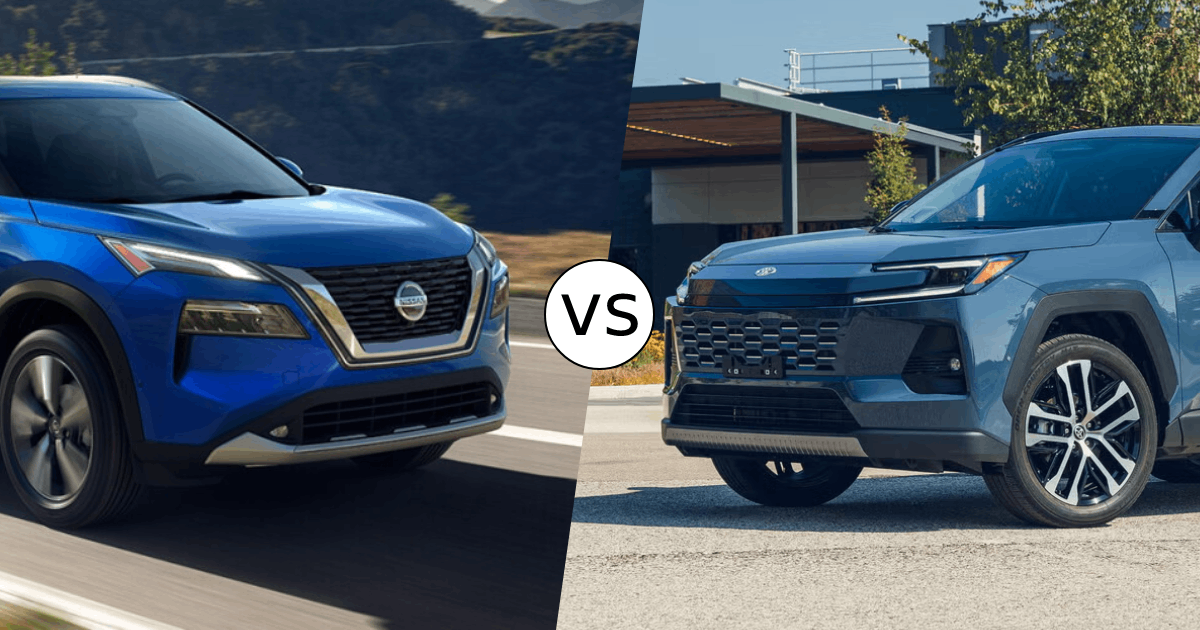
When comparing compact SUVs, the 2026 Toyota RAV4 vs Nissan Rogue matchup draws families, commuters, and weekend warriors looking for practical transport that checks multiple boxes. These vehicles approach efficiency, safety, and versatility quite differently. The RAV4's standard hybrid powertrain, comprehensive safety tech, and superior cargo space make it the smarter pick for most drivers, especially when you look at real-world performance and long-term ownership benefits. At Longo Toyota of Prosper, we help North Texas shoppers understand these key differences through actual test drives and straightforward vehicle comparisons. more Why the 2026 Toyota RAV4 vs Nissan Rogue Comparison Matters for SUV Shoppers The Toyota RAV4 versus Nissan Rogue shows how each handles fuel efficiency, safety technology, and interior flexibility. Both appeal to buyers wanting reliable transportation, but the RAV4's strengths in crucial areas put it ahead. The RAV4 brings proven reliability with standard hybrid efficiency across all trims, while the Rogue sticks with conventional gasoline power and offers no hybrid option. Compare the RAV4 and Rogue in actual driving conditions, and the RAV4's up to 44 MPG combined versus the Rogue's 33 MPG maximum creates real savings over the vehicle's lifetime. Fuel Economy: RAV4's Hybrid Efficiency Leads the Segment The Nissan Rogue vs Toyota RAV4 gas mileage conversation shifts entirely when you consider the RAV4's standard hybrid technology. The Rogue delivers decent fuel economy with its 1.5L VC-Turbo three-cylinder engine producing 201 hp and 225 lb-ft of torque, but the RAV4's hybrid system changes the ownership math completely. Hybrid systems used to mean compromises in power or availability. Toyota eliminated those concerns with the RAV4. Standard Hybrid Powertrain Across All RAV4 Trims Toyota made hybrid technology standard across every RAV4 trim level, cutting out the premium traditionally tied to hybrid vehicles. Whether you choose the base LE or jump to the loaded Limited, hybrid efficiency comes included. The RAV4 Hybrid AWD delivers 236 net combined system horsepower (up from 219 in the previous generation), while the FWD version produces 226 net combined system horsepower. The current Nissan Rogue lineup runs exclusively on a conventional 1.5L turbocharged engine with no hybrid option available at this time, though Nissan has announced a Rogue Plug-in Hybrid arriving in early 2026. This standardization means RAV4 drivers don't give up fuel efficiency when picking their desired features, and the hybrid system works seamlessly with AWD capability. Real-World MPG Comparison The Toyota RAV4 compared to Nissan Rogue specs show substantial efficiency advantages across all driving conditions. The 2026 RAV4 achieves EPA-estimated fuel economy of up to 44 MPG combined. The LE, SE, and XLE Premium trims deliver 44 MPG combined, while the XSE and Limited trims deliver 42 MPG combined. Even the rugged Woodland trim achieves 39 MPG combined. The 2026 Nissan Rogue achieves EPA-estimated fuel economy of up to 32 MPG combined on FWD models and 31 MPG combined on AWD models. The S and SV trims deliver the strongest numbers in the lineup, reaching 33 MPG combined with FWD and 31 MPG combined with AWD. The SL and Platinum trims see a slight reduction due to their larger 19-inch wheels, achieving 32 MPG combined with FWD and 31 MPG combined with AWD. The adventure-oriented Rock Creek trim, fitted with all-terrain tires, achieves 29 MPG combined with AWD. City driving reveals the biggest gap, where the RAV4's electric motor handles low-speed movement with minimal gas consumption. The Rogue's conventional engine works harder in these situations, burning more fuel to cover the same distances. Combined measurements favor the RAV4 by up to 12 MPG, potentially saving thousands of dollars across the vehicle's life while cutting environmental impact. The RAV4 PHEV offers up to 52 miles of electric-only range on the SE and XSE trims, 49 miles on the Woodland, and 48 miles on the GR Sport. Many drivers can complete daily commutes without using gasoline at all. Toyota Safety Sense 4.0: Advanced Protection Standard Safety technology separates modern vehicles from older models, and the RAV4's Toyota Safety Sense 4.0 package comes standard on every trim. This comprehensive system delivers peace of mind without expensive add-on packages. The Nissan Rogue vs Toyota RAV4 specs show both vehicles include strong safety features, but Toyota's approach feels more integrated and refined through millions of test miles. Key Safety Features That Set the RAV4 Apart Toyota Safety Sense 4.0 includes Proactive Driving Assist with curve speed management and spacing support, which actively helps maintain safe distances and appropriate speeds. Front Cross-Traffic Alert monitors intersections for approaching vehicles, while the Pre-Collision System features enhanced Pedestrian and Bicyclist Detection. The system watches the road ahead, identifying potential dangers and preparing the vehicle to respond. If reaction time isn't enough, the RAV4 automatically applies brakes to prevent or reduce collision impact. Blind Spot Monitor with Rear Cross-Traffic Alert adds protection during lane changes and when backing out of parking spaces. Safe Exit Assist monitors for passing vehicles before door opening, preventing accidents when you exit the vehicle. These features work together to create protective layers around the RAV4, actively managing risks drivers might not immediately notice. Interior Technology and Infotainment Modern drivers expect vehicles to integrate seamlessly with digital lives. The RAV4 delivers with technology that enhances rather than complicates the driving experience. The RAV4 includes a standard 10.5-inch touchscreen with an available 12.9-inch display, while all trims feature a 12.3-inch digital instrument panel. The Rogue, by contrast, comes standard with an 8-inch touchscreen on most trims, with the 12.3-inch display reserved for the top-tier Platinum. The RAV4's interface responds quickly with logical menu structures, and connectivity options include wireless Apple CarPlay® and Android Auto™ standard across the lineup. The RAV4's Available 12.9-Inch Touchscreen Display The available 12.9-inch touchscreen provides excellent visibility from the driver's seat, displaying navigation maps with clarity that shows multiple streets and points of interest simultaneously. Split-screen functionality lets you view music controls alongside navigation, eliminating constant menu switching. The display's responsiveness matches current smartphones, registering touches instantly with smooth graphics rendering. Brightness adjusts automatically to ambient light conditions, ensuring visibility in all situations. Connectivity and Digital Features Comparison The RAV4 offers up to five USB-C ports including a high-power front media port for fast device charging. Wireless charging pads handle compatible smartphones, keeping the dashboard organized. The 2026 Toyota RAV4 gets praise for its intuitive menu structure, making customization straightforward even for first-time users. Available features include a digital rearview mirror on XSE and head-up display technology on select trims. Over-the-air updates keep systems current without dealership visits, ensuring access to the latest features and improvements. Cargo Space and Passenger Comfort The Nissan Rogue vs Toyota RAV4 trunk space comparison reveals practical advantages. The RAV4 provides 37.8 cubic feet behind the second row and 70.4 cubic feet with seats folded, featuring a 60.5-inch maximum cargo width. The Rogue offers up to 36.5 cubic feet behind the second row and up to 74.1 cubic feet with the rear seats folded, giving it a slight edge over the RAV4 in maximum cargo volume. The RAV4's advantage lies in its cargo floor design and usable shape rather than raw cubic footage. The RAV4's cargo floor sits at a convenient height, and square corners minimize wasted space. The RAV4 vs Nissan Rogue size comparison shows similar exterior dimensions, but interior space utilization differs significantly. The RAV4's rear seats fold flat, creating an unbroken load floor that accommodates longer items like furniture or camping gear. The wider opening makes loading bulky items easier compared to narrower competitors. Passenger comfort goes beyond legroom measurements. The RAV4's seats provide excellent support during extended drives with durable materials. Second-row passengers enjoy adequate headroom and legroom, and climate controls maintain consistent temperatures throughout the cabin. Storage cubbies and door pockets offer convenient spots for phones, water bottles, and frequently needed items. 2026 Toyota RAV4 vs. Nissan Rogue: Final Verdict The RAV4 wins this comparison for most buyers, and the reasons come down to three factors that matter across years of ownership: fuel efficiency, safety technology, and powertrain consistency. Standard hybrid across every trim means every RAV4 buyer gets up to 44 MPG combined, regardless of budget. The Rogue's 32 MPG ceiling is respectable for a conventional powertrain, but the gap compounds quickly over 50,000 or 100,000 miles. For high-mileage commuters and families running daily errands, that difference translates directly into savings. Toyota Safety Sense 4.0 comes standard on every RAV4, with no need to step up to a higher trim to access the full suite. The Rogue offers solid safety tech, but Toyota's system benefits from years of refinement across millions of vehicles. Where the Rogue earns genuine consideration is maximum cargo volume, with a slight edge when the rear seats fold flat. Buyers who prioritize raw hauling capacity over fuel savings and hybrid efficiency may find it worth a closer look. For everyone else, the RAV4's combination of hybrid efficiency, standard safety features, and strong infotainment across all trims makes it the more complete vehicle. Whether you choose the base LE or the fully loaded Limited, you get the same powertrain and the same core technology, just more of it as you move up. That consistency is rare in this segment, and it reflects Toyota's confidence in what the RAV4 delivers. Experience the 2026 Toyota RAV4 at Longo Toyota of Prosper Test Drive the Difference Reading about the RAV4 vs Nissan comparison helps narrow options, but experiencing the vehicle firsthand reveals the true differences. We invite you to test drive the 2026 RAV4 at our Prosper location at 2100 W. University Drive. Our team brings over 55 years of Longo Toyota family expertise to North Texas, creating knowledgeable staff who answer detailed questions about trim differences, financing options, and long-term ownership costs. Test drives show how the RAV4's hybrid system delivers power, how safety features respond in real conditions, and reveal material quality and infotainment responsiveness. We're open Monday through Saturday from 9 AM to 8:30 PM, offering flexible scheduling. Call us at 972-347-4929 to arrange your test drive and discover why the 2026 RAV4 wins this comparison. Ready to see what's available right now? Browse our complete new vehicle inventory at Longo Toyota of Prosper and find the RAV4 trim that fits your needs and budget before scheduling your visit. Service Excellence Beyond the Sale Our service center provides expert care throughout RAV4 ownership. Factory-trained technicians understand Toyota's hybrid systems and handle everything from routine maintenance to complex repairs. The service department operates Monday through Friday from 7 AM to 7 PM and Saturdays from 7 AM to 3 PM. Reach our service team at 972-347-4966 to schedule maintenance or discuss vehicle concerns.

2026 Toyota Tacoma vs Chevy Colorado

2026 Toyota Tacoma vs Chevy Colorado

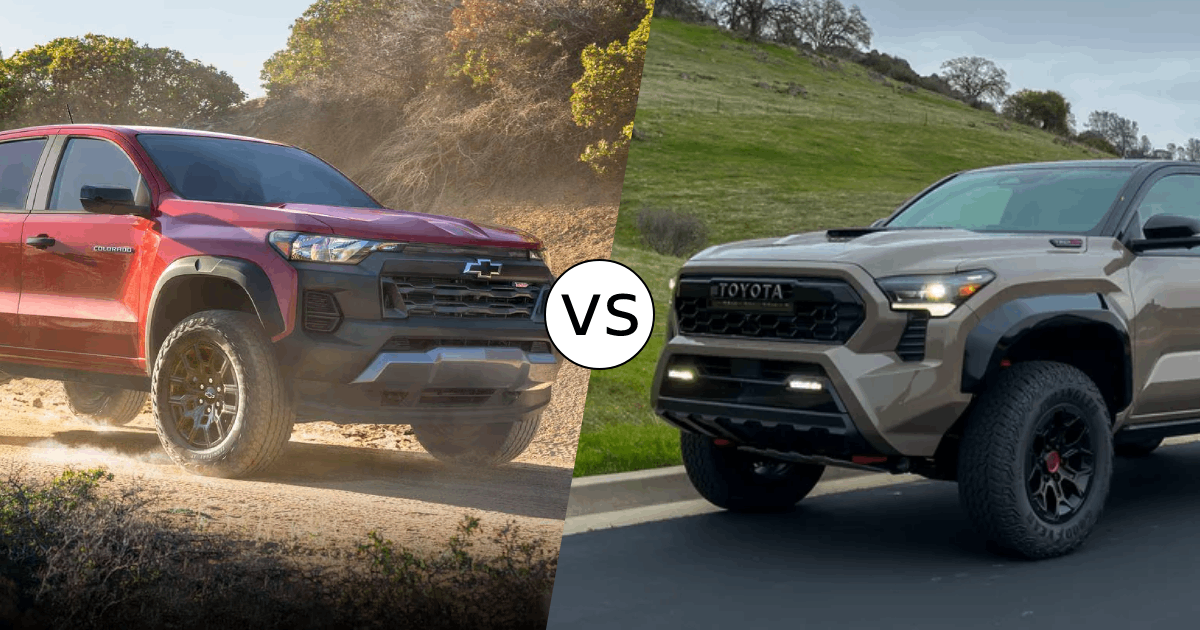
Shopping for a midsize truck means weighing capability against versatility, and the 2026 Toyota Tacoma vs Chevy Colorado debate highlights exactly that tension. These trucks occupy similar space on paper, but their personalities differ significantly beneath the surface. The Tacoma vs Colorado comparison reveals a truck built for durability versus one optimized for daily comfort. You're choosing between a proven off-road warrior with decades of reputation and a refined highway cruiser that prioritizes smooth operation. For Prosper drivers who need a truck that handles weekend trail runs and Monday work sites equally well, these differences matter. We invite you to explore our 2026 Tacoma inventory and see these capabilities firsthand. The Tacoma has built a devoted following among drivers who push their vehicles hard. Its reputation for absorbing punishment makes it stand out in the midsize segment. Meanwhile, the Colorado targets buyers who want truck utility without giving up car-like comfort. That fundamental difference shows up everywhere, from engine design to interior materials. more Powertrain Innovation and Performance Edge Power delivery separates these trucks right away. The Tacoma's approach focuses on torque and responsiveness, putting power exactly where terrain demands it. Toyota Tacoma i-FORCE and i-FORCE MAX Engines The Tacoma's i-FORCE powertrain features a 2.4L turbocharged 4-cylinder engine producing 278 hp and 317 lb-ft torque through an 8-speed automatic transmission. This turbocharged design provides power curves tuned for real-world towing and hauling. Pull a trailer through Texas hill country or load supplies, and that torque delivery becomes immediately noticeable. The i-FORCE MAX pushes things further by adding hybrid technology. This system generates 326 hp and 465 lb-ft torque while achieving an EPA-estimated 23 MPG combined. The electric motor fills torque gaps that traditional engines struggle with, giving instant response when merging or climbing grades. For Prosper drivers who spend time on both highways and back roads, that seamless power delivery creates confident driving. Feature 2026 Toyota Tacoma 2026 Chevy Colorado Base Horsepower 278 hp 310 hp Base Torque 317 lb-ft 430 lb-ft Max Horsepower (Hybrid) 326 hp (i-FORCE MAX) 310 hp Max Torque (Hybrid) 465 lb-ft (i-FORCE MAX) 430 lb-ft Hybrid Fuel Economy 23 MPG combined (EPA-estimated) N/A Toyota engineered these powertrains with durability as the primary goal. The turbocharged design runs conservative boost levels, and the hybrid components use proven battery technology. This careful approach pays dividends in longevity, directly affecting the Tacoma vs Colorado reliability equation. How the Colorado's Powertrains Compare The Colorado uses a single turbocharged 2.7L four-cylinder engine across all trims that prioritizes fuel economy and highway refinement. This engine delivers smooth power for daily commuting but is tuned for efficiency rather than sustained heavy-duty work. The 2.7L TurboMax produces strong peak torque numbers on paper, making it capable for highway towing and hauling. However, the Colorado's powertrain lacks the specialized off-road tuning that makes the Tacoma shine in challenging conditions. When comparing power delivery characteristics, the Tacoma's i-FORCE and i-FORCE MAX powertrains show more aggressive low-end torque curves suited for trail work and recovery situations. Off-Road Dominance and Trail Capability The conversation shifts decisively in the Tacoma's favor once pavement ends. Toyota has spent decades refining off-road systems, and the 2026 model represents the peak of that engineering focus. Every suspension component, differential setting, and electronic control exists to keep you moving forward when terrain fights back. The Tacoma's approach angles, departure angles, and ground clearance numbers exceed the Colorado's by margins that translate directly into trail access. Navigate rocky terrain around North Texas or explore more serious trails elsewhere, and those extra inches of clearance and degrees of angle become the difference between conquering a section and turning back. The Tacoma features a coil spring multi-link rear suspension and a 42.2-ft turning circle, providing maneuverability in tight trail situations. The frame and suspension components are overbuilt compared to segment norms, creating a durability buffer that matters when bouncing over obstacles or landing hard after cresting steep sections. TRD Pro and TRD Off-Road Advantages Toyota's TRD lineup transforms the Tacoma from capable to dominant. The TRD Off-Road package brings Monotube Bilstein piggyback reservoir shocks, locking rear differential, Crawl Control, and Multi-Terrain Select. These proven systems give you precise control in situations where momentum and traction become critical. The TRD Pro takes things even further with TRD-tuned FOX QS3 adjustable shocks featuring remote rear piggyback reservoirs, 18-inch wheels mounted with 33-inch Goodyear tires, and extensive skid plate protection. The front springs use progressive rates that absorb impacts without wallowing, while the rear setup manages heavy loads without sacrificing articulation. These specialized variants maintain strong resale value because knowledgeable buyers recognize their capabilities. The Colorado offers off-road packages, but they lack the comprehensive engineering and proven track record that makes TRD variants so desirable. Terrain Management and Suspension Technology The Tacoma's Multi-Terrain Select system fine-tunes power delivery and traction control for specific conditions. Select mud and snow mode, and the system adjusts throttle response, transmission shift points, and brake intervention to maintain momentum without wheel spin. The Stabilizer Disconnect Mechanism enhances articulation when needed, while the Multi-Terrain Monitor provides visual confirmation of wheel positioning. Suspension articulation determines how well wheels maintain contact with uneven surfaces. The Tacoma prioritizes wheel travel, keeping all four corners connected to the ground even when diagonal wheels are hanging. This articulation, combined with electronic traction aids and available locking differentials, creates a truck that rarely gets stuck when driven with reasonable skill. Advanced Technology and Safety Systems Modern trucks blend mechanical capability with electronic sophistication. Both trucks offer comprehensive tech packages, but Toyota's integration and user interface design make daily interaction more intuitive. Toyota Safety Sense 3.0 Features Toyota Safety Sense 3.0 comes standard across the Tacoma lineup, making advanced safety features accessible to all buyers. The Pre-Collision System with Pedestrian Detection uses radar and camera systems to identify potential impacts and can automatically apply brakes. Full-Speed Range Dynamic Radar Cruise Control maintains set following distances and can bring you to a complete stop in traffic, then resume when vehicles ahead move. Lane Departure Alert with Steering Assist and Lane Tracing Assist keep you centered when fatigue or distraction causes drift. The system provides gentle correction rather than jarring intervention, making highway driving less tiring on long trips across Texas. Road Sign Assist reads speed limits and displays them on your instrument cluster, while Automatic High Beams and Proactive Driving Assist enhance nighttime safety. These systems work together rather than operating independently, creating layers of protection that activate based on driving conditions. This integrated approach represents mature technology that functions reliably. Infotainment and Connected Services The Tacoma's infotainment system centers around an 8-inch standard or available 14-inch touchscreen that pairs quickly with smartphones and maintains stable connections. Wireless Apple CarPlay and Android Auto integration provides familiar interfaces. Voice recognition understands natural commands without requiring specific phrasing. Over-the-air updates keep systems current without dealership visits. The available JBL premium audio system transforms cabin acoustics through carefully positioned speakers and amplifier tuning specific to the Tacoma's interior dimensions. Connected services bring emergency assistance and vehicle tracking features that provide peace of mind. The system can share location data with emergency services if airbags deploy, potentially reducing response times. We encourage you to experience a virtual test drive to explore these technology features from home before visiting our dealership. Reliability, Resale Value, and Ownership Costs The Tacoma vs Colorado reliability discussion consistently favors Toyota's offering. The Tacoma's proven durability translates directly into lower ownership costs because major repairs remain rare even at high mileage. This reliability supports strong resale values that cushion depreciation and protect your investment. Toyota's engineering philosophy prioritizes proven technology over advanced innovation. This conservative approach means the Tacoma uses systems with established track records, making maintenance and repairs simpler and more affordable. The Colorado offers competitive warranty coverage, but its reliability metrics don't match the Tacoma's consistency. This gap widens as mileage accumulates. Resale value reflects market confidence in a vehicle's durability. The Tacoma consistently ranks among the best in the midsize truck segment for retaining value, often commanding premium prices in the used market compared to similarly aged competitors. When you're ready to upgrade, that equity provides more purchasing power toward your next vehicle from our new Toyota trucks selection. Interior Craftsmanship and Build Quality The Tacoma's interior strikes a balance between durability and modern amenities, using materials chosen to withstand years of hard use. Surfaces that see frequent contact use textured materials that hide wear and maintain appearance despite regular cleaning. Seat design prioritizes support during long drives and stability during off-road adventures. The Tacoma offers 5-passenger seating with available perforated leather-trimmed seats featuring power adjustments and lumbar support. Bolstering holds you in place when the truck tilts on steep trails, while cushioning provides comfort during highway cruising. The available heated steering wheel makes cold-weather driving more comfortable. The driving position places controls within natural reach, reducing fatigue during extended drives. Storage solutions throughout the cabin show thoughtful design. Door pockets accommodate water bottles without blocking window controls, center console bins hold electronics and charging cables, and rear under-seat storage hides gear without cluttering the cabin. These practical touches matter during daily use. The Colorado's interior emphasizes refinement over ruggedness. Materials feel more upscale initially but may not maintain that appearance as well over time. For drivers who view their truck as a tool that will see serious use, the Tacoma's more utilitarian interior design makes better long-term sense. Why the 2026 Toyota Tacoma Wins for Prosper Drivers Superior Performance Where It Counts The Toyota Tacoma vs Chevy Colorado comparison reveals clear advantages for the Tacoma across categories that matter most. The i-FORCE MAX's 465 lb-ft torque and 23 MPG combined efficiency surpass what the Colorado offers. Off-road systems represent serious engineering rather than marketing features. Technology integration enhances daily driving without adding frustrating complexity. Versatility for North Texas Driving Drivers around Prosper who need a truck that handles diverse demands will find the Tacoma's versatility stands out. It transitions seamlessly from weekend trail adventures to weekday work sites without compromise. This dual capability makes it practical for buyers who need one vehicle to excel in multiple scenarios. Long-Term Value Protection The reliability advantage becomes increasingly important as vehicles age. The Tacoma maintains performance longer with less intervention, protecting your investment and providing confidence that your truck remains dependable. Strong resale values reflect market recognition of this reliability, making the Tacoma a smart financial choice. Visit Longo Toyota of Prosper Today Ready to experience the 2026 Tacoma's capabilities firsthand? We at Longo Toyota of Prosper stand ready to help. Located at 2100 W. University Drive in Prosper, our dealership brings over 55 years of Longo Toyota's customer-first philosophy to North Texas drivers. Our sales team can walk you through trim levels and configurations to find the Tacoma that matches your specific needs. Get pre-approved for financing before your visit to streamline the purchasing process, or contact our team at 972-347-4929 to schedule a test drive and discover why the Tacoma continues earning loyalty from drivers who demand capability and reliability from their trucks.

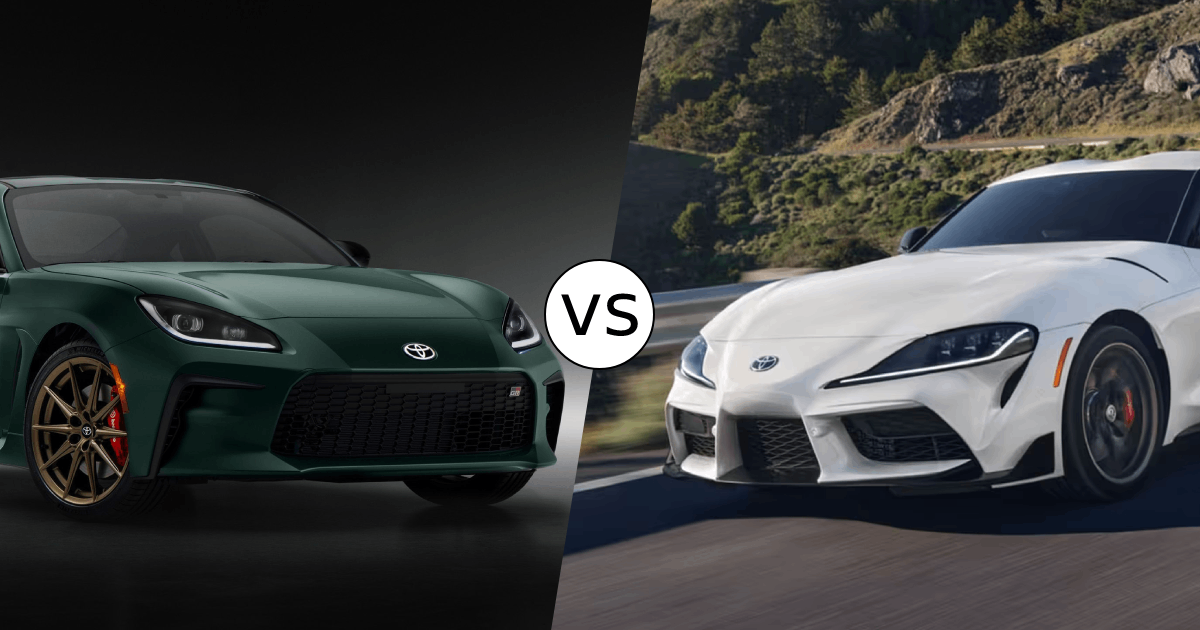
2026 Toyota GR86 vs Toyota Supra

2026 Toyota GR86 vs Toyota Supra

Choosing between the Toyota GR86 and Toyota Supra really comes down to this: do you want pure, hands-on driving thrills or refined grand touring performance? Both cars deliver genuine sports car excitement, but they couldn't be more different in their approach. The GR86 is all about lightweight simplicity and that direct connection between you and the road, while the Supra brings turbocharged muscle with sophisticated handling. Here's the thing - these aren't really traditional competitors. They're after different buyers with different budgets and completely different goals. The GR86 speaks to enthusiasts who value pure driving experience over raw speed. The Supra? It's for drivers wanting complete performance without sacrificing comfort. Understanding what each car does best will help you figure out which Toyota sports car belongs in your driveway, and you can browse our new Toyota inventory to see both models in person. more Performance and Powertrain: Naturally Aspirated vs Turbocharged The engine choice represents the biggest split between these cars, shaping everything about how they feel when you're behind the wheel. Specification GR86 Supra Engine 2.4L naturally aspirated boxer 3.0L turbocharged inline-6 Horsepower 228 hp 382 hp Torque 184 lb-ft 368 lb-ft City MPG 20 (manual) / 21 (auto) 19 (manual) / 23 (auto) Highway MPG 26 (manual) / 30 (auto) 27 (manual) / 31 (auto) GR86 Engine Character and Power Delivery The 2026 Toyota GR86 runs a 2.4-liter flat-four boxer engine making 228 horsepower and 184 lb-ft of torque. This naturally aspirated setup gives you linear acceleration that rewards keeping momentum and picking the right gear. Peak torque shows up at 3,700 rpm, which means you'll want to keep the engine spinning between 4,000 and 7,000 rpm for the best results. That low-mounted engine creates incredible balance. Every rev and gear change feels connected, especially with the six-speed manual. Power builds predictably without any turbo surprise. The GR86 makes you work for speed, pulling performance through skillful driving rather than overwhelming power. The flat-four develops real personality as you wind it toward redline, teaching you to carry momentum through corners instead of muscle through them with straight-line acceleration. Supra Engine Options and Performance The Toyota Supra delivers something completely different with its turbocharged inline-six borrowed from BMW's lineup. The 3.0-liter unit produces 382 horsepower and 368 lb-ft of torque. That's a massive performance advantage - the Supra hits 60 mph in roughly 3.9 seconds versus the GR86's 6.1-second run. Turbo lag stays minimal thanks to smart boost management. The Supra delivers strong low-end torque that makes passing effortless and highway merging stress-free on North Texas roads. The eight-speed automatic shifts quickly and reads your intentions well. The inline-six sounds refined and pulls hard from 2,000 rpm to 6,500 rpm with a broader powerband that doesn't require perfect gear timing. Handling and Driving Dynamics Both cars focus on driver engagement through completely different approaches. The 2026 Toyota GR86 vs Toyota Supra debate gets most interesting when you examine how these cars handle twisty roads. GR86: Lightweight Precision and Balance At roughly 2,800 pounds, the GR86 benefits from exceptional weight management and nearly perfect balance. The low center of gravity creates stability that builds confidence through corners. You feel the car pivot around you, responding instantly to steering inputs without that heavy front-end feel. The suspension prioritizes communication over comfort. Road surfaces translate clearly through the chassis, giving you constant feedback about available grip. The steering offers real weight and precision. Modest tire widths let you drive the GR86 at seven-tenths on public roads while staying engaged. This car rewards smooth inputs and proper weight transfer. The GR86 excels at teaching good driving technique because it responds directly to your actions. Moderate power means you can explore handling limits without hitting illegal speeds. Supra: Grand Touring Performance and Grip The Supra carries roughly 3,400 pounds - about 600 more than the GR86. Despite that weight, the chassis stays remarkably agile thanks to excellent structural stiffness and smart suspension tuning. Wider tires and aggressive geometry deliver higher cornering limits. The adaptive suspension in higher trims adjusts damping to balance comfort and performance. Sport mode tightens responses without harshness, while Normal mode provides surprising compliance for everyday driving. The Supra feels more planted and stable at high speeds, trading some playful character for greater ultimate grip. The extra power lets you rotate the car on throttle rather than relying purely on weight transfer. Interior Design, Technology, and Daily Usability The GR86 vs Supra comparison extends well beyond performance. Interior quality, comfort, and technology vary significantly, affecting daily driving capability. Cabin Experience and Comfort The GR86 interior emphasizes function over luxury. Materials are built to last rather than impress, with hard plastics covering most surfaces. The driving position works excellently - you sit low and close to the pedals with good visibility. Rear seats exist mainly for insurance purposes. Adults can't realistically sit back there. Trunk space is limited but handles weekend trips or track day gear. Feature GR86 Supra Seating Material Cloth Leather Audio System 8 speaker 10 speaker (standard) / 12 speaker JBL (Premium) Headlamps LED LED The Supra offers a substantially more upscale environment. Leather, Alcantara, and soft-touch materials create a cabin that justifies the price premium. The sport seats deliver excellent side support and long-distance comfort. You sit lower with a more wrapped cockpit feel, though visibility takes a hit compared to the GR86's airier cabin. The hatchback design provides more cargo flexibility, and the cabin stays quieter, cutting wind and tire noise at highway speeds. Infotainment and Driver Technology The GR86 features an 8-inch touchscreen running Toyota's current infotainment system. Apple CarPlay and Android Auto come standard. The system responds adequately but lacks premium refinement. Physical climate controls remain, which enthusiasts appreciate during spirited drives. Standard safety features include automatic emergency braking, lane departure warning, and adaptive cruise control. The Supra uses BMW's iDrive system through an 8.8-inch display. The interface is more sophisticated with better graphics and quicker processing. The rotary controller makes operation easier while driving. Wireless Apple CarPlay adds convenience, though the Supra notably doesn't offer Android Auto. Safety technology matches the GR86's offerings but adds blind-spot monitoring and rear cross-traffic alert as standard. Pricing, Value, and Cost of Ownership The money side plays a big role when comparing the Toyota GR86 vs Toyota Supra. Base pricing differs substantially, affecting which buyers can realistically consider each car. The 2026 GR86 positions itself as one of the most affordable new sports cars available, with the base trim offering exceptional value. The Premium grade adds features while maintaining reasonable pricing. Limited options keep final costs predictable and accessible. The Supra carries a significantly higher starting point across its lineup. The base four-cylinder model establishes the entry point, while the six-cylinder variant commands a premium reflecting its enhanced performance. Top trims represent a substantial investment in driving experience. We offer financing options to help make either model fit your budget. Insurance typically costs more for the Supra due to its higher value and performance potential. Fuel economy slightly favors the GR86, though neither car is particularly efficient when driven enthusiastically. Maintenance costs should stay reasonable for both. The GR86 uses a Subaru-sourced engine that shares parts availability, while the Supra's BMW-derived powertrain has wide parts availability through international networks. Both cars maintain strong resale values - the GR86 benefits from affordable entry pricing and limited competition, while the Supra gains from restricted production numbers and strong enthusiast demand. Matching the Right Sports Car to Your Lifestyle Picking between these two requires honest thinking about how you'll actually use the car. The GR86 Driver Profile The GR86 fits buyers who put driving engagement above raw performance. This car rewards skill development, making it perfect for enthusiasts wanting to learn proper technique or who regularly do autocross and track days. The affordable price lets younger buyers access real sports car ownership without crushing financial stress. Daily driving stays manageable despite the firm suspension and basic refinement. The GR86 works best as a primary car for people without regular passenger needs or as a dedicated weekend toy. This car appeals to drivers who prefer mechanical simplicity and honest dynamics. If you value the journey over arrival times, the GR86 delivers better than almost anything at its price. The Supra Driver Profile The Supra targets buyers wanting complete performance in a more polished package. This car balances daily usability with serious capability, making it suitable for longer trips and varied conditions. The extra power and torque make passing and merging effortless, reducing stress in traffic. Higher pricing suggests buyers typically have more established careers and larger budgets. The Supra often serves as a weekend escape or second vehicle. The improved interior quality and technology make it more appropriate for upscale venues where the GR86 might feel out of place. This car fits drivers who appreciate performance without sacrificing comfort and refinement. Experience Both at Longo Toyota of Prosper Reading specs only tells part of the story when comparing the GR86 and Supra. The best way to understand which car matches your priorities? Experience both firsthand. We keep North Texas's most comprehensive selection of Toyota performance vehicles at Longo Toyota of Prosper, giving you the chance to evaluate these sports cars in real conditions. Our sales team understands the unique characteristics that define each model. We can set up back-to-back test drives that highlight the differences in power delivery, handling balance, and daily usability. You'll experience how the GR86's lightweight construction translates to road feel, and how the Supra's turbocharged power changes your driving dynamic. Located at 2100 W. University Drive in Prosper, our facility provides a comfortable space to explore financing options that fit your budget. Our finance team works with multiple lenders to secure competitive rates for both new and pre-owned vehicles. Beyond the initial purchase, our service center staffed with factory-trained Toyota technicians ensures your sports car gets proper maintenance and care. We understand the specific needs of performance vehicles and stock genuine Toyota parts to keep your GR86 or Supra performing as intended. Contact our sales team at 972-347-4929 to schedule your test drive and discover which Toyota sports car delivers what you're looking for.

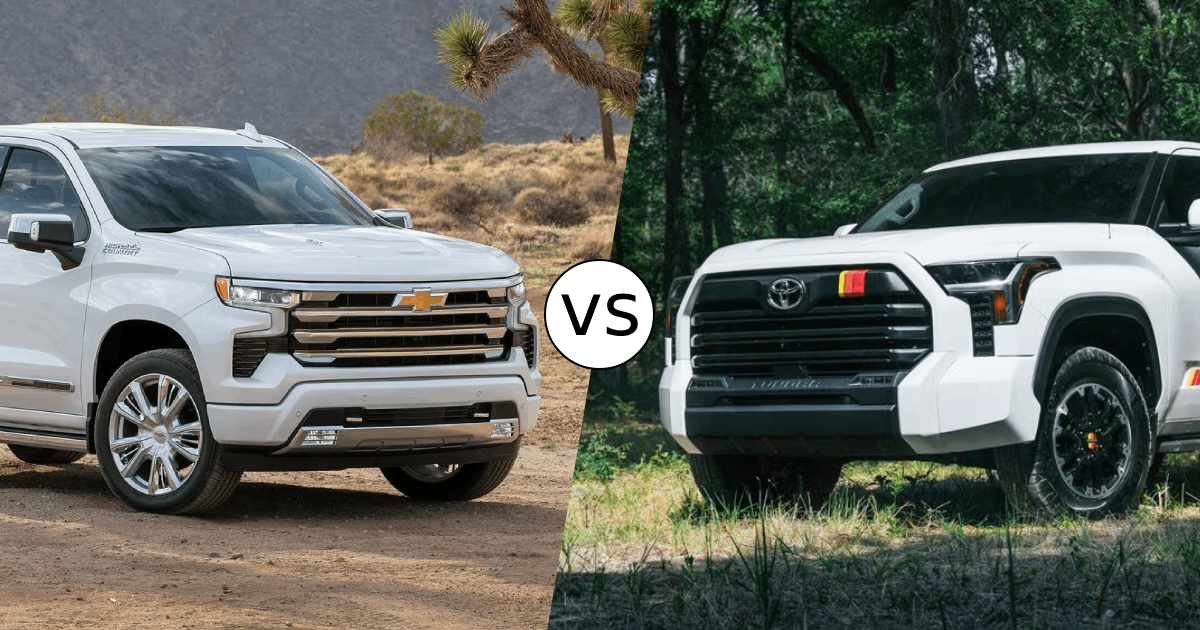
2026 Toyota Tundra vs Chevy Silverado

2026 Toyota Tundra vs Chevy Silverado

When comparing the 2026 Toyota Tundra and Chevy Silverado, you'll find two completely different philosophies in full-size truck design. At Longo Toyota of Prosper, we help North Texas drivers understand why the Tundra's hybrid innovation, proven reliability, and superior ground clearance deliver better long-term value than Silverado's traditional approach. Both trucks serve the segment well, but the Tundra's strategic advantages make it the smarter investment for most buyers. more 2026 Toyota Tundra vs Chevy Silverado: Quick Comparison Overview The Toyota Tundra vs Chevrolet Silverado debate really comes down to what matters most to you. The Tundra leads with its exclusive i-FORCE MAX hybrid system, pumping out 583 lb-ft of torque and achieving up to 22 mpg combined. That's efficiency no Silverado configuration can touch. Our customers consistently appreciate the Tundra's superior ground clearance (up to 9.4 inches versus Silverado's 7.9 inches), especially valuable for ranch work and off-pavement driving that's so common around here. The 10-speed automatic transmission provides smoother, more refined shifting than Silverado's 8-speed unit. Feature 2026 Toyota Tundra CrewMax 2026 Chevrolet Silverado 1500 Crew Cab Hybrid Powertrain i-FORCE MAX Hybrid V6 (437 hp, 583 lb-ft torque), up to 22 mpg combined (2WD) No hybrid option Standard Engine 3.4L twin-turbo V6 (389 hp, 479 lb-ft) 2.7L TurboMax I4 (310 hp, 430 lb-ft) Transmission 10-speed automatic 8-speed automatic Towing Capacity Up to 12,000 lbs Up to 13,300 lbs (with 6.2L V8 or diesel) Payload Capacity Up to 1,850 lbs Up to 2,260 lbs Ground Clearance 8.5-9.4 inches 7.9 inches Seating Capacity 5 5 or 6 (Crew Cab) The Tundra's 12,000-lb towing capacity handles most real-world needs our customers face, from boat trailers to equipment hauling, while delivering better fuel economy and ground clearance than Silverado. That hybrid system's 583 lb-ft of torque kicks in at just 2,400 rpm, giving you immediate pulling power that feels effortless during launches and highway merges. Powertrain Innovation and Efficiency The Chevrolet vs Toyota powertrain discussion shows a clear advantage for Tundra buyers. Silverado sticks with conventional engine technology, while the Tundra's i-FORCE MAX hybrid system represents genuine innovation in the full-size truck segment. We see this efficiency advantage translate to real savings for our Prosper customers who deal with long highway commutes and frequent city driving. Toyota's i-FORCE MAX Hybrid Advantage The i-FORCE MAX hybrid pairs a twin-turbo V6 with an electric motor, cranking out 437 hp and 583 lb-ft of torque while hitting up to 22 mpg combined on regular gasoline. This system eliminates the compromise between power and efficiency that defines traditional truck engines. The electric motor delivers instant torque from a standstill, making trailer launches smooth and highway passing effortless. Silverado? No hybrid option at all, which leaves buyers stuck choosing between fuel economy and capability. Regenerative braking captures energy during deceleration, recharging the battery without any driver input or charging infrastructure needed. The system operates seamlessly; you just drive normally while enjoying lower fuel costs and reduced emissions. The 10-speed automatic transmission works perfectly with the hybrid powertrain, finding optimal ratios for every driving situation with refinement that beats Silverado's 8-speed unit. Real-World Performance and Refinement The Tundra's coil-spring rear suspension delivers superior ride quality compared to traditional leaf-spring setups, soaking up road imperfections while maintaining stability under load. Daily driving feels comfortable and composed, which reduces fatigue during those long drives. The refined powertrain and suspension tuning create a surprisingly modern truck experience that our customers consistently praise. Ground clearance becomes critical for North Texas ranch work and off-pavement adventures. The Tundra's 8.5 to 9.4 inches provides real advantages over Silverado's 7.9 inches when you're navigating rough terrain, creek crossings, or rutted trails. This extra clearance protects undercarriage components while improving approach and departure angles. Built-In Reliability and Long-Term Value The Toyota Tundra or Chevy Silverado decision heavily favors the Tundra when you consider long-term ownership costs. Toyota's engineering philosophy focuses on proven durability over complexity, resulting in trucks that deliver decades of dependable service with minimal unexpected repairs. Toyota's Reputation for Dependability Toyota consistently ranks at the top of reliability surveys, and the Tundra continues that tradition. Our service department sees Tundra owners primarily for routine maintenance rather than problem-solving visits. That pattern creates predictable, low-stress ownership. Fewer unexpected repairs mean lower maintenance budgets over five or ten years, which offsets any initial price considerations. The confidence of knowing your truck will start every morning and handle whatever you demand has tangible value that extends far beyond simple cost calculations. Factory warranties cover similar periods across both brands, but the Tundra's reputation translates to fewer claims filed and less downtime. We've watched Tundra customers rack up impressive mileage with nothing more than oil changes and tire rotations. That's a testament to Toyota's engineering excellence. Resale Value and Ownership Costs The Tundra commands significantly stronger residual values in the used truck market. Buyers shopping pre-owned trucks pay premium prices for Tundra models, trusting Toyota's durability reputation. This depreciation advantage compounds over ownership, protecting your investment when it's time to trade or sell. Silverado models depreciate faster, creating a meaningful financial gap over typical ownership periods. Total ownership costs heavily favor the Tundra. The hybrid system's 22 mpg combined fuel economy delivers substantial savings compared to conventional Silverado engines, particularly for drivers facing daily commutes. Lower maintenance frequency and stronger resale values further widen the cost gap. These factors create compelling financial reasons to choose the Tundra beyond its capability and refinement advantages. Interior Quality and Technology The Chevrolet Silverado 1500 vs Toyota Tundra comparison reveals distinct approaches to cabin design. The Tundra emphasizes quality materials and thoughtful craftsmanship that create a premium environment worthy of the time you'll spend inside. Premium Materials and Craftsmanship The Tundra features soft-touch surfaces throughout the cabin, with materials selected for durability and tactile quality. Upper trims introduce genuine leather and premium textiles that elevate the experience to near-luxury territory. Panel gaps remain tight and consistent, with trim pieces fitting precisely. These details suggest longevity and care in assembly. This attention to craftsmanship creates a cabin where you'll genuinely enjoy spending time, whether commuting to work or heading out on weekend adventures. Storage solutions appear throughout, from door pockets to center console bins designed for actual truck owner needs. Controls fall naturally to hand, with intuitive placement that doesn't require taking eyes off the road. The overall design philosophy balances functionality with premium feel, avoiding the purely utilitarian approach some competitors embrace. Infotainment and Connectivity Features The Tundra's infotainment system emphasizes straightforward operation with responsive touchscreen controls. Wireless Apple CarPlay and Android Auto integration keeps your smartphone connected without cable clutter. Multiple USB ports and power outlets ensure devices stay charged during long trips. The interface focuses on quick access to essential functions like navigation, audio, and phone, without unnecessary complexity or distracting graphics. Voice commands work reliably for common tasks, letting you keep hands on the wheel and eyes on the road. Climate controls remain accessible through physical buttons and knobs, a thoughtful decision that avoids burying essential functions in touchscreen menus. The system balances modern connectivity with intuitive operation. Safety Features and Driver Assistance Safety technology comes standard on the Tundra through Toyota Safety Sense 2.5, bringing advanced driver assistance across all trim levels. This comprehensive suite includes adaptive cruise control that maintains following distance in highway traffic, lane departure alert with steering assist that provides gentle corrections when you drift, and pre-collision systems with pedestrian detection that monitor the road ahead and prime brakes when potential impacts are detected. These features work together seamlessly, activating when needed without feeling intrusive. The systems require driver attention and engagement, serving as safety nets rather than autopilot replacements. Silverado offers similar technology, though availability varies by trim level and requires package upgrades on lower configurations. The Tundra's standard inclusion reflects Toyota's commitment to safety regardless of price point. Towing and Capability Highlights The Tundra's 12,000-lb maximum towing capacity (when properly equipped) handles most real-world needs our customers encounter. Boat trailers, equipment haulers, campers, and livestock trailers all fall well within this range. The i-FORCE MAX hybrid's 583 lb-ft of torque arrives at just 2,400 rpm, providing immediate pulling power that makes launches feel confident and controlled. Payload capacity reaches up to 1,850 lbs depending on configuration, which is sufficient for heavy cargo loads and work site demands. The superior ground clearance (up to 9.4 inches) proves valuable when towing across uneven terrain or navigating boat ramps. While Silverado offers higher maximum specifications in certain configurations, the Tundra's capabilities satisfy typical truck owner needs while delivering better fuel economy and long-term reliability. Why the 2026 Toyota Tundra Is the Smarter Choice The 2026 Toyota Tundra vs Chevy Silverado comparison consistently favors the Tundra when you consider total ownership value. The exclusive i-FORCE MAX hybrid system delivers 22 mpg combined fuel economy no Silverado can match, translating to thousands of dollars in savings over typical ownership periods. Superior ground clearance (8.5-9.4 inches versus 7.9 inches) provides real advantages for off-pavement driving, ranch work, and challenging terrain navigation that's common in North Texas. Toyota's class-leading reliability reputation means fewer unexpected repairs, lower maintenance costs, and stronger resale values. The 10-speed automatic transmission delivers smoother, more refined shifting than Silverado's 8-speed unit. Standard Toyota Safety Sense 2.5 across all trims provides comprehensive driver assistance without requiring expensive package upgrades. Premium interior materials and thoughtful craftsmanship create a cabin environment that feels built to last. Choosing the Tundra means investing in proven engineering excellence backed by decades of dependability data. The i-FORCE MAX hybrid positions you ahead of inevitable industry trends toward electrification while delivering practical efficiency benefits today. For buyers planning to keep their trucks for years rather than months, the Tundra's advantages compound over time through lower operating costs and protected resale value. Explore the 2026 Toyota Tundra at Longo Toyota of Prosper Discover the 2026 Toyota Tundra firsthand at Longo Toyota of Prosper, located at 2100 W. University Drive in Prosper, Texas. As part of the #1 volume Toyota dealership family for over 55 years, we bring expertise and a customer-first approach to every interaction. Browse our current Tundra inventory to explore available configurations and experience the advantages of the i-FORCE MAX hybrid system for yourself. Our sales team is available Monday through Saturday, 9 AM to 8:30 PM, to answer any questions about Tundra capabilities and features. Call 972-347-4929 to schedule a test drive, or start with a virtual test drive from home. We’ll help you see how the Tundra performs in real-world conditions and why its features make a difference for your specific needs. Our service center supports Tundra owners with factory-trained technicians who know these trucks inside and out. Visit Longo Toyota of Prosper to experience why drivers comparing Chevy and Toyota trucks across North Texas trust us for both sales and service.

2026 Toyota RAV4 vs Volkswagen Tiguan

2026 Toyota RAV4 vs Volkswagen Tiguan

When comparing the 2026 Toyota RAV4 and the 2026 Volkswagen Tiguan, both stand out as popular compact SUVs designed to meet the needs of modern families. Each offers seating for five, everyday versatility, and a balance of comfort and capability that works well for commuting, road trips, and weekend errands around North Texas. While they compete in the same segment, their design philosophies and approaches to efficiency, technology, and long-term ownership differ in ways that families visiting Longo Toyota of Prosper often consider when choosing a vehicle. more 2026 RAV4 vs Tiguan: Quick Comparison Overview The Toyota RAV4 vs Volkswagen Tiguan debate favors the RAV4 across key metrics that matter to real buyers. We have compared these vehicles extensively, and the data clearly shows the RAV4's advantages in efficiency, power, and practicality. Feature 2026 Toyota RAV4 2026 VW Tiguan Engine Power 236 hp (AWD Hybrid) 201 hp Fuel Economy (Combined) 44 MPG (FWD) / 42 MPG (AWD) 26-30 MPG Cargo Space (Seats Up) 37.8 cu. ft. 34 cu. ft. Max Cargo 70.4 cu. ft. 70 cu. ft. Turning Circle 36.1 ft. 38.1 ft. Seating 5 5 The RAV4's standard hybrid powertrain delivers superior efficiency without compromising capability. Toyota designed this SUV around dependability and real-world performance, building something that handles family duties while saving thousands at the pump. The hybrid system produces 236 horsepower with AWD, exceeding the Tiguan's 201 horsepower while achieving dramatically better fuel economy. The Tiguan offers conventional turbocharged power but can't match the RAV4's efficiency or total system output. The RAV4's tighter turning circle (36.1 feet vs 38.1 feet) also provides better maneuverability in parking lots and city driving. These measurable advantages make the RAV4 the smarter choice for North Texas drivers prioritizing value and performance. Fuel Efficiency and Hybrid Powertrain Advantage The RAV4 vs Tiguan fuel economy comparison heavily favors Toyota's hybrid strategy. The RAV4 achieves 44 MPG combined with front-wheel drive and 42 MPG with all-wheel drive, while the Tiguan manages only 26-30 MPG depending on drivetrain choice. This 14-18 MPG advantage creates substantial savings over years of ownership, particularly for Prosper commuters covering significant highway miles annually. RAV4 Hybrid Performance Toyota's hybrid system comes standard across all RAV4 trims, delivering 226 horsepower with FWD or 236 horsepower with AWD. This standard hybrid approach means every RAV4 buyer gets exceptional efficiency without paying extra or stepping up to premium trims. The hybrid powertrain provides smooth, quiet power while capturing energy during braking to maximize efficiency. The RAV4 Prime plug-in hybrid pushes performance and efficiency further with 324 horsepower and 52 miles of electric-only range. This variant handles daily commutes on pure electricity while maintaining unlimited range through its hybrid system for longer trips. Tiguan's Conventional Efficiency The Tiguan's turbocharged four-cylinder produces 201 horsepower but delivers significantly lower efficiency. Front-wheel drive models achieve 26 city/34 highway MPG, while AWD versions drop to 22 city/30 highway MPG. This conventional approach costs considerably more at the pump and produces higher emissions compared to the RAV4's advanced hybrid technology. The fuel economy gap means RAV4 owners save thousands of dollars over typical ownership periods while reducing environmental impact. For drivers prioritizing efficiency and long-term value, the RAV4's hybrid advantage represents a decisive win. Safety Features and Crash Test Performance The VW Tiguan vs RAV4 safety comparison strongly favors Toyota's comprehensive standard equipment. Toyota Safety Sense comes standard on every RAV4 trim level, delivering advanced driver assistance features without requiring premium packages or options. This standard approach makes cutting-edge safety technology accessible regardless of budget. Toyota Safety Sense Standard Technology Every RAV4 includes adaptive cruise control, lane departure warning with steering assist, automatic emergency braking, and automatic high beams as standard equipment. These systems work continuously to reduce driver workload and prevent accidents before they develop. The technology integrates seamlessly, only intervening when necessary to maintain safety. This comprehensive suite provides exceptional protection during highway drives and stop-and-go traffic. Parents particularly value this safety coverage, knowing advanced technology monitors continuously even during distracted moments. Having these features standard across all trims means every RAV4 buyer receives the same protection. Proven Crash Protection Independent crash testing demonstrates the RAV4's robust structural protection across various collision scenarios. Toyota's consistent safety performance reinforces the brand's reputation for building vehicles that genuinely protect occupants when accidents occur. The RAV4's standard safety technology and proven crash performance provide superior protection compared to competitors requiring optional packages for comparable coverage. This safety advantage adds genuine value for families prioritizing occupant protection. Reliability, Resale Value, and Long-Term Ownership The Tiguan vs RAV4 reliability discussion decisively favors Toyota's proven track record. Toyota's reputation for building durable vehicles comes from decades of consistent performance and exceptionally low problem rates. RAV4 owners report fewer issues and lower maintenance costs over extended ownership, making it the safer choice for long-term reliability. Maintenance Cost Advantages Expected maintenance costs clearly favor the RAV4. Toyota's powertrain designs prioritize durability, and hybrid components have proven remarkably reliable despite initial skepticism. Routine maintenance follows predictable intervals with reasonable parts pricing, keeping ownership costs manageable throughout your time with the vehicle. Hybrid systems require minimal additional maintenance beyond standard service intervals. The RAV4's proven reliability means fewer unexpected repairs and lower overall costs compared to vehicles requiring more frequent specialized attention. Strong Resale Values The RAV4 maintains exceptional resale value, consistently ranking among the best in its segment. Strong demand in used markets means you recoup more of your initial investment when trading or selling. This residual value strength makes the RAV4 financially smart for buyers who change vehicles every few years. The RAV4's superior reliability and resale values create measurable financial advantages over the ownership cycle. These factors offset any initial price considerations while providing peace of mind through proven durability. Interior Space, Cargo Capacity, and Practicality The Tiguan vs RAV4 size comparison shows the RAV4's practical advantages. The RAV4 provides 37.8 cubic feet of cargo space behind the rear seats compared to the Tiguan's 34 cubic feet. This 3.8 cubic foot advantage accommodates more groceries, sports equipment, or luggage for family trips. Both vehicles offer similar maximum cargo capacity with seats folded (70.4 vs 70 cubic feet), but the RAV4's larger daily-use space proves more practical for regular hauling needs. Both SUVs seat five adults comfortably with adequate legroom front and rear. The RAV4 emphasizes functional design with easy-to-clean materials and logical storage solutions throughout the cabin. The lower load floor makes lifting heavy items easier, while multiple storage compartments keep small items organized. The RAV4's interior prioritizes real-world usability over stylistic flourishes. This practical approach serves families well, providing durable materials that withstand daily use while maintaining their appearance over years of ownership. The combination of superior cargo capacity and functional design makes the RAV4 the practical choice for active families. Technology, Infotainment, and Connectivity Modern connectivity features come standard in the RAV4, with screen sizes ranging from 10.5 inches to 12.9 inches depending on trim level. Standard features include Bluetooth connectivity, satellite radio, adaptive cruise control, wireless charging, and dual-zone climate control across the lineup. Apple CarPlay and Android Auto integration work seamlessly, allowing your smartphone to handle navigation and communication naturally. The RAV4's infotainment system prioritizes usability with physical buttons for climate controls and audio adjustments, reducing driver distraction. Voice commands respond reliably, and available premium audio systems deliver excellent sound quality for music and calls. Toyota Safety Sense integration provides clear visual displays of safety system status through the main screen. The interface remains intuitive without requiring extensive learning curves, allowing drivers to access features confidently from day one. This focus on functional technology serves drivers better than systems prioritizing visual flash over practical operation. Pricing and Value Across Trim Levels The Volkswagen vs Toyota value equation strongly favors the RAV4 for budget-conscious shoppers. Base pricing starts competitively, and standard equipment includes hybrid technology and safety features that require upgrades in the Tiguan. This pricing structure makes the RAV4 accessible while delivering exceptional value across all trim levels. The RAV4's standard hybrid powertrain alone provides thousands in fuel savings over ownership, effectively offsetting any initial cost considerations. When you factor in Toyota's superior reliability and stronger resale values, the total cost of ownership advantage becomes substantial. Buyers prioritizing features per dollar find the RAV4 delivers more value throughout the lineup. Our inventory at Longo Toyota of Prosper includes various RAV4 trims, allowing you to compare options and find the configuration matching your needs and budget. We provide transparent pricing and financing options that help you understand true ownership costs beyond monthly payments. Which SUV Should You Choose? The RAV4 vs VW Tiguan decision becomes clear when examining real-world priorities. Choose the RAV4 if reliability, fuel efficiency, superior cargo space, and long-term value matter to you. The numbers decisively favor Toyota: 44 MPG combined versus 26-30 MPG, 236 horsepower versus 201 horsepower, 37.8 cubic feet of cargo versus 34 cubic feet, and a tighter 36.1-foot turning circle versus 38.1 feet. The hybrid options particularly benefit drivers covering substantial annual mileage or those committed to reducing environmental impact. The RAV4 Prime's 324 horsepower and 52-mile electric range provides exceptional performance for buyers wanting maximum capability. Toyota's proven reliability record provides peace of mind that your vehicle will perform dependably for many years. For families prioritizing practical cargo space, the RAV4's 3.8 cubic foot advantage handles more gear for daily errands and weekend adventures. Commuters focused on fuel savings will appreciate the hybrid system's efficiency during highway drives and stop-and-go traffic. Eco-conscious drivers gain the satisfaction of significantly lower emissions while maintaining full SUV capability. Experience the 2026 Toyota RAV4 at Longo Toyota of Prosper We invite you to experience the RAV4 through our virtual test drive or visit us in person to discover why Toyota's compact SUV remains the top choice for North Texas families. Our team provides transparent information about trim levels, financing options, and long-term ownership benefits. Visit us at 2100 W. University Drive in Prosper, Texas, or call our sales team at 972-347-4929 to schedule your test drive and explore how the RAV4 fits your specific needs. At Longo Toyota of Prosper, we aim to make every step of the buying process simple, informative, and tailored to each family’s priorities in North Texas.

2026 Toyota Prius Prime vs. Tesla Model 3

2026 Toyota Prius Prime vs. Tesla Model 3

The plug-in-hybrid 2026 Toyota Prius Prime and the all-electric 2026 Tesla Model 3 are highly popular among eco-conscious drivers in Prosper, Texas. They both provide stellar fuel economy, a comfortable cabin, generous feature content, and a fun driving experience. Then again, these two compact cars differ in many ways. Check out this detailed 2026 Toyota Prius Prime vs. Tesla Model 3 comparison to make an informed choice. more Price Comparison: MSRP, Trims, and Real-World Costs Also known as the Prius Plug-In Hybrid, the Toyota Prius Prime comes in four trim levels for 2026: the base SE, XSE, Nightshade Edition, and XSE Premium. With a starting MSRP of $33,775, this model wins in the Tesla Model 3 vs. Toyota Prius Prime price matchup. The 2026 Tesla Model 3 is offered in three variants: Standard, Premium, and Performance. The entry-level trim is priced at $36,990 or more. As an EV, the Tesla comes with lower fuel and maintenance costs, which may make it cheaper to own than the Prius. Since the federal tax credit for EVs and plug-in-hybrid vehicles is no longer available, you'll likely have to pay the full price for the Toyota Prius Prime or Tesla Model 3. However, if you plan to buy the Prius, you can take advantage of the new vehicle specials at Longo Toyota of Prosper to save money. Efficiency and Range: Electric vs. Hybrid Economics When comparing the fuel economy of the plug-in-hybrid Prius vs. Tesla Model 3, the Tesla comes out on top with an incredible EPA-estimated rating of 137 mpg-equivalent combined. The Toyota isn't far behind, returning an impressive 127 mpg-equivalent combined. With an overall driving range of 600 miles, the Prius Prime provides great convenience on road trips to Austin and the Texas Gulf Coast. It also has an all-electric range of 45 miles, allowing you to commute to downtown Prosper or Prosper Business Park without using gasoline. In contrast, the Tesla offers a maximum range of only 363 miles. So, it may require a few charging stops on longer drives. Charging and Refueling: Infrastructure Considerations The battery pack of the 2026 Toyota Prius Prime can be fully charged in about 11 hours with a standard 120-volt power outlet or four hours with a 240-volt Level 2 charger. Level 2 chargers are available at public charging stations, shopping malls, and supermarkets, and they can be installed at home. Since it's a plug-in-hybrid, the Prius Prime doesn't support Level 3 DC fast charging. The Tesla Model 3 is compatible with Level 1, 2, and 3 chargers. If you use a Tesla Wall Connector or another Level 2 charger, you can fully replenish the battery in eight to 10 hours. With a Tesla Supercharger, it can take as little as 15 to 20 minutes to charge from 10% to 80%. Around Prosper, you can find Tesla Superchargers along major routes in McKinney and Frisco or at nearby retail centers such as Target. Interior Space, Comfort, and Practicality The Prius Prime's cabin looks and feels refined, with a clean, modern design, solid construction, and soft-touch materials. Not to be outdone, the Model 3 also has an upscale interior with quality materials throughout. Both the Prius Prime and the Model 3 seat up to five people in two rows of well-padded and supportive seats. Their roomy front seats provide more than 42 inches of legroom, allowing even tall people to kick back and relax. However, the Toyota has slightly roomier back seats than the Tesla. In the Toyota Prius vs. Tesla Model 3 cargo space comparison, the Prius Prime hatchback gets the better of its sedan rival. It gives you an impressive 26.7 cubic feet of storage space with the rear seats folded. That's enough for storing grocery bags from Kroger and your luggage and gear on weekend getaways to San Antonio. The Model 3 offers 21 cubic feet behind the back row and 3.1 cubic feet in its front trunk. While they're fun to drive, the Toyota Prius Prime and the Tesla Model 3 are practical vehicles that prioritize safety. Both cars are equipped with a host of driver-assistance technologies. These include forward-collision alert, automated high beams, automated emergency braking, blind-spot detection, lane-departure alert, and adaptive cruise control. Which Car Should You Choose? When choosing the Toyota Prius Prime vs. Tesla Model 3, you have to take your budget and lifestyle into consideration. The Prius is a versatile vehicle that can handle just about any driving task, from urban commuting to long-distance travel. Despite its more affordable price, it has an upper hand over the Model 3 in several departments, including driving range and interior space. If you're shopping for a new vehicle that provides excellent value for money, you won't go wrong with this Toyota. The Tesla Model 3 may be a better choice if you're looking for a thrilling driving experience. The Performance trim can rocket from zero to 60 mph in less than three seconds. However, it costs more than the base model. Similar to the Prius, the Model 3 also has a long list of tech and safety features, but it doesn't offer Apple CarPlay and Android Auto. Test-Drive the 2026 Toyota Prius Prime Today If you want to know whether the 2026 Toyota Prius Prime can meet your expectations, stop by Longo Toyota of Prosper to see the awesome hatchback in person. Browse our new Toyota inventory now to find your ideal Prius Prime model and contact us to schedule a test drive.

2026 Toyota Tundra i-Force MAX vs GMC Sierra EV

2026 Toyota Tundra i-Force MAX vs GMC Sierra EV

Full-size pickups are in a transition year. You can stick with a hybrid that keeps the familiar fuel-up routine and still gives you strong torque for towing. Or you can move into a full electric truck that feels quick and quiet, with charging as part of the plan. In our 2026 Toyota Tundra i-Force MAX vs. GMC Sierra EV review, we'll compare both trucks where it matters most, and we'll show how well they fit in everyday life, whether you're camping near Lake Texoma or commuting along the Dallas North Tollway corridor. more Quick Comparison: Key Specs At A Glance Trims and options can change the final numbers, but this snapshot helps frame the Tundra vs Sierra choice. The Tundra i-FORCE MAX makes 437 horsepower and 583 lb-ft of torque. The Tundra can tow up to 12,000 pounds when properly equipped. Toyota makes a 32.2-gallon fuel tank standard on the 2026 Tundra. The Sierra EV offers up to 283 miles on the standard battery, up to 410 miles on the Extended Range, and up to 478 miles on the Max Range. The Sierra EV can tow up to 12,500 pounds on select trims. Powertrain And Performance: Hybrid Twin-Turbo Vs Dual-Motor Electric This GMC vs Toyota matchup comes down to what kind of power you want every day. Toyota's i-FORCE MAX pairs a twin-turbo V6 with an electric motor and a 10-speed automatic. The hybrid assist comes in early, so it feels ready off the line and steady when you roll into the throttle at highway speeds. That's where passing confidence comes in while navigating traffic on US 380. The Sierra EV uses dual motors and e4WD, which means instant torque and no shifting. Around town, it can feel effortless, and the quietness is a real plus. In a Tundra vs GMC Sierra comparison, we also think about control on mixed surfaces. Towing And Payload Capabilities Capability is the point of a full-size pickup. Toyota lists up to 12,000 pounds of max towing for the 2026 Tundra lineup when properly equipped. GMC lists up to 12,500 pounds for the Sierra EV on select trims. Where the trucks separate is the towing routine. A gas or hybrid truck loses efficiency under load, but refueling stays quick. With an EV, towing can reduce driving range and add time because charging stops are longer than a fuel stop. If you're towing frequently or pulling a boat up to Lake Texoma, the Tundra i-FORCE MAX usually fits better. Payload ratings are close. Toyota lists a max payload of up to 1,850 pounds, depending on configuration. The GMC lists up to 2,250 pounds for some Sierra EV setups. In the half-ton category, either truck can handle most home projects. Toyota keeps bed use simple. GMC adds some clever storage ideas. Range, Refueling, And Charging Infrastructure Toyota made a 32.2-gallon fuel tank standard on every 2026 Tundra. For long drives and tow days, that matters. You can stop almost anywhere, fill up fast, and keep moving. GMC's Sierra EV range is up to 478 miles, depending on battery choice. This sounds like plenty at first, but as mentioned before, range can drop dramatically when towing. It also offers available 800-volt DC fast charging that can add up to 116 miles of range in about 10 minutes in ideal conditions. That's impressive, but it depends on charger access and timing. For daily driving with home charging, the Sierra EV can be a great experience. For road trips South through Dallas, there's plenty of fast chargers. If you're traveling in more rural areas, or if you're towing on the weekend, the Tundra allows for less planning because it uses gas. That flexibility is a big reason we lean toward Toyota when customers are stuck on Tundra or Sierra. Interior Space, Comfort, And Technology Both trucks can be comfortable and tech-forward, especially in upper trims. A GMC Sierra Denali vs Toyota Tundra comparison often comes down to screen layout, materials, and storage. Toyota's Audio Multimedia system offers an 8-inch screen or an available 14-inch touch screen, plus wireless Apple CarPlay and Android Auto. It's easy to set up, and it feels familiar. Toyota also notes 2026 rear comfort updates like rear console air vents on double cab models, which can help passengers during hot drives during Texas summers. GMC highlights a 16.8-inch Premium GMC Infotainment System with Google built-in compatibility on the Sierra EV. It's a bold look, and drivers who want a big display may prefer it. GMC can add front storage on the EV and available off-boarding power up to 10.2 kW on some trims. Toyota focuses on practical cabin design and standard safety tech, including Toyota Safety Sense 2.5. Which Truck Is Right For You? The Sierra EV makes sense if you want an electric truck, you have steady charging access, and your driving is consistent. It feels smooth, quick, and quiet. For many drivers, schedules change. Trailers get added. Trips get longer than expected. In that real-world context, we prefer the Tundra i-FORCE MAX. It's strong under load, it refuels fast, and it doesn't ask you to plan your route around charging. That's why we give Toyota the edge in this Tundra vs GMC Sierra review. Find Your Next Toyota Tundra If you want to take the next step, you can browse our new Toyota inventory and check our new vehicle specials. When you're ready to talk payments, our finance department can walk through options, and you can get pre-approved before you visit. We keep pricing transparent, avoid forced add-ons, and include complimentary window tint on new vehicle purchases. If you'd like help comparing equipment, towing needs, or the day-to-day differences between Tundra vs Sierra trims, contact us, and we'll set up a drive.

2025 Toyota Tundra vs. Nissan TITAN

2025 Toyota Tundra vs. Nissan TITAN

Picking between the 2025 Toyota Tundra and the now-out-of-production Nissan TITAN isn't simple. Each of these full-size trucks brings something different to your driveway. The Tundra offers hybrid technology with exceptional towing capability, while the TITAN offers traditional V-8 power at an affordable price. Let's compare auto specs and explore which truck is most cost-efficient, how they both handle Texas roads, and which one might better fit your needs. more Key Specifications at a Glance Comparing prices, the 2025 Toyota Tundra starts at $40,090 and tops out at $80,725, while the Nissan TITAN starts at approximately $48,700. This disparity reflects the differences in how these manufacturers build their trucks. Toyota's Tundra offers three powertrain options, the best of which is an i-FORCE MAX 3.4L twin-turbo V-6 hybrid that delivers 437 hp at 5,200 rpm with 583 lb-ft of torque at 2,400 rpm, working with a 10-speed automatic. Meanwhile, the TITAN uses a 5.6L V-8 engine, producing 400 hp at 5,800 rpm and 413 lb-ft at 4,000 rpm, paired with a nine-speed automatic. In terms of capacity, the Tundra fits five passengers while the TITAN can seat five or six. For pulling trailers, the Tundra beats the TITAN, providing a 12,000-pound maximum towing capacity when set up right. In comparison, the regular TITAN can tow up to 9,660 pounds, while the TITAN XD can tow up to 11,050 pounds with a gooseneck hitch. As for payload, the Tundra can carry up to 1,940 pounds, but the TITAN XD offers an impressive 2,360-pound maximum. Both trucks are available with different bed lengths to suit different hauling needs. Engine Performance and Powertrain Comparison The Toyota Tundra's i-FORCE MAX hybrid setup is impressive technology, pairing a 3.4L twin-turbo V-6 with electric power fueled by a 1.87 kWh nickel-metal hydride battery. The output of 437 hp and 583 lb-ft of torque translates to approximately 12% more hp and 22% more torque than the standard i-FORCE V-6. Plus, the smart 10-speed automatic shifts smoothly whether you're cruising on highways or pulling a boat. In contrast, Nissan sticks to the classics. The TITAN's 5.6L V-8 produces 400 hp and 413 lb-ft of torque through a nine-speed automatic. This engine isn't as sophisticated as Toyota's hybrid, but you may still love its V-8 rumble and straightforward design. Towing and Payload Capabilities Head-To-Head In the towing department, the standard Tundra can drag up to 12,000 pounds when properly equipped, making it the perfect option for hauling boats, campers, or heavy work gear. Even the hybrid version handles up to 11,450 pounds, beating both the standard TITAN's maximum capacity of 9,660 pounds and the TITAN XD's of 11,050 pounds. If you haul trailers regularly in Texas, this is a significant difference. Toyota also provides a suite of smart towing-assist technology designed to help keep things steady in more difficult driving conditions. However, the TITAN performs better in terms of payload (what you can carry in the bed). Toyota's base Tundra SR and SR5 trucks carry up to 1,940 pounds, while the maximum drops to 1,680 pounds for hybrid models due to the added battery weight. Depending on trim and bed configuration, the regular TITAN offers up to approximately 1,700 pounds of payload, but the TITAN XD can haul a massive 2,360 pounds in its bed. If you're moving gravel, mulch, or construction supplies more than pulling trailers, that's worth noting. Fuel Economy and Range Analysis Fuel efficiency is an important factor in the Nissan TITAN vs. Toyota Tundra comparison, especially with Texas-sized distances involved. Toyota's hybrid technology pays off here: the i-FORCE MAX hybrid in two-wheel-drive form gets 20 mpg city and 24 highway. The four-wheel-drive (4WD) version isn't far behind at 19 mog in the city and 22 mpg on the highway. Combined, both hybrid options offer about 22 mpg, saving you money in real terms if you plan to drive long distances. In contrast, the TITAN's V-8 consumes more fuel per mile, managing 16 mpg in the city and 21 mpg on the highway. That's not awful for a V-8, but those extra mpgs add up fast when gas prices increase. As a typical Texan driving 15,000 miles yearly, you could save hundreds at the pump with the Tundra. Tank size matters too. The Tundra is available with a massive 32.2-gallon tank, letting you go much farther between fill-ups than the Nissan's 26-gallon tank. Off-Road Capability and 4WD Systems If you want to take your vehicle off-road, the Tundra TRD Pro comes equipped with FOX shocks that effectively absorb bumps in the terrain. The sophisticated Multi-Terrain Select system works with crawl control, downhill assist, and an electronic locking rear differential to help you conquer rough trails. Alternatively, if you're not ready for the full TRD Pro, the TRD Off-Road package adds Bilstein shocks and trail-friendly electronics without the bigger price tag. Nissan's TITAN tries to keep up with its 4WD system. The PRO-4X trim adds skid plates, sport bars, and off-road tires, but it doesn't match Toyota's more advanced off-road technology. If you drive Hill Country trails or sandy East Texas backroads on weekends, the Tundra simply offers more capability. Reliability, Warranty, and Ownership Costs Kelley Blue Book named Toyota the Most Trusted Brand and Best Overall Truck Brand in 2023. The 2025 Tundra scored an Insurance Institute of Highway Safety Top Safety Pick award and a five-star rating from the National Highway Traffic Safety Administration (NHTSA). Toyota backs its trucks with a three-year/36,000-mile basic warranty, five-year/60,000-mile powertrain coverage, and an incredible 10-year/150,000-mile hybrid battery warranty. If you're looking for reliability, Toyota has a reputation you can trust. Nissan also has a strong brand reputation for reliability. RepairPal gives it a solid 4.0/5.0 rating, ranking it ninth out of 32 brands. Across all models, the average repair cost is about $500 per year, which is less than the $652 industry average. The TITAN has a four-star NHTSA safety rating and comes with a three-year/36,000-mile basic warranty and a five-year/60,000-mile powertrain warranty. That's good, but it's not as generous as Toyota's hybrid battery protection. Make the Right Choice for Your Needs at Longo Toyota of Prosper, Texas Your ideal truck depends on what matters most to you. If you value cutting-edge technology, better gas mileage, and towing big loads, the hybrid Tundra's your best option. If you'd prefer a traditional V-8 engine and care more about up-front costs than long-term value, the TITAN may make more sense to you. We think that the Toyota Tundra is a clear winner. If you want to see if it feels as good as it looks on paper, contact us at Longo Toyota of Prosper to schedule a test drive.

2025 Toyota Grand Highlander vs. Hyundai PALISADE

2025 Toyota Grand Highlander vs. Hyundai Palisade

The 2025 Toyota Grand Highlander and the Hyundai PALISADE are popular with families hunting for roomy, well-equipped vehicles that can handle both daily school runs and weekend camping trips. Our Longo Toyota of Prosper team has compiled a guide to the Hyundai PALISADE vs. Toyota Grand Highlander matchup to make your decision easier. more Quick Comparison Overview The Toyota Grand Highlander is the longest SUV in its class, giving Texas families ample usable space and cargo room. This extra length creates more room for all three rows and the biggest cargo area among midsize three-row SUVs, at 97.5 cubic feet. Toyota enhances this roominess by offering multiple engine options. The Hyundai PALISADE takes a luxury-first approach with attractive interior materials and high-tech accessories. It's a bit smaller than the Grand Highlander but still offers plenty of space. The PALISADE wins points with its comprehensive warranty, lower starting price, and attention to luxury details that make the cabin feel upscale. These SUVs differ in terms of expected reliability, how much value they retain, and the total money you'll spend during ownership. Interior Space and Comfort Analysis Space is one of the biggest considerations for families. The Grand Highlander is about 2 inches longer than the PALISADE, creating measurable cargo and roominess advantages. First and Second Row Seating The PALISADE features cloth, H-Tex- or leather-trimmed seats on lower trims, or full nappa leather seating on the Calligraphy trims. The Grand Highlander uses cloth on the XLE trim and offers Ultrasuede and leather combination materials on the Hybrid Limited and Hybrid MAX Platinum trims. The Grand Highlander's wide, cushiony seats provide excellent support for long trips on Highway 380. Front Seat Comfort and Adjustability Both offer power seats with heating, cooling, and memory, depending on the trim. The PALISADE adds massage and extra adjustments, while the Grand Highlander focuses on seat cushioning that stays comfortable without active features. However, the PALISADE has more front legroom than the Grand Highlander, at 44.1 inches vs. 41.7 inches. Second Row Versatility and Access The PALISADE also has more second-row legroom, with 43 inches vs. 39.5 inches, and makes third-row access easier with its one-touch seat slide. The Grand Highlander offers captain's chairs standard with a no-cost bench option. Third Row Seating Comparison The Grand Highlander's length provides 33.5 inches of third-row legroom, compared to 32.1 inches in the PALISADE, making for truly usable adult seating with built-in cup holders and ample headroom. Interior Materials and Build Quality The PALISADE exudes a luxury feel through its use of soft surfaces, wood trim, and suede headliner. The Grand Highlander takes a more practical approach, prioritizing durability and easier cleanup for families. Cargo Space and Storage Solutions The Grand Highlander can carry more cargo: 20.6 cubic feet behind the third row vs. 19.1 for the PALISADE, 57.9 versus 46.3 behind the second row, and 97.5 vs. 86.7 maximum in the PALISADE, the most space in any midsize three-row SUV. Performance and Powertrain Comparison Engine choices mark the biggest difference; Toyota offers three options, while Hyundai gives you one. Engine Options and Specifications The Grand Highlander offers a base 2.4-liter turbo, a standard hybrid, and the Hybrid MAX, while the PALISADE uses one 3.5-liter V-6. Toyota's Grand Highlander lineup lets families choose between efficiency and performance. Powertrain Options for the Grand Highlander The base turbo delivers 265 hp and 310 lb-ft of torque, more torque than the PALISADE's V-6, and the hybrid achieves 243 hp and 36 mpg combined. The Hybrid MAX powertrain reaches 60 mph in 6.1 seconds while providing better fuel economy than the PALISADE. Engine Performance in the Hyundai PALISADE The 3.5-liter V-6 makes 287 hp and 260 lb-ft of torque, hitting 0-60 mph in 6.9 seconds with all-wheel drive (AWD). This naturally aspirated design will appeal to you if you want a conventional engine without the complexity of a turbo. Driving Dynamics and Handling Both prioritize comfort over sportiness. The Grand Highlander controls body lean better while the PALISADE focuses on luxury, measuring 52.8 decibels at 55 mph vs. the Grand Highlander's 53.5 decibels. Our Longo Toyota team has a virtual test-drive tool that may help you experience the Grand Highlander's handling. Towing Capacity and Capability Both tow up to 5,000 pounds. The Grand Highlander's hybrid systems provide extra low-end torque, while the Hybrid MAX's 400 lb-ft of torque outmuscles the PALISADE's 260 lb-ft of torque on hills. Fuel Economy and Efficiency Gas mileage creates the biggest long-term cost difference. The Grand Highlander gets 21 mpg in the city/28 mpg on the highway vs. the PALISADE's 19 mpg city/26 mpg highway. The hybrid achieves 36 mpg combined with the front-wheel-drive configuration and 34 mpg with AWD. Even the Hybrid MAX gets 27 mpg combined, 7 mpg better than the PALISADE's 20 mpg combined. Hybrid Options and Availability Toyota's hybrid lineup gives it a significant advantage since Hyundai's promised hybrid remains unavailable. The Grand Highlander's standard hybrid engine delivers 619 miles of range with proven reliability. Long-Term Fuel Costs Analysis The Hybrid MAX's 7 mpg advantage means burning 130 fewer gallons yearly at 15,000 miles, saving $400-$500 annually. Pricing and Value Proposition The PALISADE starts at $37,200 MSRP for the SE vs. $40,860 for the Grand Highlander XLE. The Grand Highlander Platinum Hybrid MAX AWD begins at $58,775 vs. the PALISADE Calligraphy Night AWD at $54,500. The PALISADE's lower entry price helps families on a budget, while the Grand Highlander's higher starting price includes hybrid power and larger dimensions. You'll have to weigh the immediate savings against the long-term hybrid benefits. Feature Content per Dollar The Grand Highlander's higher cost buys 75 more hp, better fuel economy, more cargo room, and Toyota's reliability record. The PALISADE focuses on luxury touches, such as nappa leather and massage seats. Incentives and Financing Options Current deals vary by region, but you can check our offers online. The Grand Highlander's strong demand might mean fewer rebates, while the PALISADE may offer better incentives. Superior resale value might create better lease terms despite higher pricing. Which SUV Should You Choose? The Grand Highlander could be right for families who want better predicted reliability, stronger resale value, maximum cargo space, and flexible hybrid options. Its class-leading 97.5 cubic feet of cargo room, multiple efficient engine choices, and Toyota's proven track record make it the smart choice for families viewing their SUV as a long-term investment in reliable transportation rather than just a short-term purchase. Experience the Grand Highlander at Longo Toyota of Prosper Today If your Texas family is ready to see the Grand Highlander's advantages firsthand, contact us to schedule a test drive at Longo Toyota of Prosper. You'll see why so many families choose Toyota for their three-row SUV needs.

Contact Us

Fill out this form below and we'll contact you shortly
*Required Fields