

Longo Toyota of Prosper

Blog / Comparison

Blog

All Comparison Local New Inventory Car Tips Review Car Maintenance Tips DIY Hybrid Prosper Toyota Dealer Prosper Toyota Service Prosper Used Cars
2025 Toyota RAV4 vs. Subaru Forester

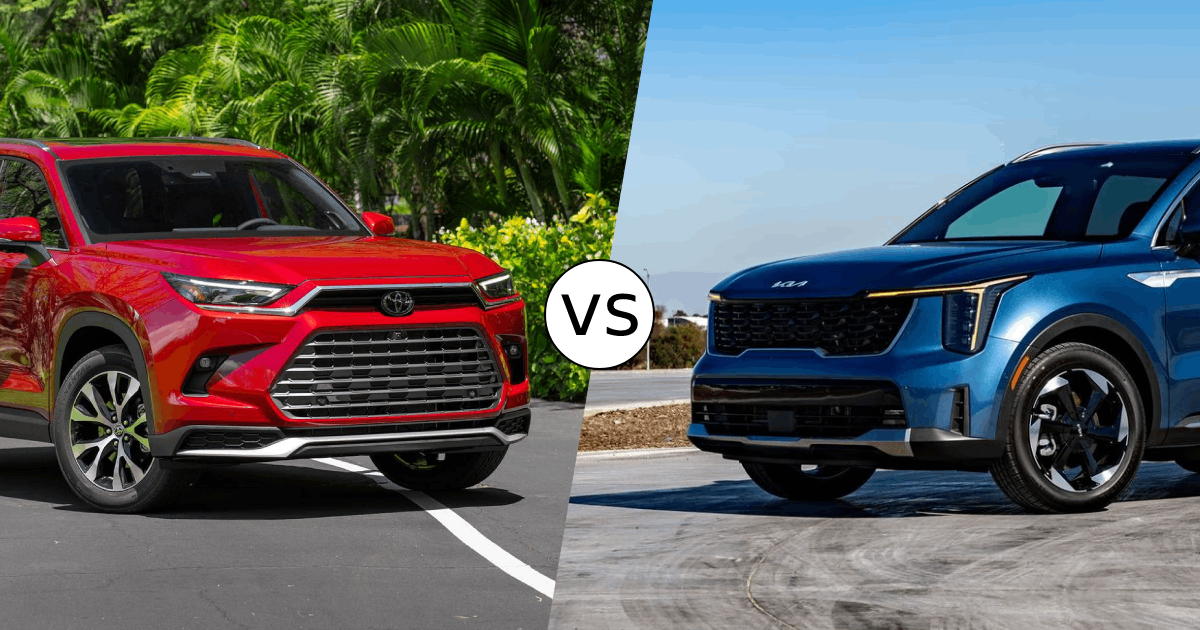
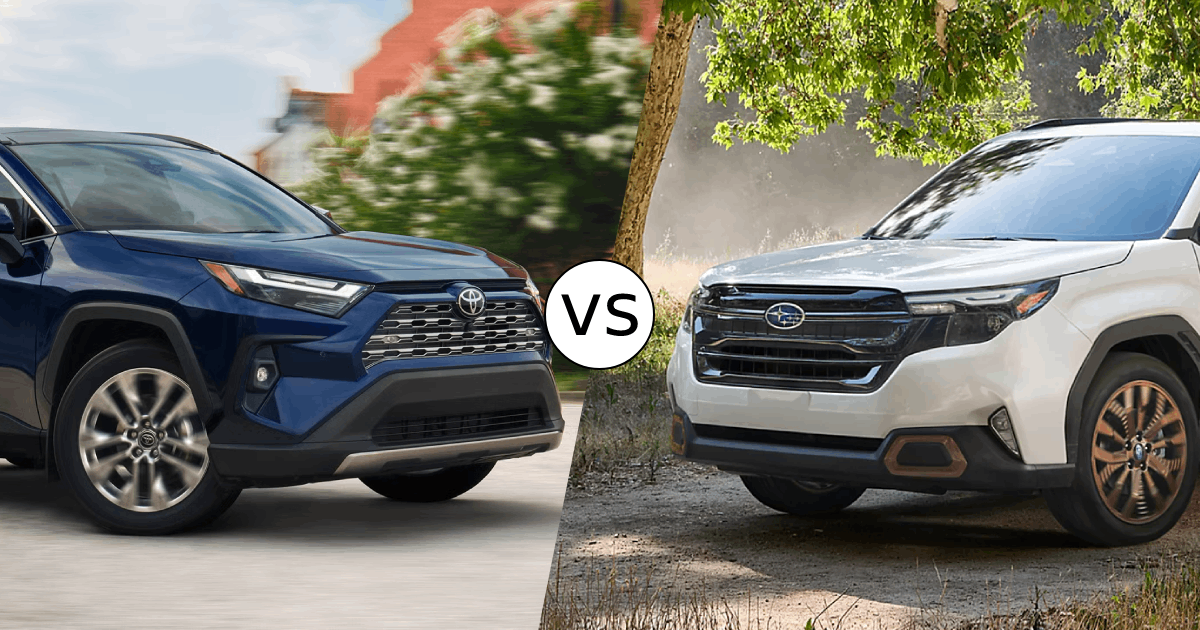
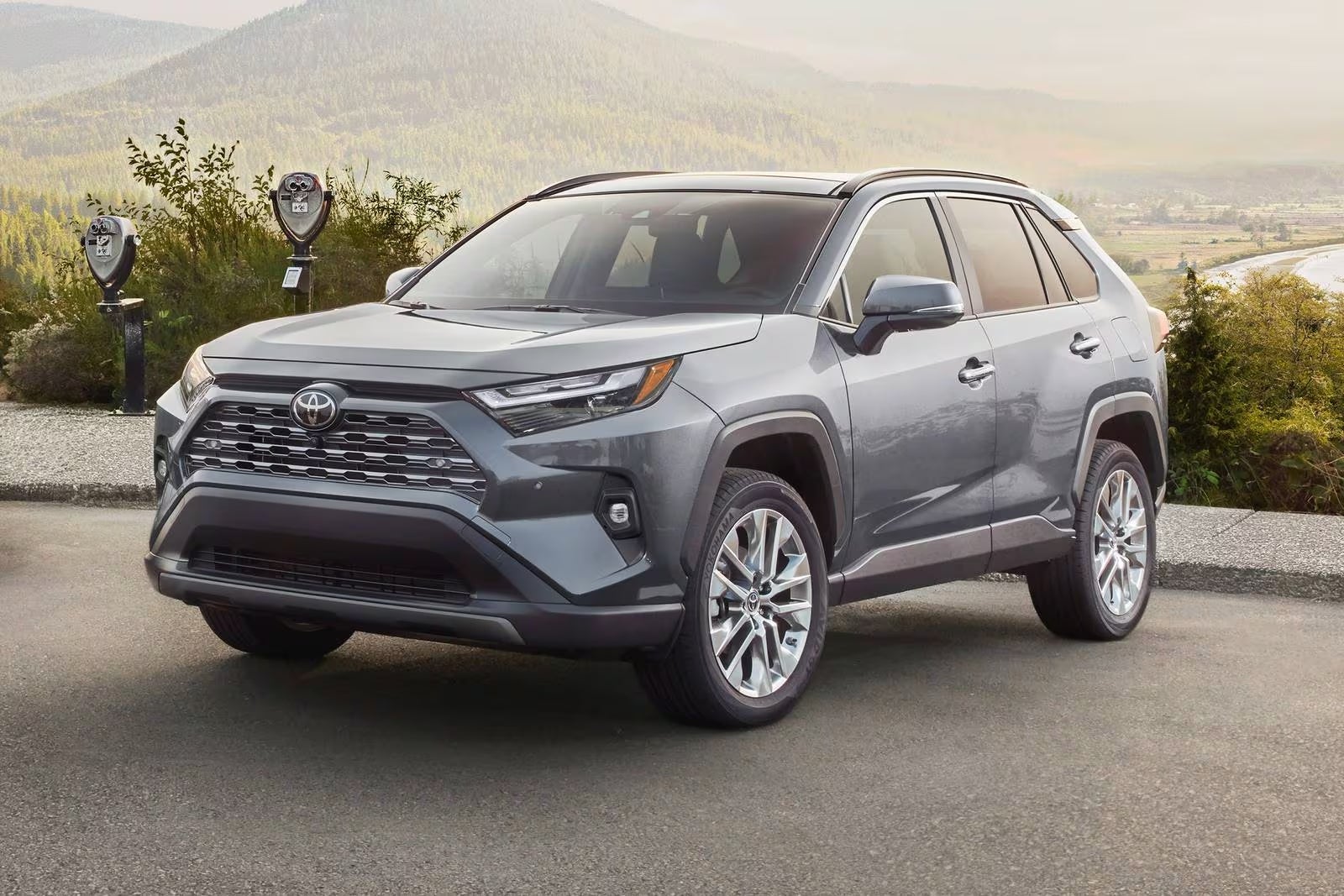
2025 Toyota RAV4 vs. 2025 Subaru Forester

Among compact crossover SUVs, the 2025 Toyota RAV4 and the 2025 Subaru Forester are crowd favorites that continue to win drivers over with their day-to-day usefulness, safety tech, and rough-weather handling abilities. Especially in Texas, these qualities make them perfect for our unpredictable seasonal changes, from scorching summers to flash flood warnings. Let's compare the RAV4 vs. Forester to help you decide which SUV suits your lifestyle better. more Pricing and Trims The 2025 Toyota RAV4 starts at $29,250 and goes up to $40,605 for the Hybrid Limited, while the Subaru Forester begins at $29,995 and reaches $41,695 for the Touring Hybrid. That price gap matters for budget-minded Prosper families, as these savings can be used for other expenses or to add premium upgrades to your SUV. 2025 RAV4 The RAV4 offers up to 11 trim options, including hybrid choices: LE and Hybrid LE XLE and Hybrid XLE XLE Premium and Hybrid XLE Premium Limited and Hybrid Limited Hybrid Woodland Edition Hybrid SE Hybrid XSE Whether you're looking for a vehicle that matches your adventurous spirit or a cost-saving hybrid, there's a trim for you. 2025 Forester Subaru offers the Forester in 10 trim levels: Base Premium and Premium Hybrid Sport and Sport Hybrid Wilderness Limited and Limited Hybrid Touring and Touring Hybrid Each model includes convenient features, especially for busy parents juggling soccer practice and dance recitals. Performance and Efficiency The RAV4's standard 2.5-liter gas engine delivers 203 horsepower and 184 lb-ft of torque, while the Forester's 2.5-liter engine produces up to 182 horsepower and 176 lb-ft of torque. When merging onto highways or climbing hills, the RAV4's extra power helps. Both use continuously variable transmissions, though the RAV4 feels more responsive when you need quick acceleration. Front-wheel drive (FWD) and all-wheel drive (AWD) are available on the RAV4, while the Forester comes standard with Subaru's Symmetrical AWD system. For fuel economy, the RAV4 takes the lead. Gas models achieve 27 mpg in the city and 35 mpg on the highway with FWD, while the AWD hybrid versions jump to 41 mpg in the city and 38 mpg on the highway. Non-hybrid Foresters get a respectable 26 mpg in the city and 33 mpg on the highway. If you've got long commutes, the more fuel-efficient RAV4 could save you hundreds of dollars yearly. While both SUVs tow 1,500 pounds standard, Subaru's Wilderness trim can pull 3,000 pounds. As for handling, the RAV4 feels slightly sportier around corners, while the Forester's softer suspension better absorbs bumps. Interior and Comfort Both SUVs offer comfortable cabins with different strengths. The Forester wins on total cargo space with up to 29.6 cubic feet behind the rear seats and 74.4 cubic feet with seats folded. However, the RAV4 provides more everyday utility at 37.6 cubic feet behind the seats but less max space at 69.8 cubic feet with seats down. Most Forester trims feature an 11.6-inch touch screen with wireless Apple CarPlay and Android Auto. The RAV4 includes an 8- or 10.5-inch display, and if you love music, you'll appreciate the RAV4's 11-speaker JBL audio system on higher models. Depending on the trim you choose, both SUVs offer heated and ventilated seats, dual climate control, and power-folding seats. These quality-of-life features make driving more comfortable, especially in hot Texas summers. Safety, Reliability, and Warranty Both SUVs offer excellent protection with five-star National Highway Traffic Safety Administration ratings and Insurance Institute for Highway Safety Top Safety Pick+ awards. These ratings come from extensive crash testing, including front, side, and rollover scenarios, so you can count on these SUVs keeping you and your family safe on the road. Each model includes comprehensive safety tech. The RAV4 features Toyota Safety Sense 2.5 with adaptive cruise control, lane-keeping assist, and automatic emergency braking. Subaru's updated EyeSight system offers similar protection, plus attention monitoring that alerts you if you look away from the road for too long while driving. These technologies prove invaluable on Texas roads, preventing numerous accidents. Both vehicles are also known to be reliable and come with three-year/36,000-mile basic and five-year/60,000-mile powertrain warranties. With the cost of living increasing and repair costs running high, this dependability matters. Which SUV Is Right for You? If you compare the Subaru Forester vs. Toyota RAV4 specs, the RAV4 is cheaper upfront, has a more powerful engine, offers more space behind the rear seats, and gets better fuel ratings. However, the Forester fights back with standard AWD, more cargo room, and a larger standard touch screen. Your decision hinges on what matters most. If you want fuel savings and a lower price, the RAV4 makes sense. For standard AWD and maximum cargo space, consider the Forester. You should also consider your local climate, such as opting for ventilated seats to handle Prosper summers. With top safety features and comfortable interiors, both vehicles easily handle school runs, daily commutes, and weekend adventures. Test-Drive the New RAV4 at Longo Toyota of Prosper Today To see if the 2025 RAV4 suits your Prosper lifestyle, visit our dealership. We'll help you find your perfect SUV match. Contact us to arrange a test-drive or ask any questions.

2025 Toyota Camry vs. Hyundai Sonata

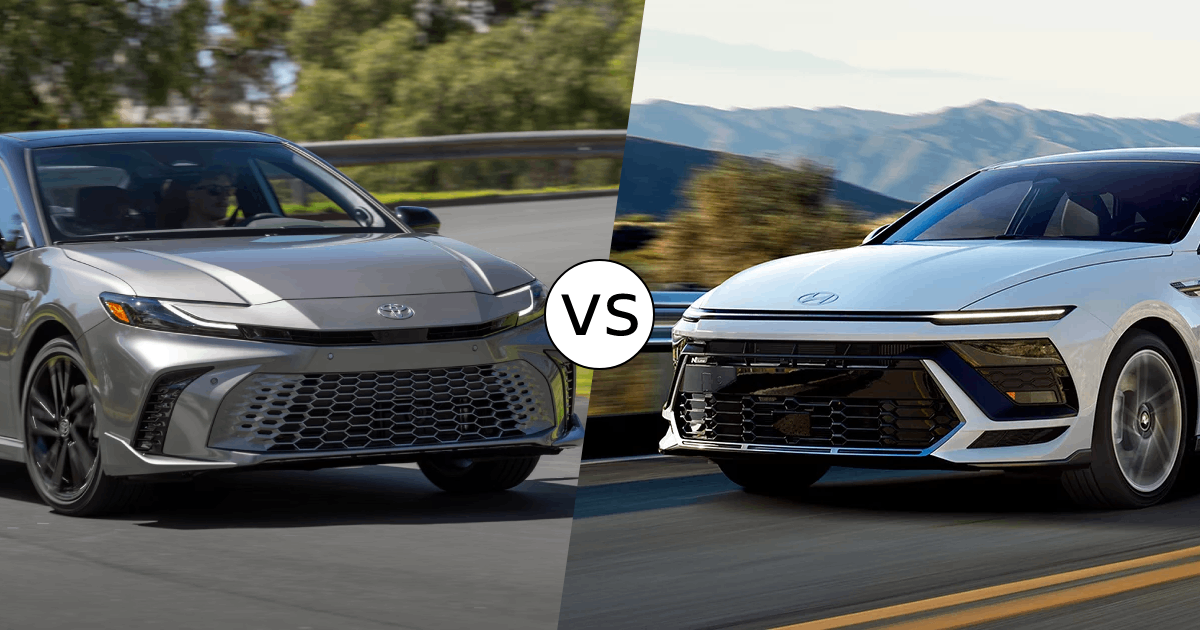
2025 Toyota Camry vs. 2025 Hyundai Sonata

If you're debating between the 2025 Toyota Camry and the Hyundai Sonata, you're in the right place. In this car specification comparison guide, we'll dive deep to uncover the biggest differences between these two popular contenders. Get expert insights from our team at Longo Toyota of Prosper in Texas, so you can decide which model wins this year's Hyundai Sonata vs. Toyota Camry showdown. more Performance and Engine Specifications Let's kick off our Camry vs. Sonata matchup by taking a closer look at what fuels these vehicles. The Toyota Camry is exclusively hybrid this year. The 2.5-liter four-cylinder engine paired with an electric motor produces 225 horsepower in the front-wheel-drive configuration. If you choose the all-wheel-drive model, you'll get a small boost to 232 horsepower. That's a noticeable improvement from last year. On the other side of the debate, the 2025 Hyundai Sonata offers a variety of engines. Most models come with a 2.5-liter gas engine that gets 191 horsepower, while the hybrid option delivers a combined 192 horsepower. The Sonata N Line gets an upgrade with a turbocharged 2.5-liter engine. With 290 horsepower, this more niche model may appeal if you're a performance-focused driver. However, if you're simply looking for a reliable everyday commuter vehicle that'll help you save money on gas and reduce your carbon footprint, the Camry is the way to go. Fuel Efficiency Next up in our Hyundai Sonata vs. Camry showdown: fuel efficiency. It's no surprise that the hybrid Camry leads the way, offering an impressive EPA-estimated 53 mpg in the city and 50 mpg on the highway for its LE front-wheel-drive model. This earns it a combined rating of 51 mpg. Even with the less efficient XSE all-wheel-drive version, you'll still get a strong 44 mpg in the city and 43 mpg on the highway. Even the hybrid Sonata falls a bit behind in this category, giving you an EPA-estimated 44 mpg in the city and 51 mpg on the highway for a combined 47 mpg. Nonhybrid Sonata models offer up to 28 mpg in the city and 38 mpg on the highway. With the sportier N Line trim, you'll see even lower numbers at 23 mpg in the city and 32 mpg on the highway. Exterior Design Let's move on to the Hyundai Sonata vs. Toyota Camry specs. The 2025 Hyundai Sonata measures 193.3 inches long, 73.2 inches wide, and 56.9 inches high, with a wheelbase of 111.8 inches. By contrast, the 2025 Toyota Camry is slightly longer at 193.5 inches but narrower at 72.4 inches. Its wheelbase is also a bit shorter, coming in at 111.2 inches. With both models, you'll get 16-inch alloy wheels and all-season tires. Hyundai offers unique upgrade options such as black lug nuts and wheel locks while Toyota has released several sporty touches such as blackout emblem overlays and two-tone paint schemes. The Hyundai Sonata comes in eight different exterior paint colors, ranging from Carbon Blue to Aero Silver. While the Toyota Camry only comes in seven solid colors, including Ocean Gem and Supersonic Red, it also features four colors you can pair with a black metallic roof for a nice contrast. Interior Design The Camry seats five passengers comfortably, with front seats that provide support for long-distance drives. Your rear passengers will benefit from generous legroom and headroom thanks to its relatively flat roofline and wide bench seat. Cargo space is competitive with 15.1 cubic feet of trunk capacity. The split folding rear seats add flexibility to carry longer items when you need to. Storage compartments include large door pockets, center console bins, and phone storage areas. Available interior color options include Black, Boulder, Light Gray, and Cockpit Red. Upholstery varies by trim, with options that include durable cloth, SofTex, and premium leather. The Hyundai Sonata provides ample head and legroom for your front passengers and a spacious interior. Storage is another strong point, with 15.6 cubic feet of cargo space and rear-seat access levers for added convenience. The center console comes with deep compartments, perfect for storing your personal items. The interior materials feel upscale throughout the cabin with a range of color schemes that includes Black, Dark Gray, and Two-Tone Camel. Overall, the Sonata's cabin feels a bit more modern, but the Camry offers you better rear visibility and more comfortable seating. Technology and Infotainment Systems Moving on to technology, the Camry features an available 12.3-inch touch screen that supports wireless Apple CarPlay and Android Auto. Toyota's latest infotainment software is responsive and user-friendly, making it easy to connect your smartphone. A wireless charging pad and an optional nine-speaker JBL audio system round everything out. Meanwhile, the Sonata gets two 12.3-inch displays, which are integrated into a sleek, glass-panel design. One is for digital gauges and the other is for infotainment. Wireless Apple CarPlay, Android Auto, and wireless smartphone charging are standard across the board. An available 12-speaker Bose premium audio system offers a rich and immersive sound experience. Safety and Driver-Assistance Features The Camry comes standard with Toyota's comprehensive safety suite, which includes automated emergency braking with pedestrian and cyclist detection, adaptive cruise control with lane centering, and lane departure warning with lane-keeping assist. It also received the 2025 Top Safety Pick rating from the Insurance Institute for Highway Safety. Similarly, all Sonata models come with Hyundai's SmartSense safety package. This includes forward collision warning with automated emergency braking, lane departure warning, and lane-keeping assist. Higher trims add features such as remote smart parking assist. The 2025 Sonata received a five-star safety rating from the National Highway Traffic Safety Administration. Price Comparison While the Sonata offers a slightly more affordable starting price point of $26,900, you'll find that the top of the lineup is more expensive at $37,700 for the MSRP. In comparison, the Camry starts a bit higher at $28,700 and scales up to $34,900 with the XSE. The difference in costs isn't substantial, but it's worth considering which features you prioritize as you review different trim levels. Schedule a Test-Drive at Longo Toyota of Prosper Today Now that we've broken down for you the differences between the 2025 Camry vs. Sonata in our car specification comparison guide, there's just one thing left for you to do: go for a test-drive. Visit us today at Longo Toyota of Prosper in Texas to experience everything the new Toyota lineup has to offer. You can also check out our full inventory of new Toyota vehicles to learn more about the latest models. Send us a message for more information, personalized recommendations, or the chance to schedule your visit.

2025 Toyota RAV4 vs RAV4 Hybrid vs RAV4 Prime

2025 Toyota RAV4 vs. RAV4 Hybrid vs. RAV4 Plug-In Hybrid

You have multiple choices for the Toyota RAV4 2025 model lineup, as this versatile small SUV is available in gas-powered, hybrid, and plug-in hybrid versions. Our Longo Toyota of Prosper team invites you to explore all your options for 2025 before you schedule a test drive. more Comparative Analysis: RAV4 vs. RAV4 Hybrid vs. RAV4 Plug-In Hybrid The 2025 Toyota RAV4 is available in 13 trims: four for the RAV4, seven for the RAV4 Hybrid, and two for the RAV4 Plug-in Hybrid. 2025 Toyota RAV4 The traditional gas-powered RAV4 trims are the LE, XLE, XLE Premium, and Limited. The base LE trim features LED headlights and 17-inch steel wheels. Inside, you'll enjoy a six-speaker sound system and an 8-inch touch screen with wireless Apple CarPlay and Android Auto. The XLE adds intermittent windshield wipers, roof rails, a power liftgate, and 17-inch alloy wheels. You also get dual-zone automatic climate control and keyless entry with a push-button start. Moving to the XLE Premium gets you a sunroof, LED fog lights, and 19-inch wheels. A leather-trimmed steering wheel, synthetic leather upholstery, and stitched trim on the doors and center console are standard features in the XLE Premium. Finally, the top-of-the-line Limited trim features heated and ventilated front seats, a 12.3-inch digital driver information display, ambient lighting, an 11-speaker JBL stereo system, and a 10.5-inch touch screen. 2025 Toyota RAV4 Hybrid The RAV4 Hybrid trims are the Hybrid LE, Hybrid XLE, Hybrid XLE Premium, Hybrid Woodland, Hybrid SE, Hybrid XSE, and Hybrid Limited. On the Hybrid LE, you'll find LED headlights, 17-inch wheels, dual-zone automatic climate control, a six-speaker sound system, satellite radio, 4G LTE Wi-Fi connectivity, and an 8-inch touch screen with wireless Apple CarPlay and Android Auto. The Hybrid XLE has a rear wiper, heated exterior mirrors, and upgraded projector-style LED headlights. You also get keyless entry with a push-button start, rear USB ports, a cargo cover, and a power-adjustable driver's seat. Opting for the Hybrid SE gets you ambient cabin lighting, a leather-wrapped steering wheel, blue interior accents, and 18-inch black wheels. The off-road-ready Hybrid Woodland features black exterior accents, raised roof rails, and 18-inch bronze wheels with all-terrain tires. On the Hybrid XLE Premium, you'll find a leather-wrapped steering wheel, synthetic leather upholstery, a sunroof, a power liftgate, and 18-inch wheels. The Hybrid XSE has a unique two-tone exterior with black trim, synthetic leather upholstery, heated front seats, an auto-dimming rearview mirror, and a 10.5-inch touch screen. The Hybrid Limited tops it off with ventilated front seats, a digital instrument panel, a power-adjustable passenger seat, dark brown interior accents, power-folding exterior mirrors with puddle lights, and an 11-speaker JBL premium sound system. 2025 Toyota RAV4 Plug-In Hybrid Toyota also offers a RAV4 Plug-in Hybrid, previously known as the RAV4 Prime, in two trim levels: the SE and XSE. The SE features a power liftgate, LED headlights, and 18-inch alloy wheels. It also has keyless entry with a push-button start, heated front seats, dual-zone automatic climate control, a 7-inch digital driver display, a six-speaker stereo system, and an 8-inch touch screen with wireless Apple CarPlay and Android Auto. The XSE adds a sunroof, a two-tone exterior with a black roof, and 19-inch wheels. You also get paddle shifters, wireless charging, synthetic leather upholstery, ambient lighting, red accent stitching, an 11-speaker JBL system, and a 12.3-inch touch screen. Power and Performance The traditional gas-powered 2025 RAV4 features a 2.5-liter four-cylinder engine that delivers 203 horsepower. This engine is matched with an eight-speed automatic transmission and standard front-wheel drive. An all-wheel-drive system is available for better traction and control over various conditions and surfaces. This engine garners an EPA-estimated 27 mpg for city driving, 35 mpg on the highway, and 30 mpg combined. All seven trims of the 2025 RAV4 Hybrid are powered by the same 2.5-liter four-cylinder engine paired with an electric motor and continuously variable automatic transmission. This combination produces a combined 219 horsepower. The Hybrid trims have all-wheel drive as standard, thanks to a second electric motor that powers the rear wheels for additional traction when needed. Most hybrid trims get an EPA-estimated 41 mpg on city streets, 38 mpg on the highway, and 39 combined, except the off-road-ready Hybrid Woodland, which sacrifices a little efficiency for adventure. The Hybrid Woodland still gets a rating of 38 mpg for city, 35 mpg for highway, and 37 combined, keeping you on the road — or trails — in Prosper, Texas, and away from the pump longer. Finally, the 2025 RAV4 Plug-in Hybrid has a 2.5-liter four-cylinder engine matched to a plug-in hybrid system for a combined output of 302 horsepower. All-wheel drive is standard on the RAV4 Plug-in Hybrid, giving you the traction and control needed. You can enjoy the EPA-estimated 94 MPGe rating, with 40 mpg for city driving, 36 mpg on the highway, and 38 mpg combined, saving you time and money. Driver-Assistance Features Toyota understands the importance of safety and driver-assistance features to ensure peace of mind on the road, and the 2025 RAV4 is packed. Every RAV4 has an advanced airbag system to help protect you and your passengers in a collision. Depending on the trim level you select, additional features of the Toyota Sense safety suite may include: Precollision system with pedestrian detection Full-speed range dynamic radar cruise control Lane departure alert with steering assist Lane tracing assist Automatic high beams Road sign assist Available features include front and rear parking sensors, a blind-spot monitor with rear cross-traffic alert, front and rear parking assist with automatic braking, a panoramic view monitor with a 360-degree overhead view in low-speed drive and reverse, and a curb view. Future of the Toyota RAV4 Series The next-generation Toyota RAV4, expected for the 2026 model year, is set to debut in late 2025 with a refreshed design and a strong hybrid focus. Anticipated updates include a boxier, more rugged exterior, an upgraded interior with a larger touch screen, and Toyota Safety Sense 3.0. The official unveiling is projected between August and October 2025. Stay tuned for more details as Toyota reveals its latest RAV4 evolution. Contact Longo Toyota of Prosper Today For more information on the future of the Toyota RAV4 series or to schedule a test-drive in one of the 2025 models, contact our Longo Toyota of Prosper team. Our experts are here to answer questions, review financing options, and get you on the road in the Toyota of your dreams. Call us at 972-347-4929 or complete our secure online form to get started.

Toyota Tacoma vs. Chevrolet Colorado

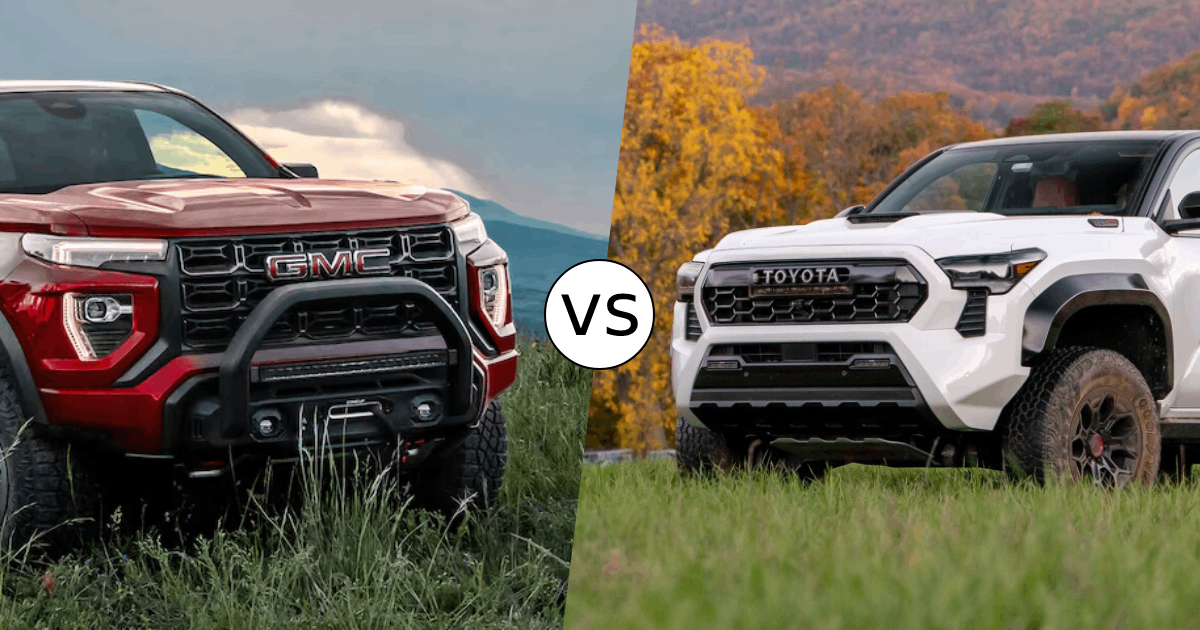
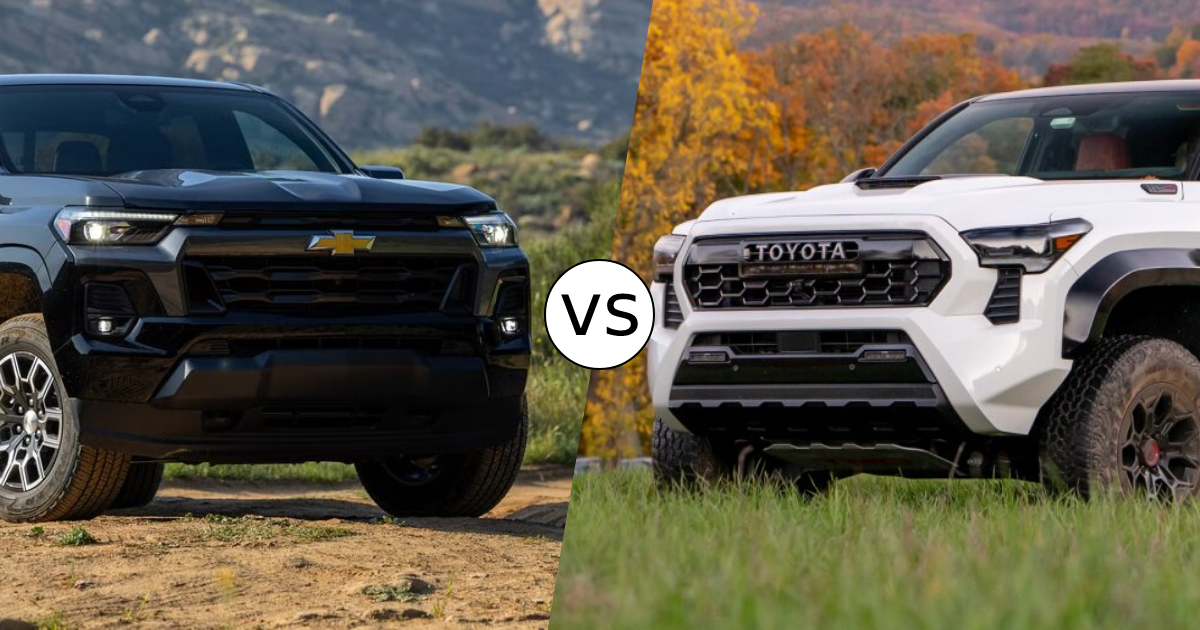
2025 Toyota Tacoma vs. Chevrolet Colorado

When it comes to midsize trucks, the market has plenty to offer. Whether you're commuting around town or planning a weekend off-road adventure, these trucks have a personality all their own. Let's explore the Toyota Tacoma and the Chevrolet Colorado and go over everything, including powertrains, interior features, safety features, and starting prices. more Overview of the Toyota Tacoma and Chevrolet Colorado Both the Chevrolet Colorado and Toyota Tacoma have their dedicated fan base in the midsize pickup truck market. The Tacoma, with its established past and great off-road capacity, has been restyled to offer more comfort and high-tech features. Meanwhile, the Colorado comes in with a powerful 2.7-liter turbo engine and many configurations, making it a dependable workhorse with a touch of flair. Performance and Powertrain Comparison Let's explore how these two trucks differ when it comes to powertrains and performance. Engine Options and Specifications The Tacoma offers a turbocharged 2.4-liter I-4 engine. In the entry-level SR model, this engine produces around 228 horsepower, but most of the lineup benefits from a more powerful version that pushes up to 278 horsepower and 317 lb-ft of torque. The Tacoma's engine is paired with an eight-speed automatic transmission, and you even get the option of a six-speed manual if you're in the mood for a more engaged drive. The Chevrolet Colorado comes standard with a turbocharged 2.7-liter I-4 engine that produces an impressive 310 horsepower and 430 lb-ft of torque. This engine is matched to an eight-speed automatic transmission. Fuel Efficiency When it comes to fuel economy, both trucks are pretty similar. While 2025 figures aren't available, the 2024 Tacoma typically gets about 20-23 mpg in the city and pushes up to 23-26 mpg on the highway, depending on whether you choose two-wheel or four-wheel drive. The 2024 Colorado offers comparable figures for its rear-wheel-drive models, with roughly 20 mpg city and 24 mpg highway. Towing Capacity and Payload Towing and payload are key factors if you use your truck for work or heavy lifting. The Toyota Tacoma boasts a maximum towing capacity of up to 6,500 pounds and can carry a payload of 1,705 pounds. The Chevrolet Colorado has a maximum towing capacity of up to 7,700 pounds — although if you choose the off-road-oriented ZR2 model, the rating drops to 6,000 pounds. Off-Road Capabilities The Tacoma's recent updates include a shift to rear coil-spring suspension in some trims, which improves ground clearance and suspension and smooths out bumpy trails. The Colorado, with its ZR2 trim, doesn't shy away from tough conditions. With 10.7 inches of ground clearance and off-road packages that include advanced suspension components, the Colorado is built to take on rocky paths and muddy trails. Interior and Technology Features When it comes to design and technology, there's so much to find inside each truck. Cabin Comfort and Design The Toyota Tacoma's interior has been redesigned to be simple and comfortable. Soft-touch materials, a modern dashboard, and a raised seating position ensure you won't feel like you're sitting too low to the ground. The Tacoma's interior is functional and inviting, making long drives or off-road excursions much more enjoyable. The Chevrolet Colorado's cabin is equally modern, though it has a slightly different vibe. Its crew cab layout offers a clean, updated design. While it may have less headroom than the Tacoma, the overall feel is contemporary, with neatly arranged controls and a focus on driver convenience. Infotainment and Connectivity Options Both trucks keep you connected on the go. The Tacoma features an easy-to-use infotainment system that comes with either a standard 7-inch or an upgraded 12.3-inch digital display in higher trims. Wireless Apple CarPlay and Android Auto are standard, so your music, maps, and messages are always within reach. The Colorado isn't far behind, offering an 11.3-inch touch screen as its centerpiece. It also supports wireless smartphone connectivity with Apple CarPlay and Android Auto, and if you like a bit more tech, a premium audio system is available. Safety and Reliability Safety is a huge deal for anyone on the road, and both the Tacoma and Colorado have loaded up on modern safety tech. Standard features include forward collision warning, automatic emergency braking, and lane departure warnings. The 2025 Toyota Tacoma's safety features helped it earn the 2024 Top Safety Pick+ award from the Insurance Institute for Highway Safety. While both trucks perform well in crash tests, the Tacoma has a slight advantage due to its construction and longstanding reputation for reliability. Exterior Design and Customization Customization is where things get really interesting. The Tacoma has long been a favorite among truck enthusiasts who love to add personal touches, such as lifted suspensions, custom wheels, and unique accessories that make your ride stand out. Toyota even offers a range of official accessories so you can tailor your Tacoma to your exact needs. The Colorado also offers customization, but its aftermarket scene isn't quite as expansive as the Tacoma. There are still plenty of options if you're looking to tweak your ride, especially with off-road packages and styling upgrades that make the Colorado uniquely yours. Pricing and Value for Money The 2025 Toyota Tacoma has starting MSRPs of $31,590-$63,735, depending on the trim and options you choose. The Chevrolet Colorado, meanwhile, costs $31,900-$49,600. While the Colorado offers impressive power and towing capacity, its pricing structure means that it can become a pricier option, especially if you're looking at the more feature-packed trims. Which Truck Is Right for You? Choosing between the Toyota Tacoma and Chevrolet Colorado depends on your truck priorities. For overall value, ease of use, and performance, the Tacoma shines. If you want a midsize truck that excels both on trails and highways, check out this capable pickup. Visit us at Longo Toyota of Prosper to experience the Tacoma in person. We're here to help you find the ideal truck for your lifestyle.

2025 Toyota 4Runner vs. Ford Bronco

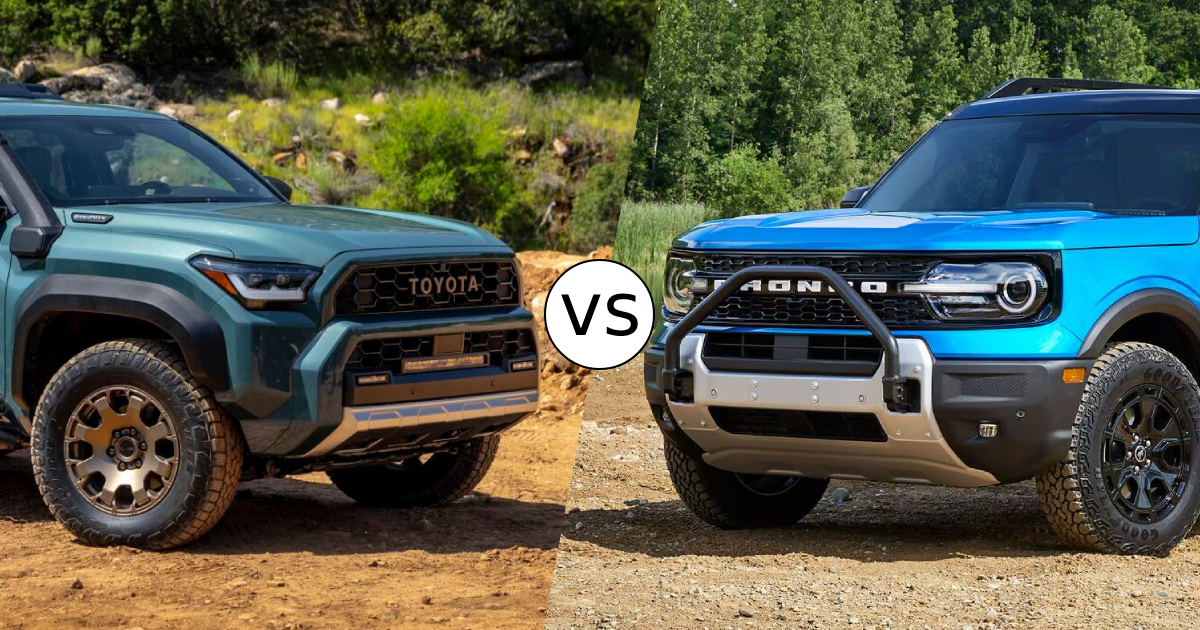
2025 Toyota 4Runner vs. Ford Bronco

The highly awaited 2025 Toyota 4Runner has finally arrived and is already generating plenty of buzz among off-road enthusiasts. This all-new sixth-generation model uses a Tacoma truck platform, which enhances its off-road performance and towing rating. While it has maintained its fifth-gen predecessor's rugged aesthetics and adventurous spirit, its interior has been massively upgraded for an improved in-cabin experience. But how well does this off-roading icon hold up against fellow top dogs in the segment? Join our team at Longo Toyota of Prosper in this ultimate showdown as we stack the new 4Runner against the 2025 Ford Bronco to determine which is the better adventure SUV. more Engine Specifications and Powertrain Comparison Let's start by checking out the Toyota 4Runner vs. Ford Bronco specs. For the 2025 model year, Toyota offers the 4Runner in two potent engine choices. The base powerplant, standard on all gas models, is an i-FORCE 2.4-liter turbocharged inline-four, producing 278 horsepower and 317 lb-ft of torque. This engine pairs with an eight-speed automatic transmission and rear-wheel drive or full-time four-wheel drive. Toyota also offers an electrified version of this powerplant, dubbed i-FORCE MAX, on higher models. This more powerful hybrid engine churns out a maximum of 326 horsepower and 465 lb-ft of torque. The 2025 Bronco's base engine is a 2.3-liter EcoBoost inline-four, which Ford pairs with a seven- or 10-speed transmission. This powerplant delivers an impressive 300 horsepower and 325 lb-ft of torque. While the Bronco doesn't offer hybrid capabilities like the new Toyota 4Runner, two V-6 engines are available for those seeking additional power. The optional 2.7-liter twin-turbo V-6 cranks out a maximum of 330 horsepower, while the more powerful 3.0-liter twin-turbo makes an astonishing 418 horsepower. Performance and Handling The 2025 Toyota 4Runner's robust engines offer plenty of power to conquer the great outdoors. The Trailhunter model, which comes equipped with the i-FORCE MAX engine, has an impressive 0-to-60 mph time of 7.7 seconds. Handling has also significantly improved since the last model year, and the gear shifts are smoother than ever. In addition to its formidable powertrain, the new 4Runner offers plenty of off-road-ready equipment to enhance performance and drive quality on rugged terrain, including a locking rear differential and disconnecting stabilizer bars. Higher models feature even more off-roading features, including a sport-tuned suspension and Bilstein monotube shocks. The new Ford Bronco is as capable as ever, thanks to its high-output engine lineup. Models equipped with the V-6 engine record impressive acceleration, making the 0-to-60 mph dash in 7.3 seconds. Steering is also stable and responsive, courtesy of an independent front suspension. Like the 2025 4Runner, the Bronco offers an array of standard and optional off-roading gear, making it easy to take on any terrain. Notable features and equipment include 17-inch beadlock capable wheels, 35-inch rugged terrain tires, electronic-locking front and rear axles, and high clearance fender flares. Towing Capacity and Utility Both the 2025 Toyota 4Runner and the 2025 Ford Bronco use pickup truck platforms, which has massive benefits for their towing capabilities. Even so, the 4Runner is the superior hauler of the two, boasting a maximum towing rating of 6,000 pounds when equipped with the i-FORCE engine. In comparison, the most formidable hauler in the 2025 Bronco line, the Raptor, with a standard 3.0-liter V-6 engine, can tow loads of up to 4,500 pounds. Nevertheless, both SUVs offer numerous standard and optional towing equipment to facilitate safer and easier hauling. All 2025 4Runner models come with an integrated towing receiver hitch, while an Integrated Trailer Brake Controller system and a Trailer Backup Guide system are standard on higher models and optional on the base models. Meanwhile, all Bronco models feature Trailer Sway Control and front tow hooks. The more towing-oriented Raptor model comes with additional standard features, including a Trailer Module and a hitch receiver. Design, Features, and Comfort Inside the new Toyota 4Runner you'll find a swanky cabin with premium features everywhere you turn. The base SR5 trim offers fabric-trimmed cloth seats with six-way manually adjustable driver and front passenger seats. SofTex- and leather-trimmed seats are available on higher trims. Other noteworthy available comfort amenities include heated and ventilated front seats, a leather tilt/telescopic steering wheel, and a dual-zone automatic climate control system. The 2025 Toyota 4Runner also comes with an upgraded and user-friendly infotainment system for a more connected driving experience. An 8.0-inch Toyota Multimedia display is the standard infotainment touch screen on the model. However, there's an optional 14.0-inch touch screen for those who prefer a larger display. Both screens offer wireless smartphone integration, allowing access and control of communication, entertainment, and navigation apps from the infotainment system. Additional standard and optional features include a 12.3-inch digital gauge cluster, head-up display, Sirius XM, and a 14-speaker JBL premium audio system. The new Ford Bronco offers an equally compelling cabin with a driver-centered layout and plenty of amazing comfort and tech features. Its easy-to-remove frameless doors and hard top allow for an open-air driving experience. Meanwhile, cloth-trimmed seats provide excellent support and plenty of adjustments to keep fatigue at bay during long drives. Models higher in the lineup offer leather upholstery and additional comfort features such as heated front seats with ventilation and a heated and leather-wrapped steering wheel. Inside, the Bronco also comes with a 12.0-inch infotainment display with the latest SYNC 4 infotainment software. Standard features integrated into this sophisticated infotainment system include voice recognition, real-time traffic updates, and wireless smartphone connectivity. Test-Drive the 2025 Toyota 4Runner at  Longo Toyota of Prosper Still undecided about whether you should consider the Bronco or 4Runner for your next SUV purchase? Come and see the 2025 Toyota 4Runner firsthand at our dealership in Prosper, Texas. At Longo Toyota of Prosper, we offer a wide range of new Toyota models including sedans, SUVs, and pickup trucks. Browse our inventory to see the 2025 4Runner models we currently have in stock and schedule a test-drive to experience its unmatched off-roading capabilities.

2025 Toyota Tacoma vs. Ford Ranger

2025 Toyota Tacoma vs. Ford Ranger

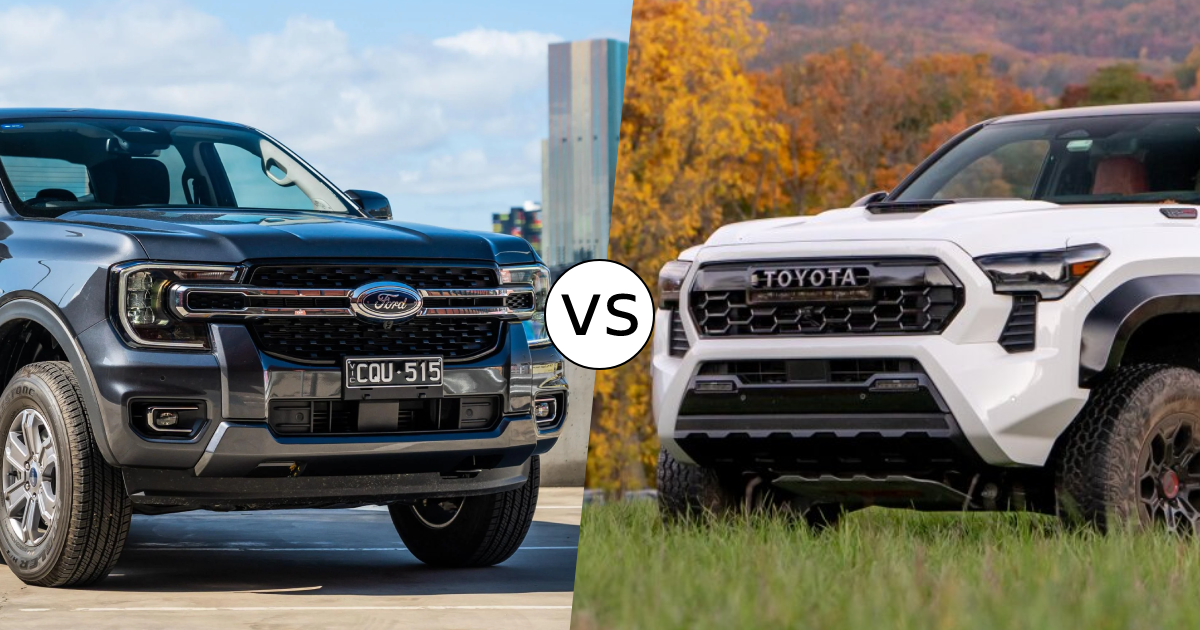
After ushering in new generations in 2024, the Toyota Tacoma and Ford Ranger today face off as the two major competitors in the midsize truck segment. These popular pickups both boast fresh styling, cutting-edge technology, and improved capabilities. But which is the best option? We take a closer look at the Tacoma vs. Ranger battle to help you find the right midsize pickup for your needs in Prosper, Texas. more Ford Ranger vs. Toyota Tacoma Powertrains and Performance The Toyota Tacoma and Ford Ranger both have various powertrain options to meet different tastes and needs. A turbocharged i-Force 2.4-liter four-cylinder engine powers standard Tacoma trucks. The basic version of the SR trim with automatic transmission generates 228 hp and 243 lb-ft of torque. Opt for a manual transmission system for a 270 hp motor with 310 lb-ft of torque. Higher trim levels get a more powerful 2.4-liter engine that generates 278 horsepower and 317 lb-ft of torque. Toyota also offers an available i-Force Max hybrid powertrain that produces 326 horsepower and 465 lb-ft of torque. Ford counters with three Ranger engines. A 2.3-liter EcoBoost four-cylinder making 270 hp and 310 lb-ft of torque is standard for the XL, XLT, and LARIAT trims. You can upgrade this to a 2.7-liter EcoBoost V-6 delivering 315 hp and 400 lb-ft of torque if you choose the XLT or LARIAT. For even more power, get the Raptor which comes with a 3.0-liter EcoBoost V-6 serving up 405 hp and 430 lb-ft of torque. While Ford's beefiest V-6 outmuscles Toyota's offerings, such a powerful engine sacrifices fuel economy. If fuel efficiency matters to you, you'll appreciate that Toyota offers a hybrid version of its truck while Ford doesn't. Independent reviews also say Tacoma's engine options provide all the power you need for city and highway driving. Ford Ranger vs. Toyota Tacoma Road Dynamics Both auto manufacturers have made improvements that enhance the driving experience for motorists. Critics say the current generation of Ford Rangers feels more stable on the road, although its steering has a “vague feel.” New coil springs help the latest Tacoma models have a more refined, smoother ride that's more car-like than the trucks of the past. Ford Ranger vs. Tacoma Off-Road Capabilities If you love off-road adventures, you're probably considering either the Toyota Tacoma TRD Pro or Ford Ranger Raptor. Both vehicles have various features that help them thrive on challenging terrains. The Tacoma TRD Pro features 2.5-inch FOX Racing QS3 shock absorbers and hydraulic rear bump stops for handling aggressive off-road maneuvers. New bucket seats up front have built-in shock absorbers to minimize the impact of rough rides. It maintains 11.0 inches of ground clearance with a 33.8-degree approach angle and 25.7-degree departure angle. The Ford Ranger Raptor also has 2.5-inch FOX shocks, but their Live Valve technology automatically adjusts to changing conditions. It only has 10.7 inches of ground clearance and a 33.0-degree approach angle, although its departure angle is larger at 26.4 degrees. Toyota Tacoma vs. Ford Ranger Towing and Payload Capacity The Ford Ranger has more potential pulling power, with a maximum towing capacity of 7,500 pounds and a payload rating of 1,805 pounds with the 2.3-liter and 2.7-liter engines. Surprisingly the 2025 Ranger Raptor's towing capacity is just 5,510 pounds, despite its larger motor. Gas-powered and hybrid Tacomas eclipse the Raptor's towing and payload specs. The standard Tacoma has a maximum towing capacity of 6,500 pounds and a payload rating of 1,705 pounds. As expected for trucks in its class, the Tacoma hybrid has a smaller towing capacity of 6,000 pounds, although its payload rating is a little larger at 1,709 pounds. Toyota Tacoma vs. Ford Ranger Specs for Fuel Economy The standard engines offer comparable fuel economy. The entry-level Ranger engine achieves 21 mpg in the city and 25 mpg during highway drives. The Tacoma's standard gas engine also returns 21 mpg in the city but edges out the competition with 26 mpg on the highway. For fuel-efficient urban driving, consider the Tacoma Hybrid, which delivers 23 mpg in the city and 24 mpg on the highway. Toyota vs. Ford Interior and Technology Both trucks have comfortable cabins with modern technology that enhances the driving experience. Cloth seats come standard on both models while higher trims have leather or leather-accented upholstery. The Toyota Tacoma's base infotainment screen is 8 inches, but a larger 14-inch display is optional until the Limited trim when it becomes standard. Ford's standard screen is bigger, measuring 10.1 inches, but its upgrade is just 12 inches. Both vehicles wirelessly connect to Apple CarPlay and Android Auto. Tacoma vs. Ranger Safety Features Both vehicles have some standard safety features including forward collision warning, automated emergency braking, and automatic high beams. However, the Toyota Safety Sense system is more comprehensive than the Ford Co-Pilot360. It includes features such as pedestrian detection, lane-keep assist, and adaptive cruise control that Ford makes optional extras or reserves for higher trims. Toyota also includes safety technologies that aren't available on the Ranger such as road sign assist. Toyota vs. Ford Pricing and Value Both trucks have similar price points, although the Toyota Tacoma is slightly more affordable with a starting MSRP of $31,590 compared to $32,980 for the Ranger. Both have comparable infotainment options, although the Toyota's safety suite is more comprehensive so it's a really financially savvy choice. The Toyota also has more trim options, which make it easier to find a Tacoma at just the right price point for your needs. Discover the Toyota Tacoma at Longo Toyota of Prosper While the Toyota Tacoma and Ford Ranger are both excellent midsize trucks, Toyota treats motorists with more features and options. It's the only one with manual transmission and hybrid engine options and its safety features, especially at the entry level, are much more impressive. See why so many motorists love the Toyota Tacoma at Longo Toyota of Prosper, your local Toyota dealership. Our friendly team can answer your questions about these top trucks and organize your test drive. We're open 9 a.m. to 8:30 p.m. Monday through Saturday for your convenience.

Toyota Tundra vs. Ford F-150

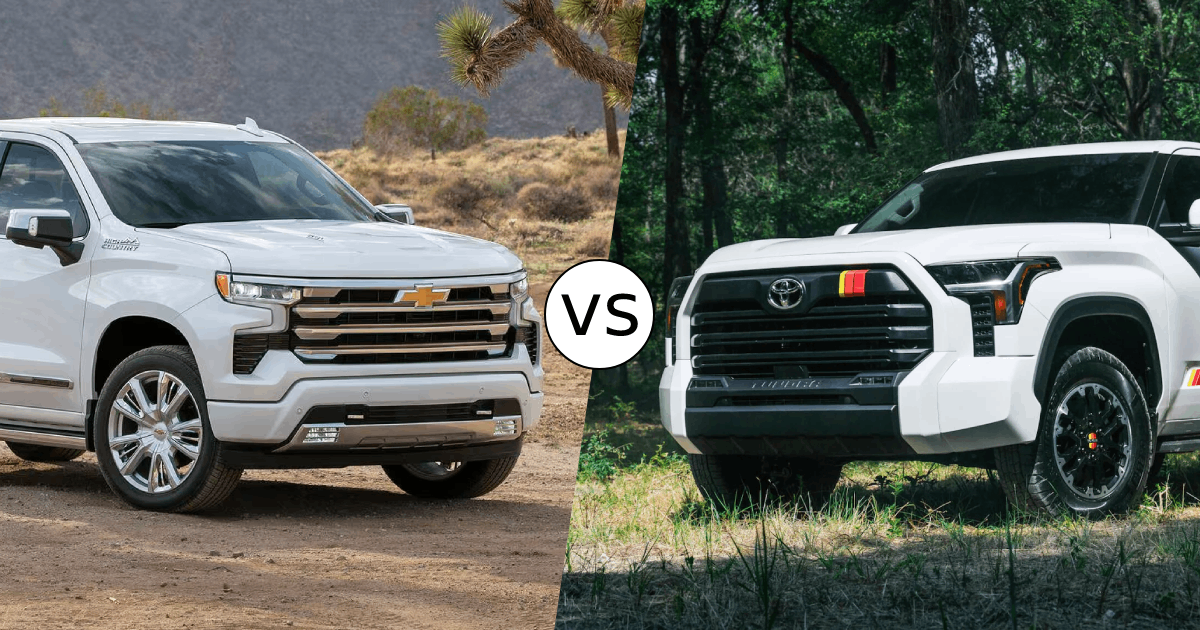
2025 Toyota Tundra vs. Ford F-150

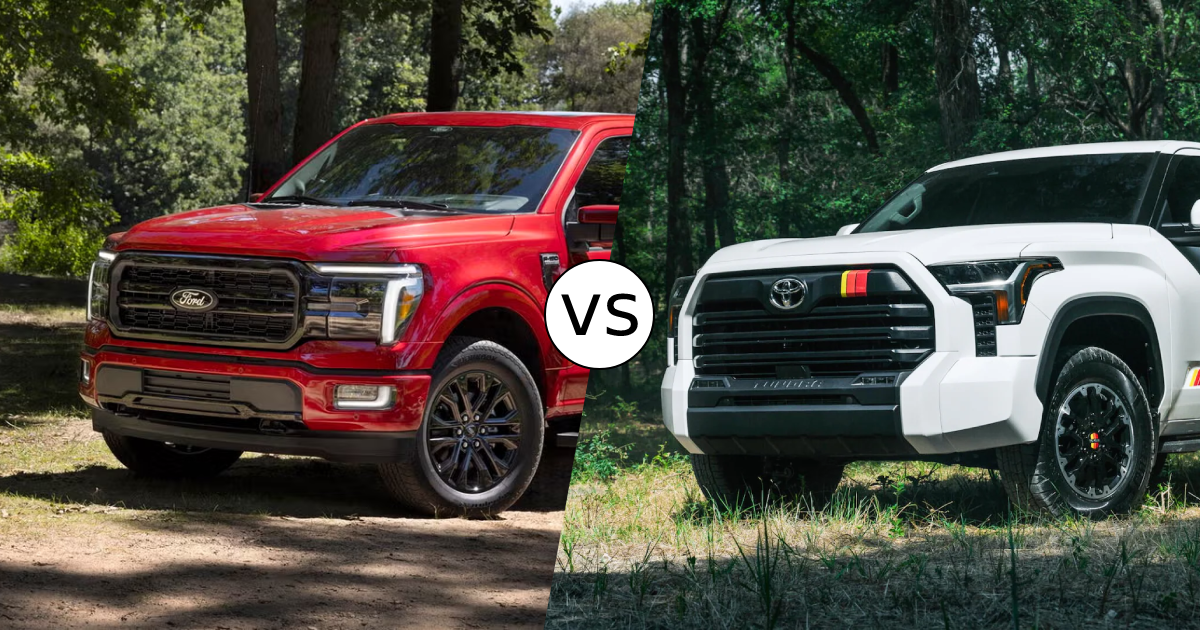
When it comes to full-size pickup trucks, the Toyota Tundra and Ford F-150 are titans of the industry. These two powerhouses have been duking it out for years, each vying for the top spot in the hearts of truck enthusiasts. As we roll into 2025, the rivalry is hotter than ever, with both trucks bringing their A-game to the table. The Ford F-150 has been America's best-selling truck for over four decades, a testament to its enduring popularity and reliability. On the other hand, the Toyota Tundra, fresh off a major redesign in 2024, is ready to shake things up with its bold new look and advanced features. For truck buyers in 2025, this Toyota Tundra vs. Ford F-150 comparison couldn't be more relevant. more Performance and Engine Specs Both trucks offer a range of powerful engine options. The 2025 Toyota Tundra features two engine options: a twin-turbo 3.4-liter V-6 with 389 horsepower and 479 lb-ft of torque, and a hybrid version that combines the V-6 with an electric motor for a total of 437 horsepower and 583 lb-ft of torque. The hybrid model achieves up to 22 mpg combined, with a towing capacity of 11,380 pounds and a payload capacity of 1,640 pounds, making it ideal for heavy-duty tasks and everyday use. In comparison, the 2025 Ford F-150 offers the following engine options: 3.5-liter PowerBoost full hybrid V-6: 430 horsepower and 570 lb-ft 2.7-liter EcoBoost V-6: 325 horsepower and 400 lb-ft of torque 3.5-liter EcoBoost V-6: 400 horsepower and 500 lb-ft 5.0-liter Ti-VCT V-8: 400 horsepower and 410 lb-ft 3.5-liter high-output EcoBoost V-6: 450 horsepower and 510 lb-ft 5.2-liter supercharged V-8: 720 horsepower and 640 lb-ft The hybrid variant achieves a combined fuel efficiency of up to 25 mpg, with a maximum towing capacity of 11,200 pounds and a payload capacity of 1,750 pounds. Exterior Design When it comes to looks, both trucks bring their A-game. The new Toyota Tundra features a bold exterior with a prominent grille and sleek LED headlights, creating a powerful presence. Its muscular lines and pronounced wheel arches enhance its rugged look, while practical features such as a power tailgate and integrated bed step add functionality. Available wheel sizes range from 18 to 22 inches, with color options including Magnetic Gray Metallic and Wind Chill Pearl. The 2025 Ford F-150 combines classic toughness with modern style, featuring a redesigned front fascia with a larger grille and advanced LED lighting for improved visibility. Its aerodynamic design enhances fuel efficiency, and it offers various colors such as Agate Black Metallic and Atlas Blue Metallic. Practical features include the Pro Access Tailgate and an optional onboard power generator. Interior Features The new Toyota Tundra features a comfortable and practical interior with premium materials, including options for leather trim. It offers heated and ventilated front and rear seats, dual-zone climate control, and a power-operated vertical rear window. Technology includes an 8-inch touch screen on base models and a 14-inch display on higher trims, along with wireless Apple CarPlay and Android Auto. The audio system boasts 12 speakers, and there's a 12.3-inch digital gauge cluster. Cargo space is also generous, with under-seat storage, a spacious center console, and three truck bed sizes (5.5, 6.5, and 8.1 feet). In comparison, the 2025 Ford F-150 offers durable cloth seats in lower trims and luxurious leather with massaging seats in higher trims. The SYNC 4 infotainment system features a 12-inch touch screen with wireless Apple CarPlay and Android Auto. Higher trims include a B&O Sound System and a 12-inch digital productivity screen. Utility options include the Pro Access Tailgate, onboard power generator, and under-seat storage. It offers three bed sizes (5.5, 6.5, and 8 feet) and a maximum payload capacity of 2,440 pounds. Safety and Reliability When comparing the Tundra vs. F-150's safety and reliability, these trucks don't disappoint. The Tundra has earned high marks from the Insurance Institute for Highway Safety, including a Top Safety Pick+ rating, thanks to its robust crashworthiness and advanced safety features such as the standard Toyota Safety Sense 2.5. Historically, the Tundra has been known for its reliability, though recent models have faced some challenges, leading to a predicted reliability rating that is slightly below average. The Tundra comes with a comprehensive warranty package, including a three-year/36,000-mile basic warranty, a five-year/60,000-mile powertrain warranty, and a 10-year/150,000-mile hybrid battery warranty. The 2025 Ford F-150 also boasts strong safety credentials, receiving a five-star overall safety rating from the National Highway Traffic Safety Administration. It features the Ford Co-Pilot360 suite, which includes precollision assist with automatic emergency braking, blind-spot monitoring, and lane-keeping assist. The F-150 has a mixed reliability history, with some model years performing better than others, but it generally maintains a solid reputation. Ford offers a similar warranty package with a three-year/36,000-mile basic warranty and a five-year/60,000-mile powertrain warranty. Cost of Ownership The 2025 Toyota Tundra starts at an MSRP of $40,090, with higher trims reaching up to $80,725. Maintenance costs for the Tundra over the first five years are estimated to be around $2,259, which is relatively low compared to other full-size trucks. The Tundra also holds its value well, with a five-year depreciation rate of 36%, resulting in a resale value of approximately $41,223. This strong resale value, combined with Toyota's reputation for reliability, makes the Tundra a cost-effective choice in the long run. The 2025 Ford F-150 has a starting MSRP of $38,710, with top trims such as the Raptor reaching up to $78,905. Maintenance costs for the F-150 are slightly higher, averaging around $3,507 over the first five years. The F-150's depreciation rate is higher at 51%, leading to a five-year resale value of about $30,245. Despite the higher maintenance costs and depreciation, the F-150's diverse engine options and advanced features may appeal to buyers looking for a versatile and powerful truck. The Verdict: Which Truck Reigns Supreme? Both the Toyota Tundra and Ford F-150 excel as exceptional trucks, with the F-150 offering more engine options and higher towing capacity, while the Tundra impresses with its bold design and hybrid powertrain. Ultimately, the choice depends on your personal preference. At Longo Toyota of Prosper, we proudly present the 2025 Toyota Tundra, featuring a recent redesign and powerful engine options. Visit our dealership to explore this top contender in the full-size truck segment. Our knowledgeable staff is ready to answer your questions and arrange a test-drive. Experience the power and comfort of the Tundra firsthand — schedule your test-drive today.

2025 Toyota Tacoma vs. Toyota Tundra

2025 Toyota Tacoma vs. Toyota Tundra

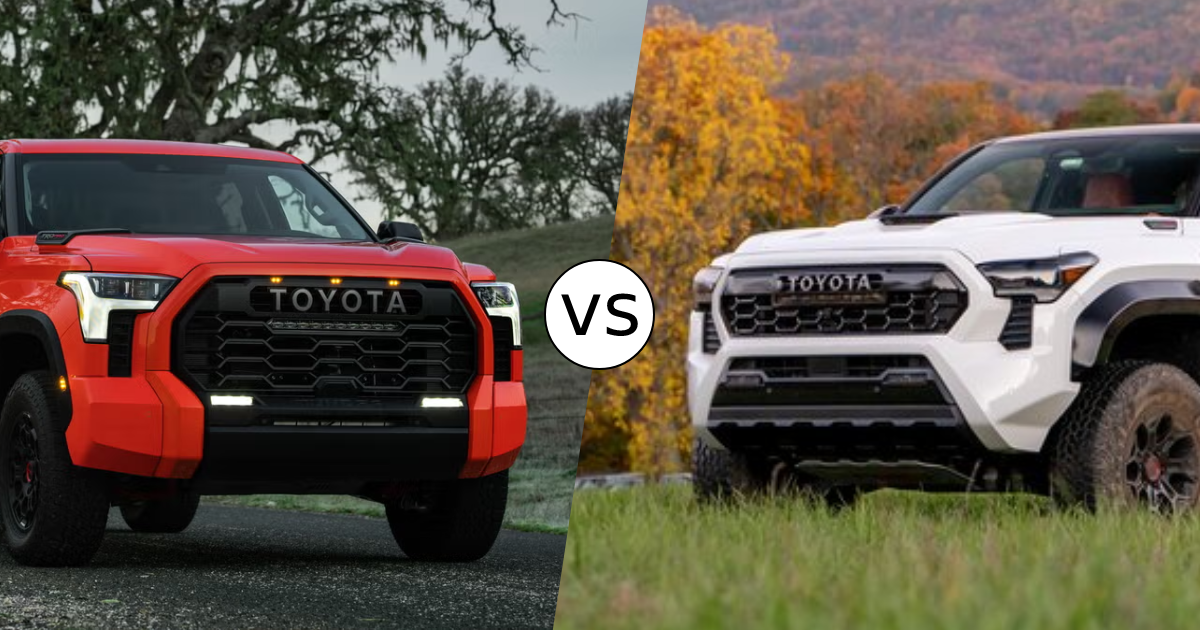
The midsize and full-size light-duty truck markets are highly competitive, but Toyota has front runners in both classes with the Tacoma and Tundra models. Here at Longo Toyota of Prosper, Texas, we offer a side-by-side comparison of the Tacoma and Tundra to help you choose the truck that best suits your needs. Discover the key differences between the 2025 Toyota Tacoma and Toyota Tundra, comparing trims, features, and performance. more 2025 Toyota Tacoma vs. Toyota Tundra Comparison The 2025 Toyota Tacoma and Toyota Tundra fall into different classes of pickup — the Tacoma is a midsize truck, while the Tundra is a full-size truck. This comparison will help you decide which size truck offers the capability and features you need. Depending on the trim, you can choose the 2025 Tacoma with a two-door two-seat XtraCab and a 6-foot bed or a four-door five-seat Double Cab with a 5-foot or 6-foot bed. The XtraCab has generous cargo space behind the front seats, while the Double Cab has storage beneath and behind the rear seats. The 2025 Tundra comes in a four-door five-seat configuration with either a Double Cab or CrewMax cab, both offering a choice of two bed lengths. You also get plenty of interior storage. Four-wheel drive is either available or standard depending on the trim level for both the Tacoma and Tundra. 2025 Toyota Tacoma Trim Levels For 2025, the Tacoma is available in SR, SR5, TRD PreRunner, TRD Sport, TRD Off-Road, Limited, Trailhunter, and TRD Pro trim levels. The TRD and Trailhunter trims feature specialized equipment for off-road adventurers. 2025 Toyota Tundra Trim Levels You can choose from the SR, SR5, Limited, Platinum, 1794 Edition, and Capstone trims. As you go up the trims, you'll discover increasing levels of comfort and equipment, while the TRD Pro offers serious off-road capability. Size and Dimensions In a Tacoma vs. Tundra size comparison, the full-size Tundra is larger than the midsize Tacoma. Bed length and trim level determine exterior dimensions. Exterior Measurements The Tacoma's exterior dimensions are: Length from 213.0 to 226.2 inches Width from 76.9 to 77.9 inches Height from 73.8 to 77.9 inches Wheelbase from 131.9 to 145.1 inches The Tundra's exterior dimensions are: Length from 233.6 to 252.5 inches Width from 80.2 to 81.6 inches Height 78.0 inches Wheelbase from 145.7 to 164.6 inches Interior Space The Tacoma's interior dimensions (rear figures for Double Cab) are as follows: Headroom (front/rear): 39.7/38.4 inches Hip room (front/rear): 56.8/56.3 inches Shoulder room (front/rear): 58.3/57.8 inches Legroom (front/rear): 41.8/33.7 inches The Tundra's interior dimensions are: Headroom (front/rear): 41.0  /38.5 inches Hip room (front/rear): 62.6/60.5 inches Shoulder room in Double Cab (front/rear): 65.0/63.4 inches Shoulder room in CrewMax (front/rear): 65.0/62.4 inches Legroom in Double Cab (front/rear): 41.2/33.3 inches Legroom in CrewMax (front/rear). 41.2/41.6 inches Performance and Engine Specs The Tacoma and Tundra have engines with power output to match your needs, including a hybrid option. 2025 Toyota Tacoma Performance Stats Powering the Tacoma SR is a turbocharged 2.4-liter i-FORCE engine delivering 228 horsepower and 243 lb-ft of torque via an eight-speed automatic transmission. Most of the other trims come standard with a higher output version of this engine that delivers 278 horsepower and 317 lb-ft of torque. When paired with an available six-speed manual transmission, it produces 270 horsepower and 310 lb-ft of torque. The i-FORCE MAX hybrid powertrain is standard for the Trailhunter and TRD Pro models and available for the TRD Sport, TRD Off-Road, and Limited trims. This powertrain pairs the 2.4-liter turbo with a battery pack and electric motor for a system output of 326 horsepower and 465 lb-ft of torque. 2025 Toyota Tundra Performance Stats Under the Tundra SR's hood is a 3.4-liter twin-turbo i-FORCE V-6 engine that generates 358 horsepower and 406 lb-ft of torque. In other trims, this engine can deliver 389 horsepower and 479 lb-ft of torque. The i-FORCE MAX hybrid engine, which pairs a twin-turbo V-6 with an electric motor, is standard in the TRD Pro and Capstone and available in the Limited, Platinum, and 1794 Edition trims. This engine generates 437 horsepower and 583 lb-ft of torque. All trims feature a 10-speed automatic transmission. Towing and Payload Capacity Both the Tacoma and Tundra offer sturdy towing and payload capabilities for their respective classes. Depending on the truck's configuration, the Tacoma's maximum towing capacity ranges from 3,500 pounds to 6,500 pounds. The maximum available payload varies from 1,230 pounds to 1,705 pounds. The Tundra has a maximum towing capacity ranging from 8,300 pounds to an impressive 12,000 pounds. The payload ranges from 1,575 pounds to 1,940 pounds. Technology and Safety Features When it comes to technology, the Tacoma and Tundra offer similar standard and available features. In the Tacoma and Tundra, the base infotainment system has an 8-inch touch screen, wireless Android Auto and Apple CarPlay connectivity, and satellite radio. Higher trims have a 14-inch touch-screen display and a 12.3-inch digital instrument cluster. Both trucks come standard with the Toyota Safety Sense suite of driver-assistance technologies. This provides you with adaptive cruise control, a pre-collision system, pedestrian detection, proactive driving assist, lane departure warning with steering assist, automatic high beams, and road sign assist. Most configurations also include blind-spot monitoring with rear cross-traffic alert. The Insurance Institute for Highway Safety has named both the Tacoma and Tundra as 2024 Top Safety Picks. The Tundra also received a National Highway Traffic Safety Administration five-star overall crash rating — there's currently no rating available for the Tacoma. Test-Drive the 2025 Toyota Tacoma and Tundra at Longo Toyota of Prosper Deciding between the 2025 Toyota Tacoma and Tundra will ultimately depend on your professional needs and personal truck use. Contact us at Longo Toyota of Prosper to schedule a test-drive and experience these powerful, versatile, and capable trucks.

2024 Toyota RAV4 vs. Honda CR-V

2024 Toyota RAV4 vs. Honda CR-V

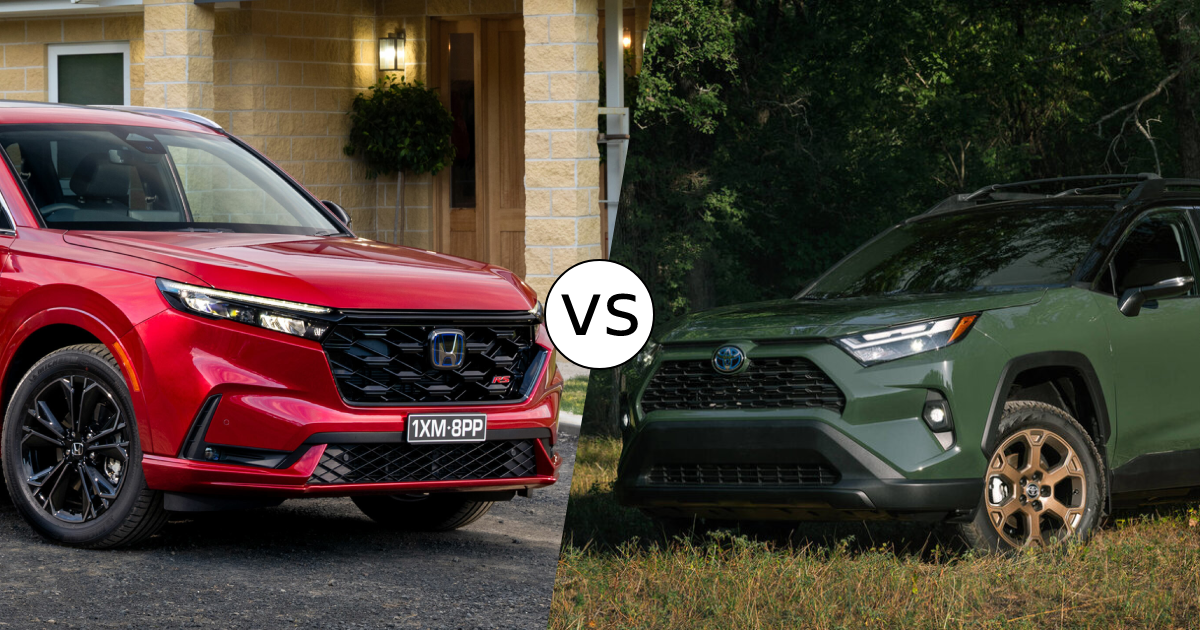
The compact SUV segment has long been dominated by two top contenders: the Toyota RAV4 and the Honda CR-V. As pioneers in their class, with the RAV4 debuting in America in 1994 and the CR-V in 1997, they've set the standard for compact SUVs. While both vehicles are excellent options for modern drivers, the 2024 Toyota RAV4 continues its two-decade reign as America's most popular SUV, thanks to its impressive performance, reliability, and design. However, with the 2024 Honda CR-V getting a full redesign, it's worth comparing the two to see if Honda has taken over the throne. We'll explore the key aspects of both vehicles to see which one reigns supreme. more Price and Value First, let's compare Honda's CR-V and Toyota's RAV4 on their price point. The 2024 Toyota RAV4 has a more appealing starting MSRP of $28,675 when compared to the Honda CR-V's $29,500 base price. Toyota, with six distinct trims, also offers more variety, including specialized variants such as the TRD Off-Road trim. The Honda CR-V has just three trims and no off-road-specific option, which may be a deal-breaker for some buyers. Furthermore, Toyota's reputation for reliability and long-term value makes the RAV4 a better investment in the long run. Performance and Driving Experience Boasting a robust 2.5-liter four-cylinder engine and producing 203 horsepower, the RAV4 outperforms the CR-V's 1.5-liter, 190-horsepower turbocharged engine. This power difference becomes noticeable during highway passing maneuvers and when climbing steep hills. The RAV4's powerplant is mated to an eight-speed automatic transmission, providing a smoother and more efficient driving experience than the CR-V's continuously variable transmission. Toyota maintains its advantage when we compare the hybrid versions. With its sophisticated dual-motor system generating 219 horsepower, it tops the CR-V hybrid's 204 horsepower. The RAV4's versatility extends to its impressive 3,500-pound towing capacity, while the CR-V can only tow up to 1,500 pounds. When it comes to handling, the RAV4 offers better off-road versatility than the CR-V. Its multi-terrain select system and available Dynamic Torque Vectoring All-Wheel Drive provide enhanced traction in challenging conditions. Meanwhile, the TRD Off-Road trim boasts superior off-roading capability that the CR-V just can't match. Fuel Economy Both SUVs demonstrate impressive efficiency, though the RAV4 maintains a slight advantage across all configurations. In front-wheel-drive variants, the 2024 RAV4 achieves 27 mpg in the city and 35 mpg on the highway. While the CR-V matches the city rating, it falls just short on the highway at 34 mpg. This pattern continues in all-wheel-drive configurations, where the RAV4 and the CR-V both deliver 27 mpg in the city, but the RAV4 has the edge on the highway at 34 mpg, compared to 27 mpg for the CR-V. This makes the Toyota marginally more economical for long-distance driving. Interior and Cargo Space In cargo capacity, the Honda CR-V takes a slight lead with 39.3 cubic feet behind the second row compared to the RAV4's 37.6 cubic feet, and a generous 76.5 cubic feet with the rear seats folded, while the RAV4 offers 59 cubic feet. Passenger comfort varies slightly, with the CR-V providing a bit more legroom. Front passengers get 41.3 inches compared to 41 inches in the RAV4, while rear passengers see a bigger difference with 41 inches in the CR-V vs. 37.8 inches in the RAV4. Both vehicles use quality materials and have well-designed interiors focused on comfort and functionality. Infotainment and Connectivity The technology comparison favors the RAV4, with its standard 8-inch touch screen and six-speaker sound system beating the CR-V's 7-inch screen and four-speaker setup. The advantage extends to higher trims, with the RAV4 providing an 11-speaker premium audio system and a larger 10.5-inch touch screen. Although the CR-V does offer a premium sound system with 12 speakers, which is only available on the Sport Touring Hybrid trim, its maximum screen size is only 9 inches. Connectivity options also lean in Toyota's favor. Both vehicles offer wireless smartphone charging and multiple 12-volt outlets on higher trims, but the RAV4 adds up to five USB ports. The CR-V's more limited options include a standard USB interface and a single USB-C charging port. Apple CarPlay and Android Auto are standard on both, but the RAV4 provides wireless integration for added convenience. Safety Features and Ratings Safety has become a crucial aspect for modern buyers, and both vehicles deliver on this front. The Toyota RAV4 earned a 2023 Top Safety Pick award from the Insurance Institute for Highway Safety (IIHS), and the 2024 RAV4 Hybrid received a five-star overall rating from the National Highway Traffic Safety Administration. The RAV4's standard Toyota Safety Sense 2.5 package includes many features, from pre-collision assist with pedestrian detection to adaptive cruise control with steering assist. Premium features include blind-spot monitoring, rear cross-traffic alert with automatic braking, and a 360-degree camera system. The Honda CR-V also boasts top safety ratings, with the 2023 CR-V earning a Top Safety Pick+ award from the IIHS. While CR-V's standard Honda Sensing suite includes features similar to those of the RAV4, such as adaptive cruise control, collision mitigation braking, blind-spot monitoring, and lane-keep assist, Toyota's Safety Sense 2.5 is the more comprehensive and intuitive suite. Design and Customization On the outside, Toyota provides an impressive array of color options, including distinctive choices such as Ruby Flare and Cavalry Blue. It also offers sophisticated dual-tone combinations featuring contrasting roof colors, such as Ice Edge rooftop paired with Magnetic Gray. Chrome accents on the headlights, exhaust tips, and door handles add a touch of luxury to the RAV4's exterior. The CR-V takes a more conservative approach with single-tone exterior colors, including Canyon River Blue and Radiant Red. While it offers 18-inch wheels in Berlina Black or Sparkle Silver, it falls short in terms of customization options compared to the RAV4's bold 19-inch-wheel choices in Light Gray or Dark Metallic designs. Test-Drive the 2024 Toyota RAV4 at Longo Toyota of Prosper The 2024 Honda CR-V offers some impressive features and improvements in its newer version, but the 2024 Toyota RAV4 continues to dominate in key areas such as performance, value, and customization options. At Longo Toyota of Prosper, we have an extensive selection of new and used RAV4 models for you to explore. Schedule a test-drive today to experience why the RAV4 remains America's favorite SUV. Contact us for more information about our current offers and financing options.

Toyota 4Runner vs. Jeep Grand Cherokee

2025 Toyota 4Runner vs. Jeep Grand Cherokee

Finding the right vehicle for your requirements in the competitive SUV segment can be overwhelming. The 2025 Jeep Grand Cherokee and 2025 Toyota 4Runner stand out in this category. Both are undeniably capable vehicles that cater to a broad range of driving styles and preferences. In this article, our team at Longo Toyota of Prosper has compared these two vehicles to help you decide which one best fits your lifestyle. more Engine Performance and Off-Road Capabilities A comparison between a Jeep Grand Cherokee and a Toyota 4Runner shows that each vehicle offers unique performance capabilities. Toyota 4Runner vs. Jeep Grand Cherokee Specs The 4Runner is equipped with a turbocharged 2.4-liter four-cylinder engine coupled with an eight-speed automatic transmission that delivers 278 horsepower. Rear-wheel drive is standard, with an optional full-time four-wheel drive system and a two-speed transfer case with high and low range. The 2025 Grand Cherokee has a 3.6-liter V-6 engine that delivers 293 horsepower. Although rear-wheel drive is standard, several all-wheel-drive systems are available, including one with an electronically locking limited-slip rear differential. The Grand Cherokee offers a smooth, comfortable ride, especially in higher-level trims that use air springs and adaptive dampers. Both the 2025 Grand Cherokee and the 2025 4Runner have hybrid variants. The plug-in hybrid Grand Cherokee 4xe produces 375 horsepower. The hybrid 4Runner's i-FORCE MAX powertrain combines the 278-horsepower 2.4-liter engine with a 48-horsepower electric motor to deliver a combined 326 horsepower. 4Runner vs. Jeep Off-Road Features and Technologies The Jeep vs. Toyota off-road comparison shows that both vehicles are ideal for your rugged adventures. The Jeep Trailhawk combines a Quadra-Drive II all-wheel-drive system with a front anti-roll bar disconnect, allowing for better wheel articulation on rough trails. Increased ground clearance provides the 2025 4Runner with even greater off-road prowess compared to its predecessors. A ground clearance of 9.2 inches and a 33-degree approach angle enhance its off-road capabilities. The 4Runner also offers optional disconnecting stabilizer bars, a locking rear differential, and an off-road cruise control system. The hybrid 4Runner offers extra horsepower and features such as manually adjustable dampers. Towing Capacity The Grand Cherokee's 3.6-liter V-6 offers a maximum towing capacity of 6,200 pounds. The 4Runner delivers 317 Ib-ft of torque in the non-hybrid configuration and 456 Ib-ft in the hybrid option, providing a maximum towing capacity of 6,000 pounds. Interior Comfort and Technology The base trims of the Grand Cherokee offer essential features. Higher trims such as the Summit and Overlord feature more premium touches, including quilted leather upholstery, open-pore wood trim, and high-tech digital displays. The Grand Cherokee only offers two rows of seats. If you need more space, you can opt for the three-row Grand Cherokee L. The 2025 4Runner offers an upgraded, more sophisticated, and comfortable cabin. High-quality materials and improved ergonomics create a sense of luxury while retaining functionality with features such as strategically placed storage bins throughout the cabin. Controls are easily accessible while an optional third row increases passenger capacity, making the 4Runner ideal if you have a large family. Cargo Space Comparison The two-row Grand Cherokee offers a cargo volume of 37.7 cubic feet behind the rear seats, which expands to an impressive 70.8 cubic feet with the rear seats folded. The Grand Cherokee offers a slight advantage over the three-row 4Runner in terms of cargo space. Toyota has yet to release official cargo and passenger dimensions, but since the 2025 4Runner is longer than the 2024 iteration, we can expect it to offer more room than its predecessor. For reference, the three-row 2024 4Runner offers a tight 9 cubic feet of cargo space behind the third row, expanding to 46.3 with the third row folded, and a cavernous 88.8 cubic feet with both the second and third rows down. Safety Features Both vehicles boast an impressive suite of safety and driver-assistance features. The Jeep offers the following features: Standard automatic emergency braking with pedestrian detection Standard lane-departure warning and lane-keep assist Standard adaptive cruise control Hands-Free Active Driving Assist system available in the Overland and Summit models The TSS 3.0 suite of driver-assistance and safety technologies in the 4Runner offers basic features such as automatic emergency braking with pedestrian detection and lane-departure warning with lane-keep assist. It also offers advanced technologies such as adaptive cruise control with lane centering assist. The 4Runner also offers an innovative driver-assistance system that can detect an unresponsive driver and safely bring the vehicle to a stop, if necessary. Pricing Both the Grand Cherokee and the 4Runner are available in several trim levels to cater to various budgets and driving preferences. At an MSRP of $38,290, the base trim of the Jeep is slightly lower than the base-level 4Runner at $43,000, which increases at higher trim levels. Despite the slightly higher entry-level price point, the Toyota 4Runner offers better overall affordability, with the top-of-the-range trim available at an MSRP of only $54,000. Visit Longo Toyota of Prosper Today The 2025 Jeep Grand Cherokee and Toyota 4Runner offer unique features that cater to a variety of preferences. Overall, the Toyota edges out the Jeep in terms of affordability and features. If you're in Prosper, Texas, visit Longo Toyota of Prosper to experience the 2025 4Runner firsthand. Contact us today to arrange a test drive, or stop by the dealership. Our dedicated team will answer any questions you may have and help you find the perfect vehicle for your lifestyle.

2024 Toyota Tacoma Trailhunter

Toyota Tacoma TRD Pro vs. Trailhunter

If you're looking for a rugged, off-road truck, Toyota offers two great options with the Tacoma TRD Pro and the new Tacoma Trailhunter. Although both are perfect for off-road adventures, each offers unique strengths. The TRD Pro now comes with new features to enhance its performance on rough terrain. The Trailhunter is a brand-new model designed specifically for overlanding adventures. Let's explore how these two heavyweights compare and what makes each one unique. more Interior Features Both the 2024 Tacoma TRD Pro and Trailhunter offer comfort and quality but with different priorities. The TRD Pro has a sportier feel, with SofTex-trimmed seats, contrast stitching, and camo-pattern inserts. This model also offers power-adjustable heated and ventilated seats and a heated leather steering wheel with a red center stripe. A standout feature is the isodynamic performance seats, designed to minimize body movement during fast off-road driving with built-in shock absorbers for stability on rough terrain. Toyota built the Trailhunter for practicality. It comes with tough, all-weather floor mats and an ARB switch panel for hooking up extra gear. It also has a bed-mounted air compressor, making it ideal for overlanding. You still get heated and ventilated seats and a large 14-inch touch screen, but the overall feel is more rugged. It's designed with extra storage to handle longer trips with ease. The 60/40-split rear seats provide additional storage space for your gear when you're out exploring. Both trucks offer several advanced technology features, including wireless Apple CarPlay, Android Auto, a JBL sound system, and a 12.3-inch digital gauge cluster. The Trailhunter adds MOLLE storage panels on the seatbacks to secure extra gear, which is ideal for your adventure getaways. Exterior Features Although the 2024 Toyota Tacoma TRD Pro and Trailhunter are both built for off-road adventures, they serve different purposes. The TRD Pro is ideal for high-speed desert runs, featuring bold touches such as 18-inch black alloy wheels, chunky 33-inch Goodyear territory R/T tires, and a blacked-out grille with LED fog lights. It has a fierce look with its hood scoop, wider stance, and TRD black performance dual exhaust system. The high-clearance front bumper and TRD Pro skid plate help it navigate steep dunes and rocky trails effortlessly. Toyota designed the Trailhunter for more leisurely, overland adventures through forests and rugged terrain. It comes with stylish Bronze Oxide 18-inch wheels and the same tough Goodyear Territory R/T tires as the TRD Pro. The load bed features an ARB modular utility bar with removable MOLLE panels for custom gear setups and a standard roof rack for extra cargo or a rooftop tent. The Trailhunter also has a high-mount air intake and RIGID Industries dual-color LED fog lights, making it perfect for both long journeys and off-road adventures. Engine and Performance A turbocharged i-FORCE MAX 2.4L hybrid I-4 powers both the TRD Pro and Trailhunter. In the TRD Pro, it delivers 326 horsepower and 465 lb-ft of torque. While the Trailhunter produces slightly less horsepower at 323, it delivers the same torque. This engine pairs with an eight-speed automatic transmission, enhancing performance and fuel efficiency. Toyota has tuned the Trailhunter to provide more torque at lower speeds, which is helpful when you're rock-crawling or tackling steep terrain. This makes it easier to stay in control when you're navigating rough trails. Toyota has made the TRD Pro for speed. Its throttle response is quicker, which makes it suitable for faster off-road driving. The TRD Pro's engine gives you the burst of power you need to keep up the pace. Off-Road Features The TRD Pro and Trailhunter highlight Toyota's top off-road capabilities, each designed for different adventures. The automaker has equipped the TRD Pro with TRD-tuned FOX QS3 shocks that offer a 2-inch lift and adjustable compression stiffness, combined with reinforced rocker protection for high-speed runs and jumps. It also comes with Toyota's multi-terrain select, crawl control, a locking rear differential, and a front stabilizer bar disconnect, making it versatile for driving in different conditions. Toyota has built the Trailhunter for overlanding with its Old Man Emu 2.5-inch monotube suspension, which increases load-carrying capacity and impact absorption on long journeys. It also has multi-terrain select, crawl control, a rear differential, and a front stabilizer bar disconnect but with added features such as high-strength underbody protection and frame-mounted rock rails. This makes the Trailhunter ideal for tougher, more technical terrain where stability and durability are key. Towing Capacity Towing and payload capacities differ slightly between the TRD Pro and Trailhunter. The TRD Pro can tow up to 6,000 pounds, which is perfect for hauling ATVs, dirt bikes, or other off-road gear. Its payload capacity is also quite impressive at 1,680 pounds, which is ideal for carrying moderate loads without compromising on performance. The Trailhunter can also tow 6,000 pounds, but its payload is slightly lower at 1,475 pounds since it's the heavier truck by 260 pounds. Price For 2024, Toyota's off-road trucks come with a slightly higher price tag. The Tacoma TRD Pro's starting price is $63,900, which reflects its advanced high-performance features, such as isodynamic performance seats. The Trailhunter, which Toyota has priced at $62,900, is slightly more budget-friendly. It's basically built for overlanding and has several practical features. Both are pricey, but their features and capabilities make the cost worth it. Check Out the Toyota Tacoma TRD Pro and Trailhunter at Longo Toyota of Prosper The 2024 Toyota Tacoma TRD Pro and Trailhunter offer exceptional off-road capabilities, each with unique strengths. Although the TRD Pro is slightly costlier, it's perfect for high-speed desert adventures, while the Trailhunter is ideal for overlanding. Both are a significant investment but deliver impressive performance. If you're in the Prosper, Texas, area and interested in these models, we invite you to visit Longo Toyota of Prosper to schedule a test drive or browse our other Toyota lineups to find your perfect off-road vehicle.

2024 Toyota Tundra vs Ford F-150 Hybrid

2024 Toyota Tundra i-FORCE MAX vs. Ford F-150 Hybrid

The automotive world is abuzz with the rise of hybrid trucks, and two models leading the charge are the 2024 Toyota Tundra i-FORCE MAX and the 2024 Ford F-150 Hybrid. These trucks represent the pinnacle of innovation, offering a blend of power, efficiency, and sustainability. This article compares these two hybrid giants, focusing on performance, design, technology, and value. Whether you're a seasoned truck enthusiast or a first-time buyer, this guide will help you make an informed decision. more Performance and Efficiency When it comes to performance, both the 2024 Toyota Tundra i-FORCE MAX and the 2024 Ford F-150 Hybrid offer impressive specs. The Tundra i-FORCE MAX is equipped with a 3.5-liter V-6 hybrid engine that produces a robust 437 horsepower and 583 lb-ft of torque. This powertrain allows the Tundra to tow up to 12,000 pounds, making it a formidable contender in the heavy-duty truck segment. Additionally, the Tundra boasts an estimated fuel efficiency of 19 mpg in the city and 22 mpg on the highway, ensuring you get the most out of every gallon. On the other hand, the 2024 Ford F-150 Hybrid features a 3.5-liter PowerBoost V-6 hybrid engine. This engine delivers 430 horsepower and 570 lb-ft of torque, allowing for a towing capacity of up to 12,700 pounds. The F-150 Hybrid also excels in fuel efficiency, offering an estimated 25 mpg in the city and 26 mpg on the highway. Both trucks incorporate advanced technologies to enhance performance, such as the Tundra's Adaptive Variable Suspension and the F-150's Pro Power Onboard system, which provides up to 7.2 kW of exportable power. Design and Comfort Aesthetically, the 2024 Toyota Tundra i-FORCE MAX and the 2024 Ford F-150 Hybrid each bring unique design elements to the table. The Tundra features a bold, aggressive exterior with a large grille, muscular fenders, and sleek LED headlights. Inside, the Tundra offers a spacious cabin with high-quality materials, comfortable seating, and ample storage options. The interior is functional and luxurious, with features such as heated and ventilated seats and a panoramic moonroof. The 2024 Ford F-150 Hybrid, meanwhile, sports a more traditional yet rugged design. Its exterior is characterized by a strong, boxy shape, a prominent grille, and robust wheel arches. Inside, the F-150 Hybrid doesn't disappoint, offering a comfortable and practical cabin. The seats are supportive, and the materials used are durable yet upscale. The F-150 also offers a range of cab and bed configurations to suit various needs, making it a versatile choice for different types of users. Technology and Safety Both the Tundra i-FORCE MAX and the F-150 Hybrid are packed with cutting-edge technology and safety features. The Tundra comes equipped with a 14-inch touch-screen infotainment system, offering Apple CarPlay, Android Auto, and a premium JBL audio system. It also includes Toyota Safety Sense 2.5, a suite featuring adaptive cruise control, lane departure warning, and a pre-collision system with pedestrian detection. The Ford F-150 Hybrid matches this with its SYNC 4 infotainment system, which includes a 12-inch touch screen and wireless Apple CarPlay and Android Auto. The F-150 also offers an available Bang & Olufsen sound system for an immersive audio experience. On the safety front, the F-150 comes with Ford Co-Pilot360, a comprehensive suite of driver-assist technologies with features such as automatic emergency braking, blind-spot monitoring, and a 360-degree camera system. Pricing and Value When considering the pricing and value of these hybrid trucks, it's essential to look at the overall package each one offers. The 2024 Toyota Tundra i-FORCE MAX has a starting MSRP of around $52,000. This price includes a host of standard features, such as the advanced infotainment system, Toyota Safety Sense 2.5, and a robust powertrain. Additionally, Toyota offers various optional packages that allow buyers to customize their Tundra to fit their specific needs. The 2024 Ford F-150 Hybrid starts at a slightly lower MSRP of approximately $47,000. This price point provides access to the powerful PowerBoost V-6 engine, SYNC 4 system, and Ford Co-Pilot360. Like the Tundra, the F-150 also offers numerous optional packages and configurations, giving buyers the flexibility to tailor the truck to their preferences. Both vehicles come with competitive warranties and are known for their reliability, making them solid investments for the long term. Customer Reviews and Reliability Customer feedback and reliability ratings play a crucial role in the decision-making process. The 2024 Toyota Tundra i-FORCE MAX has received positive reviews for its powerful engine, comfortable ride, and advanced safety features. Many users appreciate the Tundra's rugged design and the quality of materials used in the interior. The Tundra also shines with a commendable reliability score of 78 out of 100, according to J.D. Power. This score indicates a high level of quality and dependability, which is a testament to Toyota's well-established reputation for crafting durable and enduring vehicles. The 2024 Ford F-150 Hybrid has also garnered favorable reviews, particularly for its towing capacity, fuel efficiency, and versatile design. Customers have praised the F-150 for its practical interior and advanced technology features. Ford has a long-standing reputation for building reliable trucks, and the F-150 Hybrid is no exception. Both trucks have their share of common praises and minor complaints, but overall, they're well-regarded in the hybrid truck market. Discover Your Next Hybrid Truck at Longo Toyota of Prosper, Texas Both the 2024 Toyota Tundra i-FORCE MAX and the 2024 Ford F-150 Hybrid offer exceptional performance, design, technology, and value. Each has unique strengths, making them worthy contenders in the hybrid truck segment. If you're leaning toward the Tundra, we invite you to visit Longo Toyota of Prosper in Prosper, Texas, to explore this impressive vehicle in person. Schedule a test drive or contact us for more information. At Longo Toyota of Prosper, we're committed to helping you find the perfect truck to meet your needs.

Contact Us

Fill out this form below and we'll contact you shortly
*Required Fields